
One thing I have learned about death is that it is inevitable, regardless of how hard you cry over your loss.
I learned not to cry when someone is dead, not because I lack empathy. But because I realize death is part of one’s life cycle.
Many of us cried because we may miss them a lot, having a hard time living our lives without them, or maybe something personal than that.
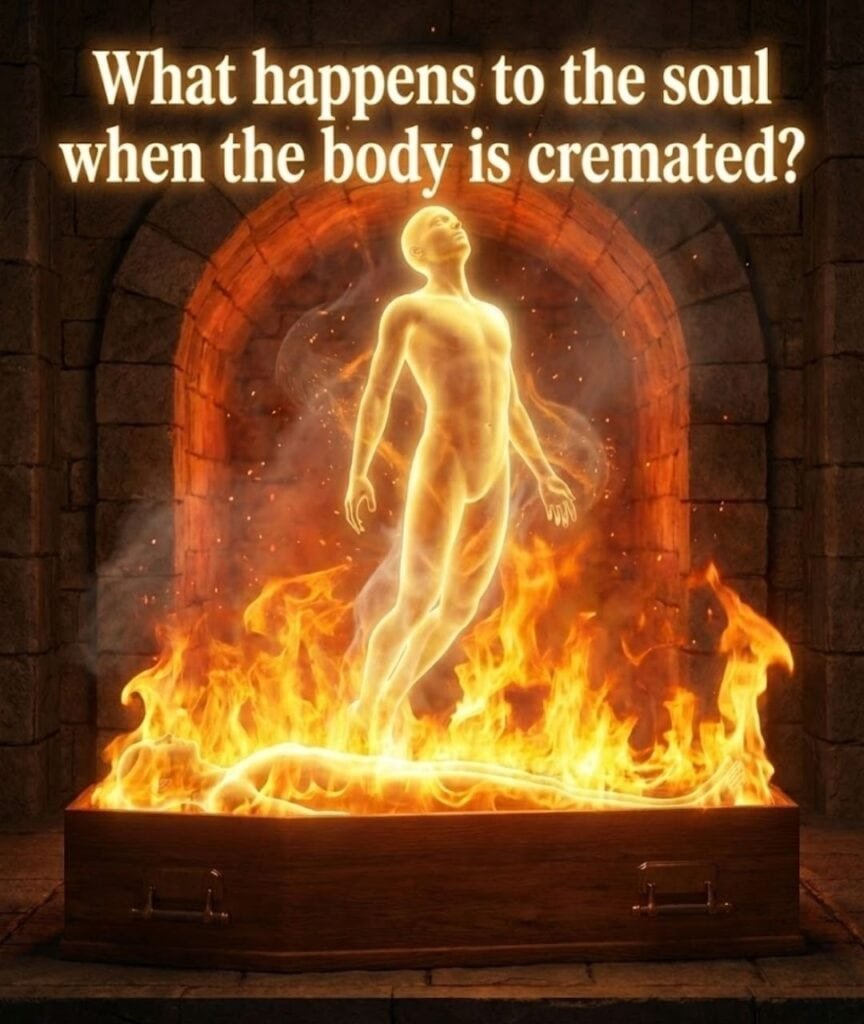
Different people tried to ask me the question: “What happens to the soul of a cremated person?”
People around me knew I could answer anything, even the trickiest question thrown at me. But this specific question is what I refused to answer.
All of us walk in this life with different perspectives and spiritual beliefs. Saying something controversial might not be a helpful response after all.
But how do we know the fate of a person’s soul after they are cremated?
Difference Between Body and Soul
Before I dive right into the heart of the discussion. It is important to differentiate your body and your soul.
All faiths agree on one thing: the body and the soul are two distinct layers embedded in the individual’s personification.
The body refers to your physical form, your aspect that will undergo several transformations in a lifetime.
On the other hand, the soul is your intellectual aspect, which is defined as your immaterial self, being defined with a unique character.
Although they are separate aspects of being you, different faiths have distinct standpoints about the cremation process.
How Religions Perceive the Cremation Process
Major religions have held that the body does not in any way affect the fate of one’s soul.
Hence, cremation does not determine or trap your afterlife destiny, as it is your body that undergoes burning.
Here’s how different beliefs stood their ground on the cremation process:
Christian Views
Christians have different points when it comes to the cremation process. In fact, all denominations and faithful do not share the same belief in the process itself.
Denominations agree that the cremation process does not affect the fate of one’s soul.
However, many Christians prefer to bury their loved ones due to the principle that the dead body must be treated as “resting,” where the soul is absent from the vessel.
Both the dead and cremated bodies are treated with respect.
Dharmic Standpoint (Hindu-Buddhist Belief)
The cremation process is a permitted practice in the Dharmic beliefs (referring only to Hindu and Buddhist religions).
It is treated as a great step towards great rebirth (reincarnation), enlightenment, and a cleansed transition to another life cycle.
The cremation process is much appreciated in the Hindu-Buddhist belief.
The Bahá’í Perspective
The perspective of the Bahá’í Faith offers a simple approach to the cremation process.
From their perspective, the body is treated like a graduate school. It is left behind because the soul moves to another vessel or level to thrive better.
Philosophical or Non-Religious Beliefs
Another perspective treats the soul as a fully developed energy that will join with the universe.
Believing that their soul offers an undying connection to their living loved ones. A bridge for their ties in the spiritual world.
For some, the cremation process is understood as a natural option to bury the body.
A way to recycle one’s remains into organic matter that fertilizes the planet.
What Science Says About Our Soul?
Science can identify the effects of cremation on one’s body.
However, it can only define the soul as an immeasurable material. Science cannot explain the afterlife nor give a definitive hint about what may happen there.
Our soul is still defined by science as a mysterious material that modern methods have found elusive in providing an exact reasoning.
Why Does the Fate of One’s Soul Matter So Much?
The fate of one’s soul is a big question mark, despite being a critical point.
It is telling us how they are doing without the help of our loved ones.
People often ask this to be reassured or to ensure that their loved ones are at peace.
Regardless of what faith you walked in, the fate of the soul in the afterlife matters more than how it was buried by their relatives.
The Body’s Disposal Does Not Change the Soul’s Fate
The cremation process is an option to preserve the remains of a dead loved one, this time through ashes.
One thing is for sure about the cremation. It cannot affect the fate of the soul in their afterlife.
Some bodies should be cremated for a reason, and it should be respected.
While we are still not reaching that point, let’s celebrate life with the ones dear to us.