
Winter is always associated with snow, happiness, and enjoying the cold breeze.
This is not always the case.
When the temperature drops, others would not be happy about this. Because an itchy, blotchy rash would appear on their chest.
These rashes appear when the environment is cold. But not an allergic reaction to the detergent or skin dryness.

But what are these rashes on my chest? Why do they appear during the cold season, and what should I know more about them?
Cold Weather Effect
Cold air makes your skin dry up so easily, removing the skin’s moisture without you realizing it.
Add to that the indoor heating in your home, which makes your skin vulnerable to irritation.
The cold air exposure may result in rashes that are characterized by itching, redness, and blotchiness.
Chest Reaction
The effects of cold weather and hot temperatures from indoor warming make your chest exposed to different temperatures.
This volatile reaction can weaken your skin’s natural shield, especially when you dare to remove both your scarf and coat.
Another reason why you get some cold-weather rashes is because of cooled sweat that is trapped under your clothing.
This chest reaction will result in the appearance of chest rashes.
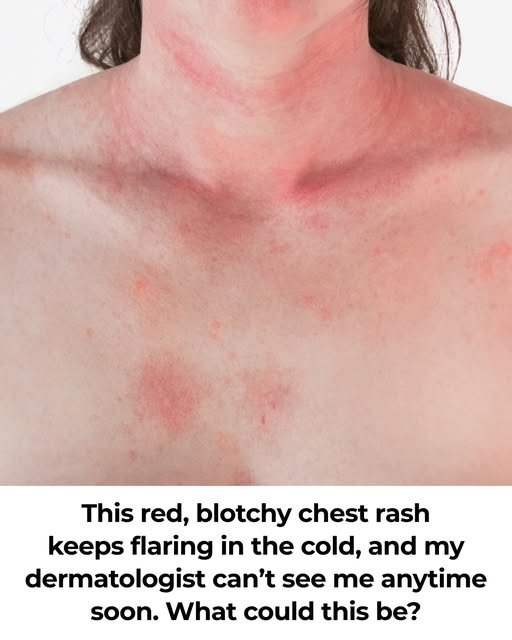
Normal Dryness vs. Cold Urticaria
Although the cold air makes you lose a lot of moisture from your skin, there is a big difference between having normal skin dryness and cold urticaria.
A normal dryness is characterized by mild redness, flakiness, and rough skin texture.
Having a cold urticaria and winter-related rashes in the chest are symptoms beyond skin dryness.
In cold urticaria, rashes appear after you are exposed to cold air. It is then followed by other symptoms like itching, blotchy, and reddish patches.
It is hard to simply dismiss it as skin irritation, especially if it does appear during the peak of cold season and eases after the temperature rises.
Other Types of Cold-Weather Rashes
Not all winter-related rashes are due to cold urticaria. There are still other types of rashes that are related to the cold weather.
It can be that someone has heat-to-cold shock, is irritated by wool fabric, and has tight, severely dry skin.
Aside from cold air alone, the combination of cold air and hot temperatures can also create some chest rashes.
How to Mitigate the Effects?
Here’s what you need to do to lessen the impact of chest rashes that are associated with cold air exposure:
- Apply fragrance-free creams after taking a bath.
- Wear clothes that prevent open exposure to cool air.
- Take a bath still with warm water; avoid a hot shower at all costs.
- When choosing your outfit, use gentle fabrics.
When to Call a Doctor?
In some cases, cold-related chest rashes must be another reason that requires proper diagnosis.
If the rashes keep coming, spreading, swelling, or get worse, these symptoms are your signs not to take the condition lightly.
When the rashes are combined with breathing difficulty, swelling of the face or lips, and dizziness, these are signs that you need immediate treatment.
Cold-weather reaction is normal, but it has different responses and impacts on humans.
The Cold Bothers You Anyway
Frozen’s Elsa is wrong about cold. It bothers your skin and your health.
The next time you remind yourself about snow, think about the triggering reaction caused by the cold air exposure.
Prioritize comfort and protection against the effects of the cold season.
Prepare for the effects of coldness and avoid hot showers.
Stick to warm water, and you’ll be fine.