
Every individual bears the same respect and remembrance when it comes to their dead loved ones.
This moment is where we feel disheartened, low, and humbled to realize that life is nothing but a vapor. No matter how great you are, death is an inevitable part of the cycle.
In that moment, we feel so vulnerable and would show affection to their remains before we bid farewell.
However, medical experts provide you with a warning when it comes to dealing with your deceased loved ones. And it comes to the position of safety.
Here’s what you should know about not kissing your dead loved ones for your own health, and why you should not take this as an offense.
Body Changes After Death
When a person dies, their remains (about their physical aspect) will undergo a process called decomposition.
This natural process slowly degrades the body, allowing germs and bacteria to thrive and claim the body as their environment.
After an individual’s demise, dramatic changes may come fast due to the body systems shutting down.
The body is already in its most vulnerable stage, as it can no longer control or prevent the germs and bacteria from taking over.
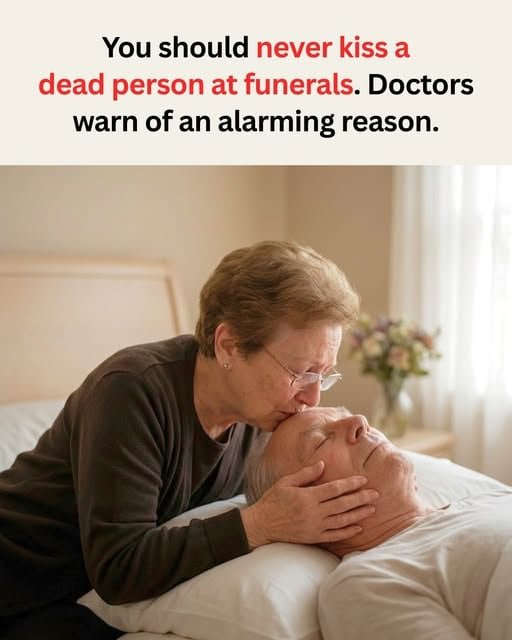
The Risk of Bacterial Exposure
The medical doctors warn against kissing your deceased loved one’s body due to high exposure to bacteria.
There are bacteria that, during an individual’s demise, may thrive easily as the host can no longer prevent them.
These bacteria are characterized as those that are resistant to drugs, from undiagnosed infections, living primarily in the respiratory system, or newly-developed organisms.
A simple kiss to bid farewell is enough to expose you to the bacteria that may yield a high risk of consequences.
Although the risk of getting infected from these bacteria is a rare case, this is something that doctors do not take lightly in the name of safety.
Why Handle the Dead Body with Caution?
During the moments of grief, your skin becomes the easiest way to be infected by the high bacterial presence found in the dead body.
These bacteria can also harm you by entering a cold sore, bleeding gums, small cuts, or cracked lips.
Doctors are concerned that these bacteria may take the opportunity to come in to your healthy systems through the open wounds you have.
Your skin is a delicate organ, and having direct contact with a dead body is an open invitation for these bacteria to thrive in your system.
That’s the reason why funeral and medical professionals alike treated the body with caution by wearing protective gear.
It’s not because of the dead person, but the number of bacteria present in the body of a deceased individual.
Embalming and Sterilization
People often ask if the embalming process makes the dead body entirely sterile.
The simple answer is no.
While the embalming process in modern practice includes the sterilization of the dead body of an individual, the process is meant to preserve the physical appearance of the deceased’s loved ones.
It is also to slow the decomposition of the body and reduce the production of odor.
The embalming process does not include the complete removal of bacterial presence in the dead body, as some of them are thriving internally.
Rare Risk with Serious Effects
Kissing the dead body is not just an open invitation to high bacterial exposure, but opens the possibility of getting unusual infections.
These bacteria may carry a disease with them. Although uncommon, these bacteria have serious effects on a living person’s skin and health.
Doctors warn the public that serious infections are possible if you happen to have mouth-to-mouth contact with the deceased.
Another risk from kissing a deceased individual includes getting an infection due to their weak immune system (if they die from it) or if they’re being infected with a certain disease (like in COVID-19 patients).
Medical warnings prevent the worst possibility of health risk, even though they are treatable or preventable.
The Line Between Medical and Cultural Insights
Cultural and medical insights have opposing standpoints as to how one might show their respect and goodbye to a deceased individual.
However, the doctors are clear that they don’t intend to despise the funeral traditions. As for them, touching or kissing the body of a deceased is not just the only way to bid farewell.
Although many traditions consider touching or kissing a deceased as a final act of respect and love for the dead, medical experts provide insight that may allow society to rethink.
It has nothing to do with disrespecting a culture, but making informed decisions to support a sanitized burial practice out of safety and keep the living healthy.
Smart Ways to Bid Farewell
If direct touch or a kiss is medically unsafe, there are still ways to bid farewell to your dead loved ones.
Here’s what health experts suggest you do during the funeral:
- Speaking softly to a person, leave a heartfelt message.
- Briefly hold the deceased’s hands, but one must wash their hands right away.
- If kissing the forehead is unbearable, do it by placing a cloth on the deceased’s forehead.
- You may place a keepsake, flower, note, or beautiful stone with them.
Who Should Be More Cautious?
Pregnant individuals, the elderly, children, and people with a weaker immune system must be cautious when touching or kissing the bodies of their deceased loved ones.
Their fragile health condition can be vulnerable to this bacterial presence. They rarely infect you with an unknown disease, but it has a serious effect on your health.
A Warning from the Position of Safety
Saying goodbye to our deceased loved ones is a painful moment. There’s no perfect way to at least prove that we deeply love them.
But when it comes to prioritizing safety, it is better to say goodbye when you don’t have to be exposed to bacteria.
Doctors’ piece of advice stems from the need to secure yourself from possible health risks.
Hence, it’s all about protecting and securing the health of the living for a longer, fulfilling life.