
Do you ever experience like you have to do something, but forget it all of a sudden?
It happens to most of us occasionally. Sometimes we blame a preoccupied and stressed mind, or a lack of sleep.
But when it does affect our daily routine, it could signal us something we are not aware of. It could indicate a sign of Alzheimer’s disease.
Alzheimer’s disease is a condition that develops slowly with episodes of memory loss. The early signs can be that elusive.
But with an early medical check-up, it can help a lot in keeping your brain healthy.
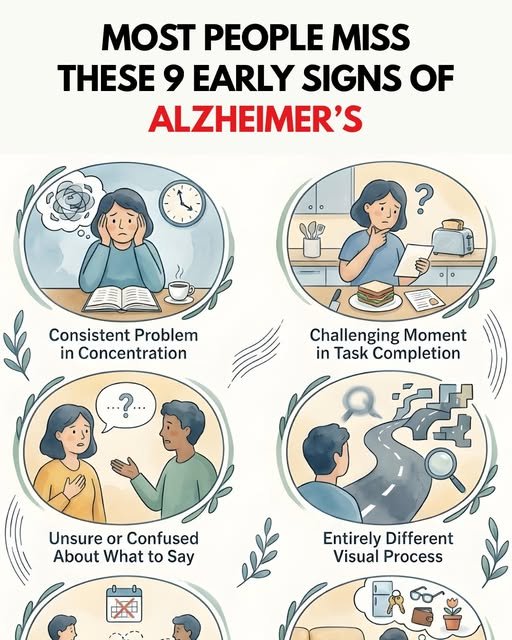
Here are the early signs of Alzheimer’s disease that you must know about.
Early Signs of Alzheimer’s Disease
Extreme Forgetfulness
Consistent forgetfulness leading to forgetting personal or critical information is an early symptom of Alzheimer’s.
This type of memory loss affects an individual’s daily routine. It affects the consistency of their response and how they are able to hold current conversations.
Consistent Problem in Concentration
Early signs of Alzheimer’s include someone who has a challenging time focusing on essential tasks.
People with the early signs tend to become mostly erratic and unable to finish their daily tasks.
Challenging Moment in Task Completion
People who have the early stages of Alzheimer’s tend to get lost halfway through a task. Making it harder for them to finish.
This happens because their minds are often overwhelmed, stressed, or experiencing unusual changes that affect the overall cognitive function.
Unsure or Confused About What to Say
People who experience the early signs tend to be disoriented, confused, or unsure about essential information.
It’s because the cognitive function has a challenging time setting things in order. An overwhelmed mind struggles to provide clear responses.
Entirely Different Visual Process
When you are experiencing the early signs, your brain has an entirely different way to process visual information.
It makes someone puzzled about how to clearly read, focus, or perform things. People usually confuse this symptom with having vision problems.
Connection Struggle with Others
When you are experiencing the early signs of Alzheimer’s, you may experience persistent communication challenges with other people.
Aside from having speech difficulty, it makes one struggle to connect with others in conversation.
Frequently Misplacing Specific Items
Since you tend to forget a lot and have a challenging time, people with early Alzheimer’s signs tend to misplace their stuff frequently.
That means being unable to think where the stuff is located or struggling to remember where your lost items are.
Unusual Decision-Making
Do you ever think of the extent of the early signs? It can lead to people making unusual or tactless judgments.
Expect that those who have the early signs may feel impulsive, oddly behaving, or overconfident at times.
Over-isolation From Social Gatherings
Early signs of Alzheimer’s make a person over-isolate. It means people who have it may feel ashamed or unsettled when going to social gatherings.
They avoid social gatherings because they may feel pressured. But it is often misconstrued as this sign can indicate that someone is depressed.
When You Should Be Worried?
We know that the next thing come into your mind is the early signs themselves. But this doesn’t mean having one of them may lead to Alzheimer’s disease.
It is probably another condition, aside from Alzheimer’s. Sleep problems, medications, chronic stress, and others are contributory factors to mental or memory degradation.
However, having some of the symptoms may lead to Alzheimer’s disease, which is best addressed with your doctor.
If you happen to believe you have one or some of the symptoms, you may use the early checkup card to ensure medical treatment, improvement, and better response to keep the brain healthy.
What Habits Can Maintain a Healthy Brain?
When you are positive for Alzheimer’s disease, there is no way you can stop it. However, habits that contribute to a healthy lifestyle can secure a healthy brain.
Here are some of the habits that support your brain health:
- Engage in mental stimulant activities like puzzles or reading.
- Maintain healthy and balanced meals.
- Aim for a quality sleep routine.
- Exercise daily.
- Be sociable.
- Manage your glycemic and blood pressure levels.
Healthy Mind, Secure Lifestyle
Early signs of Alzheimer’s can be easily mistaken, just as someone who has it perceives their reality.
Its effects are detrimental; ignoring those early signs can cause worsening of the problem.
Although health professionals can confirm, early consultation is always encouraged.
If you happen to experience none of these signs, don’t take your healthy mind for granted. Use it to secure a great and healthy lifestyle.