
Imagine this. A lot of people will come to visit you, your family, your closest friends, and concerned acquaintances.
Some of them will share how great you are, and your friends will immortalize the legacy you have set on their lives.
Except for the fact that you are dead.
All of us will one day face our demise and leave everything on earth behind.
The concept of death is not new to us; the ancient world had a different idea of what the afterlife would look like.
Many of us tried to participate in this topic.
- We avoid talking about it.
- We fear mentioning it.
- We thought it brought bad luck.
- We feel sad about death.
- We perceive death as the bitter end.
However, caregivers and hospice nurses who are taking care of near-death patients perceive death as a deep human moment.
They didn’t just witness emotions, they observed:
- Behavioral changes
- Strange patterns
- Ultra reminiscence
- Hearing farewell messages
Hospice nurses and caregivers point out that there is one common thing that patients do as they face death.
Reaching upward.
Although unseen, some of the patients face upward and attempt to explain that they’ve seen something we couldn’t fully comprehend.
Experts have something to say about this common movement that patients make before dying.
The “Movement” Nurses Observed
During the final moments of the patients, hospice nurses observed that they had one movement in common.
They make a repetitive act of grasping or reaching upward.
The movements are characterized by:
- Grasping at the air
- Slowly stretching the arms
- Hand movements
- Picking at the sheets or blankets
However, patients who may have done the movement may perform it peacefully, restlessly, or confusedly.
Families of the patients may often ask these questions:
- What’s happening to them?
- Are they seeing someone?
- What are they doing?
- Do they want to say something?
- Is it normal?
We may not fully identify what the patients are experiencing firsthand.
But hospice nurses can observe that this is normal among the people who are facing their demise.
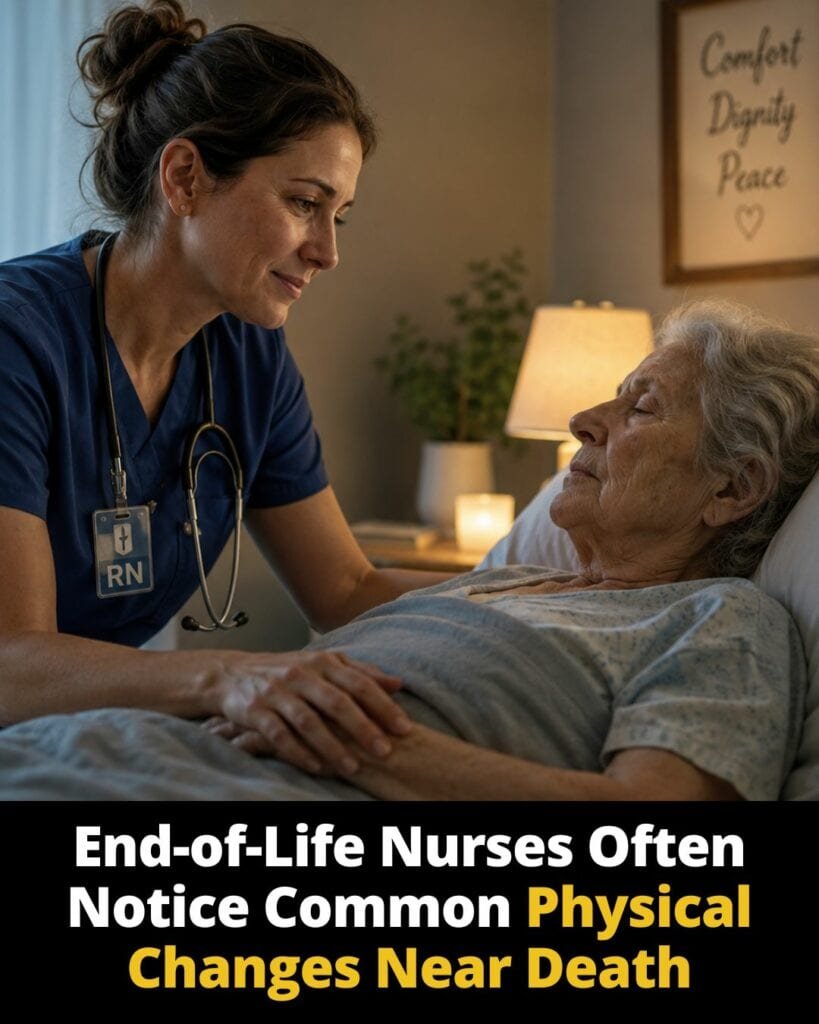
Why Are Patients Doing This Movement?
When the patient is approaching their final moments, their body undergoes mental and physical changes.
The changes that the patients experience can affect their consciousness, awareness, and movement.
Because of that, experts say that stretching upward happens because of:
- Reduction of oxygen levels toward the brain
- Effects of the medications
- Terminal agitation
- Altered awareness
- Having a delirium
- Neurological changes
Although patients may have different reactions to near-death, that’s the reason hospice care provides individualized support to ensure their comfort.
Experts emphasize the cause of the physical’s internal movement when patients are facing death.
What Is Terminal Agitation?
Terminal agitation refers to the restlessness, confusion, or physical disturbance that happens before a person’s demise.
Families who may witness their loved ones feeling physical upset or disturbed may observe that they are unsettled or disoriented.
Terminal agitation may include symptoms, such as:
- Problematic in staying still
- Reaching motions
- Pulling an object
- Emotional distress
- Repetitive movement
- Restless
- Confused
Experts say that when a patient experiences terminal agitation, it happens because of:
- Dehydration
- Discomfort
- Organ failure
- Reduce oxygen levels
- The body’s reaction to medication
- Chemical changes in the body
What Patients’ Families Often Notice?
Aside from that “reaching” movement that they notice, the family of the patients will also start observing something else.
Their families are getting observant of the physical changes that the patient will experience in their final moments.
Most of these changes are:
- Sleeping often
- Dismissive in conversation
- Cooling hands or feet
- Skin discoloration
- Appetite changes
- Slow-breathing
- Physical information
- Frequent confusion
Experiences may vary depending on the patient’s health status and physical condition.
For affected families, these changes make them emotional and slowly accept the fate of the patient.
Death may be inevitable, but so is the family’s reaction to a person’s demise.
A person’s physical death has a spiritual meaning that their family can’t help but feel deeply emotional about.
Patients Speaking to their Deceased Loved Ones
Hospice workers also noticed that patients who are nearing their deaths will mention or converse about people who are “unseen”.
As if talking to the people who have been gone for a long time.
That’s why patients might be seen doing these things:
- Smiling at unknown figures
- Conversing with unseen entities
- Talk to or about family members who are dead
- Discuss things about the afterlife
These actions can be interpreted by:
- Spiritual beliefs
- Cultural beliefs
- Personal experiences
Although there is no single exact explanation for this phenomenon, experts suggest that physical changes are linked to changes in the patient’s consciousness.
The Physical Changes
Death becomes frightening to each one of us because we don’t have an idea of how it changes our bodies as we are nearing it.
In the series and movies we’ve seen, death is nothing but a deep sleep.
Death won’t just come as a surprise; physical changes slowly take over the body as the person is going to face their final appointment in life.
Experts say that even the body, despite not knowing the exact hour of a person’s death, will slowly prepare itself for that moment.
Hospice workers also noticed that the last thing to become active is the person’s sense of hearing.
That’s why in the patient’s final hours, families are expected to provide a loving and calm message before the person departs.
What Should Their Families Do?
Watching someone’s death could be emotionally sorrowful, especially if that person has an impactful legacy on your life.
But for the family of the patients, it’s understandable that they worry a lot about their loved one.
They might ask the questions, like:
- Is this phenomenon normal?
- Is the patient scared?
- Are they suffering?
- Are all the sufferings necessary?
The families should stay in touch and be cooperative with the hospice professionals.
Not just out of concern, but also for the medical teams to provide:
- Adjustments to comfort care
- Emotional support
- Assertiveness
- Pain management
Although hospice workers empathize with the patient’s family, they should prioritize their loved one’s welfare as well to constantly provide the necessary care.
Why Does This Topic Matter?
Taking care of a patient who is in their near-death moment could be an emotional experience.
Even a person’s demise is too heavy to bear.
Handling either caregiving or grieving is a challenging thing to process.
Modern society avoids talking a lot about death, thinking that it would cause a bad fate.
But death is inevitable, and each one of us has to face the reality.
This topic matters because we have to understand how crucial to have a profession related to hospice and end-of-life.
Talking about this topic is one way to understand the sensitivity of the topic and reduce the feeling of panic, confusion, and fear in the grieving family.
Accept Death as How You Embrace Life
Death is inevitable; each one of us has an individual appointment with it.
Before it may happen, we aim to be prepared, healthy, and expect the emotional heaviness it may cause.
Experts may have perceived this moment as connected to your neurological and physical changes… that’s because facing death is part of the cycle.
We are reminded that we must accept death the same way we embrace life.
Not because becoming emotional is a completely wasted idea, but because death is not always the end of someone’s memory.
Let’s put the idea that their death means passing on to a new reality where we could meet them sooner.
Aside from that, we must appreciate the role of the hospice workers in providing them with the care before their demise. Although they can’t help but be emotional when seeing patients and their families facing such a phenomenon, it’s challenging for them to balance emotion and comfort.