
Men and women should realize that there’s a vitamin that is responsible for strengthening their energy, immunity, mood, and bones.
This nutrient is no other than Vitamin D.
Vitamin D is a nutrient that works due to sunlight exposure. It is needed to secure your health in the long term.
The deficiency may lead to maintenance disruption, making healing a slower process.
Here are the symptoms you need to know to determine if you are a Vitamin D-deficient person.
Low in Energy and Chronic Fatigue
Lack of Vitamin D makes you consistently low in energy, and fatigue becomes incurable with long rest.
Fatigue and low energy contribute to low energy production and affect the function of your muscles.
Check also your nutrient levels, as Vitamin D deficiency drains them.
Vulnerable to Sickness
Does your immune system go down easily due to infection or a cold? That is a sign of Vitamin D deficiency.
Vitamin D acts as a fuel for your immune response. If it is not enough, your body will have a slower reaction to illnesses, affecting your recovery process.
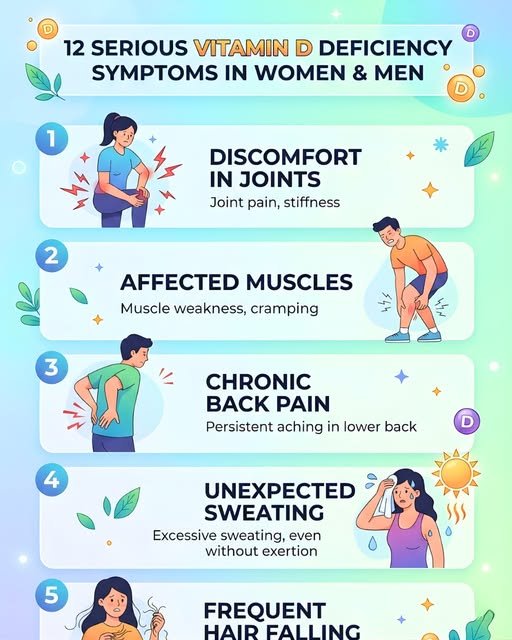
Discomfort in Joints and Bones
Your bones and joints can absorb calcium easily with the help of Vitamin D.
Low levels of Vitamin D affect the absorption process of calcium that is required for your bones and joints.
Avoid letting your Vitamin D stay low. It makes your bones and joints sensitive and vulnerable to strain and speedy aging.
Affected Muscles and Strength
Low Vitamin D levels can reduce your strength and weaken your muscles.
Making your daily tasks significantly more unbearable to achieve.
Older adults must not ignore Vitamin D consumption as it may affect their bone and joint stability.
Frequent Mood Swings and Irritation
Vitamin D is essential for your emotional and mental health.
It helps the brain achieve stability and satisfaction.
Low levels of Vitamin D in the brain lead to negative thoughts and emotions, mood changes, and feel extreme sadness.
If you happen to experience negative emotions without any valid reason, it’s probably that you are low in Vitamin D.
Frequent Hair Falling and Thinning
Your hair health is closely linked to your nutritional level.
Vitamin D is responsible for hair growth. Having deficient levels of it leads to thinning or falling of the hair.
Both men and women are not exempted to such consequences.
Bruises and Cuts Took Longer to Heal
Vitamin D promotes a faster recovery process, even for minor wounds.
But if it is lacking, tissue repair might take some time.
Lack of Vitamin D and other nutrients can also lead to inflammation problems.
Chronic Back Pain
There is back pain that isn’t just caused by strain or posture problems. Nutritional deficiency can also cause chronic lower back pain.
When your Vitamin D is deficient, your muscle strength and bone density are affected, enabling you to feel discomfort in your lower back.
Unexpected Sweating
The lack of Vitamin D can also be linked to frequent sweating on your forehead, especially if it is not caused by anything.
Unexplained, frequent sweating is a reflection of an underlying imbalance and a lack of Vitamin D.
Weight Fluctuation
When your body has enough Vitamin D, it influences your hormonal balance, metabolism, and fat storage.
Vitamin D supports normal weight gain or loss.
However, low Vitamin D levels make weight management challenging, especially if accompanied by a sedentary lifestyle and unhealthy diet.
Brain Lag and Lack of Focus
Vitamin D is responsible for the health and function of the brain. Making you well-functioning and more focused on your daily activities.
Lack of Vitamin D causes poor function in your cognitive ability.
It causes brain lag and makes you less focused.
Vulnerable Bones
When Vitamin D deficiency consistently reaches low levels, it increases the chance to weaken your bones.
Over time, this affects the bones of older adults and individuals who receive less Vitamin D.
Most Likely Vulnerable
Lack of Vitamin D can cause trouble for an individual’s body. Here are some of the patients who are most likely vulnerable to such a deficiency:
- Allergic to dairy.
- Patients with digestive issues.
- Residents in regions with less sunlight exposure.
- Have a darker complexion.
- Those who spend mostly on the outdoors.
- Older adults
Vitamin D-Filled Healthy Lifestyle
Let’s admit it. We can’t live longer without making our lifestyle simpler, healthier, and Vitamin D-filled.
Just in case you want to improve your Vitamin D levels, here are some tips you can follow:
- Consume fatty fish that has Omega-3
- Prioritize eating plant-based and dairy products.
- Add egg yolks to your new diet.
- Expose yourself to the sun early in the morning.
- In rare cases, take Vitamin D supplements that are approved and guided by your healthcare provider.
- For deficiency level evaluation, consider a blood test for early detection or the right treatment.
Sunshine and Healthy Lifestyle
Vitamin D deficiency taught us a realization that we should not forget. We are dependent on sunlight exposure.
It may not be the same as how plants process it. The truth is, our skin needs sunlight for nourishment.
Join it with a healthy lifestyle, better nutrition, and a proper diet, and your body will not be vulnerable to any diseases.
It takes sunshine and a healthy lifestyle to achieve great wellness.
Just don’t forget to prevent sunlight overexposure. Your routine is the way to go.