
Every year it catches us out. One week you are eating outside in the warm evening light, and the next you are hunting through the back of a closet for gloves, tripping over a pair of sandals nobody has worn since August, searching for the ice scraper you definitely put somewhere sensible last March, and wondering how on earth the house got this full.
Winter changes how we live. We spend far more time indoors, the days get shorter, and every bit of clutter we managed to ignore in summer suddenly feels like it is sitting right on top of us.
So the weeks before the cold arrives are a good moment to clear a little space. Not a full spring clean in reverse. Just ten targeted jobs that make winter easier, cheaper and, in a couple of cases, genuinely safer.
If you only do one thing on this list, make it number three. It is the one that can actually protect your home.
So, let’s go through them.
Why Before Winter Makes Sense
Partly it is practical. In a few weeks you will need room by the door for wet boots, space in the garage for the car, and a clear path to the boiler.
Partly it is about how the house feels. When you are indoors for most of the evening, the rooms you sit in matter more. In July you walk past the clutter on your way outside. In January it becomes the view.
And partly it is timing. Thrift stores and shelters ask for coats and blankets right now, before the cold sets in, which is exactly when your spare ones are most useful to somebody else.
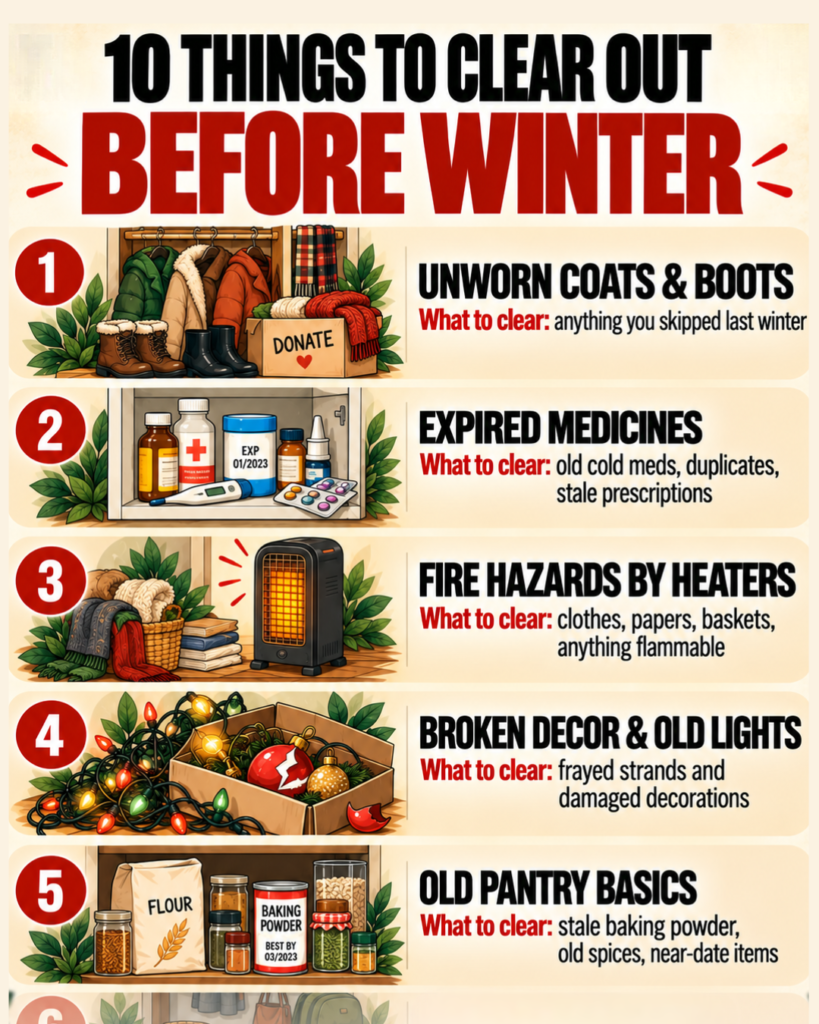
1. Coats And Boots You Did Not Wear Last Winter
Open the coat closet and be honest.
There is usually a coat that does not quite fit anymore. A pair of boots that pinch. A jacket bought on sale that never felt right. Each one stays because it is still perfectly good.
Here is a simple test. If you did not wear it at all last winter, you are very unlikely to wear it this winter either.
So let it go to somebody who will. Many shelters, churches and community groups run coat drives in the fall, and a warm coat sitting unused in your closet is genuinely valuable to somebody without one. Give it a quick wash first and check the zipper works.
You will also free up room for the coats you actually wear, which means less of a scramble every morning.
Do the same with gloves, hats and scarves. Match up the pairs, and let the single gloves go. Their partners are not coming back.
2. The Medicine Cabinet
Cold and flu season is coming, and the worst time to discover that your cold medicine expired two years ago is at midnight with a fever.
Take everything out. Check every date. You will probably find half-used prescriptions from years ago, three opened bottles of the same painkiller, and something nobody can remember buying.
Expired medicines may not work as well as they should. Some should not be used at all after their date. Replace what you will need this winter now, while you are well enough to go to the store.
Do not just throw old medicines in the trash. The safest option is a drug take-back program, and many pharmacies have drop-off boxes all year round. If none is available, the FDA suggests mixing medicines with something unappealing, like used coffee grounds or cat litter, sealing them in a bag and putting that in the trash. A short list of very strong medicines should be flushed instead, so check the label or ask your pharmacist.
While you are there, look for anything a visiting grandchild could reach. Winter means more visits, and medicines kept low or in handbags are a real risk to small children.
3. Anything Close To A Heater, Fireplace Or Furnace
This is the most important one on the list, so please do not skip it.
According to the National Fire Protection Association, US fire departments respond to around 37,000 home fires involving heating equipment every year, and nearly half of them happen between December and February. Those fires cause hundreds of deaths a year.
And a large share of them start the same way. Over half of home heating fire deaths begin when heating equipment sits too close to something that can burn – furniture, curtains, bedding, clothes, or a pile of newspapers.
Space heaters are the biggest concern. They account for a minority of heating fires, but NFPA data shows they are involved in most of the deaths.
So here is the job. Walk around every heater, radiator, fireplace, wood stove, and the furnace itself. Clear a space of at least three feet around each one. That is the distance fire safety experts recommend.
Move the laundry basket away from the radiator. Pull the armchair back from the fireplace. Clear the boxes stacked against the furnace in the basement. Then do the same in children’s rooms, where blankets and toys tend to end up right beside the heater.
And while you are at it, press the test button on your smoke alarms and carbon monoxide alarms. It takes thirty seconds.
If you use a space heater, check it too. Look for a damaged cord or plug, make sure it switches off automatically if it tips over, and plug it straight into the wall rather than an extension cord. Turn it off whenever you leave the room or go to sleep.
4. Broken Decorations And Old Lights
Most of us have a box of holiday decorations that grows a little every year and never seems to shrink.
Before the season starts, go through it. Glue what can be glued, and let go of what has been broken for three Christmases running.
Pay special attention to string lights. Check each set for frayed or cracked wires, broken sockets and loose connections. Damaged lights are a genuine fire risk, especially wound around a dry tree or near curtains, so any set with damaged wiring belongs in the trash, not on the mantel.
A set that has not worked properly for two years will not get fixed this year either. Let it go and start the season with lights you trust.
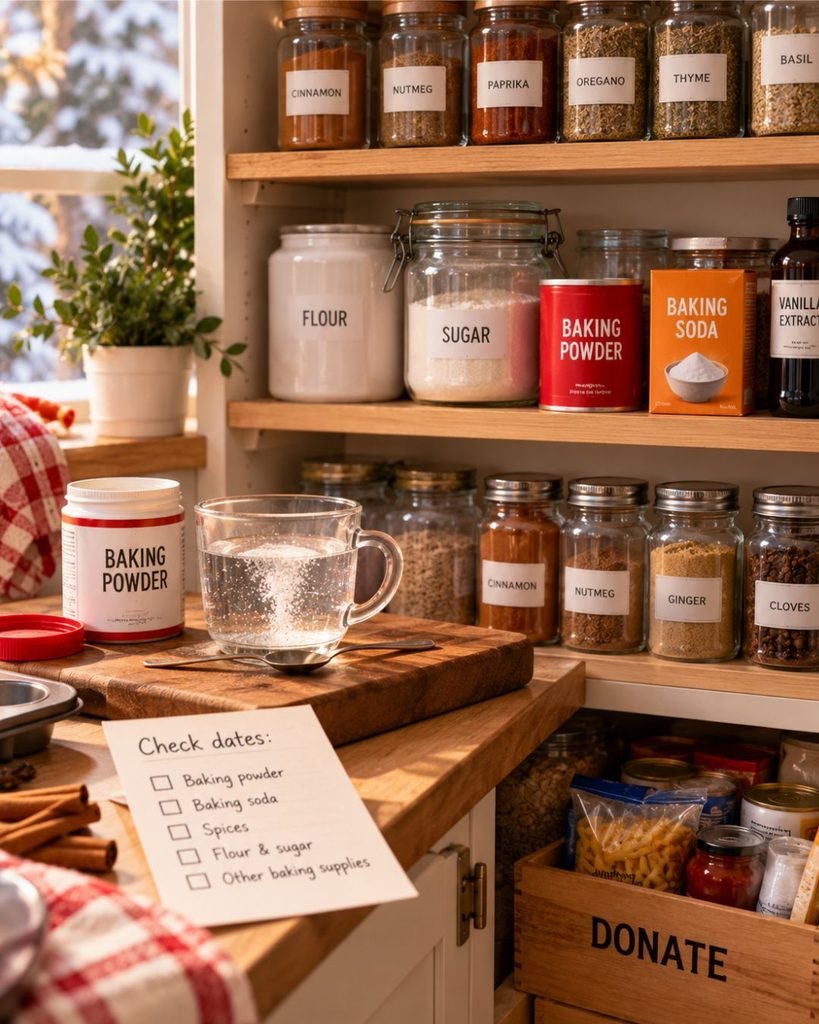
5. The Pantry, Before The Baking Starts
Holiday baking season is close, and nothing ruins a cake like flat baking powder.
Go through the pantry and check the dates, especially on baking supplies and spices. Baking powder tends to lose its strength within roughly six months to a year of opening. You can test it by stirring a teaspoon into hot water. If it fizzes well, it is still good. If it barely bubbles, replace it.
Ground spices lose their flavor over time too. A rough guide is two to three years. Has a spice faded in color, so you can barely smell it when you open the jar? Then it will not add much to your cooking.
While you are there, pull everything near its date to the front, so it gets used first. Anything unopened and still in date that you know you will not use can go to a food bank, which tends to need donations most around the holidays.
6. The Entryway
In summer, the space by the front door barely matters. In winter, it becomes the busiest spot in the house.
Wet boots, dripping umbrellas, snowy coats, scarves, gloves, school bags – all of it arrives at the door at once, usually at the same moment as somebody who needs the bathroom.
Clear it now, before the mess begins. Move out anything that does not belong there, like the beach bag or the summer shoes. Put out a tray or mat for wet boots, and give everybody one hook.
A small basket for hats and gloves helps too. Without one, they end up on the stairs, the radiator and the kitchen table.
A working entryway means less mud through the house and fewer lost gloves. Every winter day starts and ends a little calmer.
7. Summer Things Still Lying Around
Look around the house and the yard and you will find summer still hanging on.
Sunscreen, beach towels, the kiddie pool, the outdoor cushions, the cooler. Clean what you are keeping and store it properly, and let go of what you will not use again.
Check the sunscreen while you are at it. Most sunscreens have an expiry date, and an old bottle may not protect you properly next summer.
And deal with the garden hose. Drain it completely, disconnect it from the outdoor faucet, and store it somewhere dry. Water left sitting in a hose, and in a faucet still attached to one, can freeze and crack the hose or even damage the pipe behind it, which is an expensive surprise in the middle of winter.
8. Old Blankets, Towels And Bedding
Most linen closets are full of things nobody uses. Thin towels, twin sheets for beds you no longer have, a comforter that has been flat for years.
Keep enough for your household and a guest or two. The rest can do a lot of good elsewhere.
Animal shelters are often grateful for old towels and blankets. They use them for bedding and cleaning, especially through the cold months. It is worth calling your local shelter first to ask what they accept.
Afterwards you can actually find the good towels. It feels like a small luxury every time you open the door.
9. The Garage Or Shed
If your car spends the winter outside because the garage is full of things you never use, this one is for you.
Getting the car into the garage means no more standing outside at seven in the morning in the dark, scraping ice off the windshield with a credit card because you cannot find the scraper, while your fingers slowly go numb and the clock ticks toward being late. That alone is worth an afternoon.
Start with anything broken, outgrown or forgotten. Then look at old paint and chemicals. Latex paint can be ruined if it freezes. If your garage gets very cold, move the paint you are keeping somewhere warmer.
Old paint, pesticides, motor oil and similar products should never go in the ordinary trash or down the drain. Most towns run household hazardous waste collections, so check your city or county waste website before throwing anything out.
Batteries need care too. Many kinds, especially lithium batteries, can start fires in trash cans and garbage trucks, so tape over the ends and take them to a battery recycling point instead.
10. The Car Trunk
Finally, the trunk of the car, which in many families quietly turns into a storage unit over the summer.
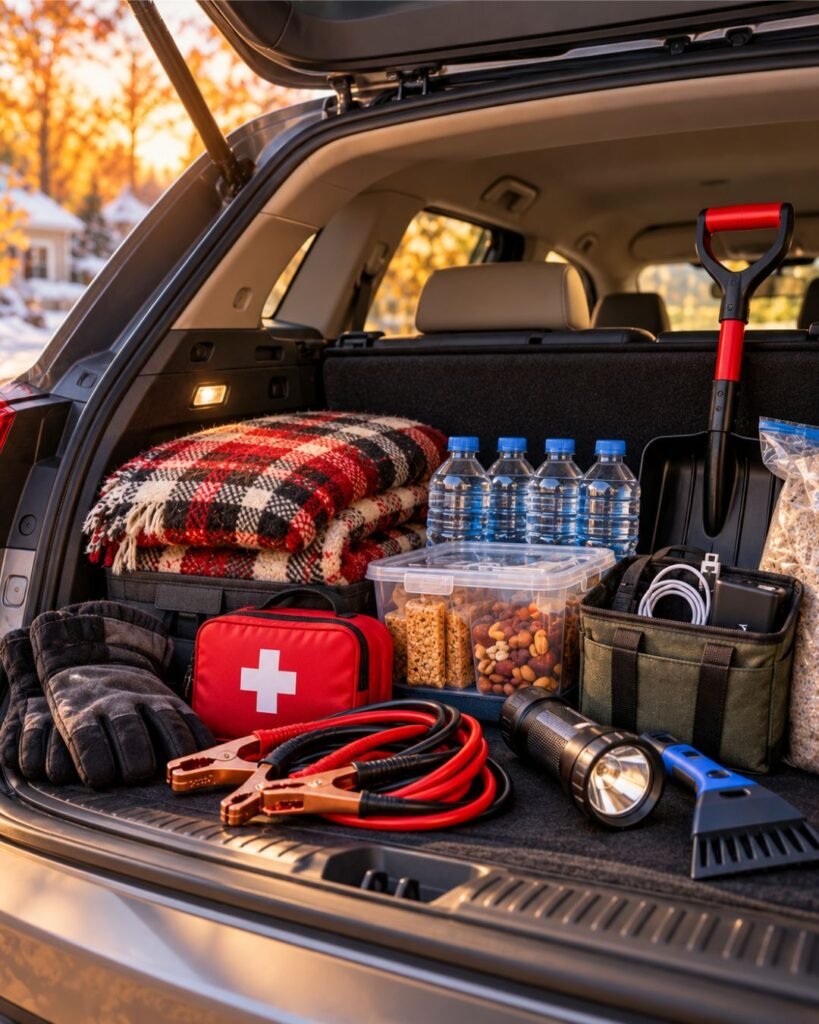
Clear out the beach chairs, the forgotten shopping bags and whatever is rolling around back there. Then put in what you will actually need if winter catches you out on the road.
A warm blanket, a flashlight with working batteries, an ice scraper, jumper cables, a phone charger, some bottled water, and a few snacks that will keep for months, the sort of things you hope you will never need and will be enormously grateful for the one night you do. Live somewhere with heavy snow? Add a small shovel, and something for grip like a bag of sand or cat litter.
It takes up very little space, and if you ever break down on a freezing night, you will be very glad you spent ten minutes on this in October.
If It All Feels Like Too Much
Ten jobs can sound like a lot, especially if you are tired, busy, or simply not a natural organizer. So here is a gentler way in.
Do one a week. Ten weeks takes you neatly from early fall to the start of winter, and no single week needs more than an hour.
Set a timer for twenty minutes and stop when it rings, even if you are not finished. A job that has an end is much easier to start.
Keep three bags beside you: keep, donate, and throw away. Decide quickly, and do not let anything go back into a fourth pile called later.
And get the donate bag out of the house the same day, into the car at least. A bag of donations that sits by the front door for a month is just more clutter with good intentions.
Most of all, do not wait for the perfect free weekend. It is not coming. Twenty minutes on a Tuesday evening counts.
Small Jobs, A Better Winter
None of these ten jobs needs a free weekend. Most take less than an hour, and you can spread them across the next few weeks.
Start with the one that matters most. Clear the space around your heaters, and test the alarms. Then pick whichever of the others bothers you most every time you walk past it.
By the time the first real cold arrives, your house will feel lighter, your winter will run more smoothly, and somebody, somewhere, will be wearing the coat you never put on.
Which of these jobs are you tackling first?