
Blink once, blink twice.
Voila! Some tiny squiggly shapes float as your vision becomes clear.
This can be experienced by everyone, regardless of their age and health status.
These weird shapes may likely appear as:
- Worms
- Cobwebs
- Dots
- Fluid-like
- Bubbles
They are no other than the eye floaters, and it doesn’t mean your vision is dirty.
Eye floaters are harmless and a part of the aging process.
Uh oh, not so fast.
Their existence can also indicate you have a vision problem that requires immediate medical attention.
The only way to determine them is to understand their nature and the reason for their occurrences.
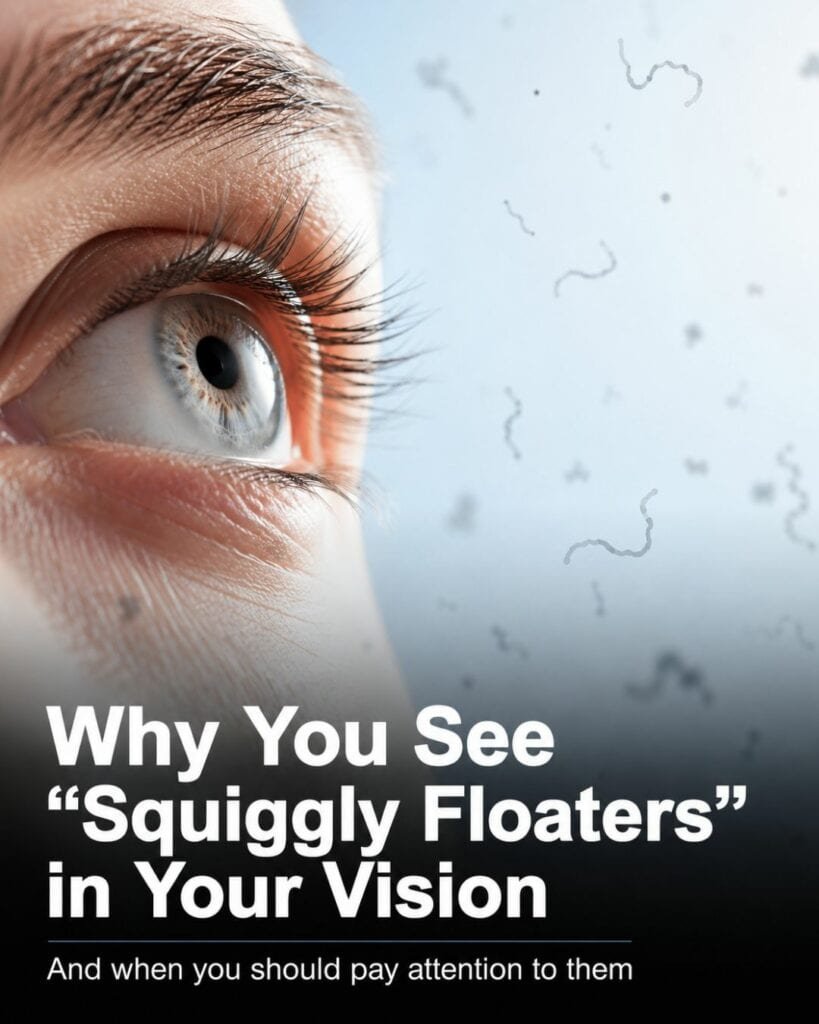
Now, let’s get to know what the experts say about eye floaters.
What are These Eye Floaters?
Eye floaters are those tiny shapes that suddenly appear in your visual field.
As your eyes move, they follow suit.
When we had it the first time, it may have appeared somewhat obstructing our focus.
Eye floaters are described by those who have them as weird shapes that can easily be mistaken for dirt in your vision.
They become too noticeable when you stare at:
- White walls
- Sun’s radiance
- Light-colored surfaces
- Bright computer screens
- Daylight skies
These weird shapes are observable on brighter backgrounds or when you are directly exposed to sunlight.
Why Do Floaters Appear?
Inside your eye is a jelly-like and clear substance known as the vitreous humor.
When you are young, this structure is firm and smooth.
As you age, this becomes less solid and more watery.
The tiny fibers that form the gel clump together, casting shadows on your retina.
Since the retina is the light-sensitive tissue at the back of your eye, they usually appear as floaters.
Those floaters appear as a result of clumping tiny fibers, and you don’t actually see some shapes.
That’s why it’s normal to feel discomfort when you visually have them.
Why They Are Common to the 50s?
The main reason for the development of eye floaters is aging.
As people reach 50, their vitreous may experience some changes.
Eventually, the vitreous will start to shrink and pull away from your retina.
This is called posterior vitreous detachment.
Although this is a part of the aging process, it may sometimes lead to retinal detachment or tears, which can exacerbate vision changes.
Eye floaters may also appear among young people in their early adolescence, but it is more on sightedness.
Whether you are in your prime or in your 50s, a doctor’s consultation can best ensure that your vision is normal.
Why Floaters Are Mostly Visible on Brighter Days?
Eye floaters are quite noticeable when you are directly exposed to sunlight.
That’s because bright light allows you to see the shadows more clearly.
Imagine the dust floating through that radiance that hits your windows.
Although the room is clearly tidy, the sunlight exposes the particles that the naked eye cannot see easily.
Just like that scenario, eye floaters are mostly observed when you are directly sighting a bright background.
Are These Dangerous?
Most of the time, eye floaters do not pose any danger.
They gradually appear and would stay harmless.
Other people have it without eye problems.
You only feel weird about it when you have it for the first time.
But your brain will eventually get over it.
Eye floaters might become a serious concern when having:
- Dark shadows
- Side vision loss
- Blurred vision
- Light flashes
- Increase in eye floaters
Most of these indications are symptoms of retinal damage that would require medical attention.
These warning signs should not be taken lightly because untreated retinal detachment or tears can lead to permanent blindness.
Never brush off these serious symptoms.
How Essential Are Your Retinas?
Your retinas are responsible for sending visual information to your brain.
Once it detaches or pulls away from the back of your eyes, your vision becomes threatened.
Visual-threatening factors may include:
- Aging
- Severe nearsightedness case
- Diabetes
- Previous eye surgery
- Retinal problem due to family history
- Eye injuries
The eye floaters are harmless, but they become a clear indication when your retina undergoes changes or problems.
Is Anxiety or Stress Connected to the Floaters?
Many people across the internet often ask whether the existence of floaters is directly linked to stress or anxiety.
However, anxiety or stress is not responsible for the existence of the eye floaters.
Instead, anxiety or stress is an outcome when you overthink about your health or your vision status.
The existence of floaters is due to the changes that happen in the retina.
While stress or anxiety indicates how your brain reacts to their existence.
Floaters in Teens and Young Adults
A while ago, we mentioned that eye floaters may also happen among teens and young adults.
Mostly, it’s due to the person’s nearsightedness.
Aside from that, other reasons are directly linked to their routine.
Other reasons for the existence of eye floaters include:
- Prolonged eye strain
- Long exposure to computer screens
- Eye inflammation
- Eye injuries
- Migraines
Spending several hours on a bright surface or screen can cause eye fatigue, which disturbs your vision.
People in this category should limit their exposure to computer screens, allowing their eyes to rest.
Do Eye Floaters Go Away?
It depends.
Eye floaters can either stay or fade over time.
When they fade, that’s because:
- The brain has already adapted
- They settle lower inside the eye
- The retina has already adjusted
Should these floaters still exist, but your brain doesn’t react much to them, they call it neuroadaptation.
That’s when your brain sees floaters as part of your visual field.
The brain tends to do that, unless the eye floaters have:
- Expanded
- Increased
- Disrupting
Eye Floaters Treatments
Don’t worry, most floaters don’t require treatment.
They can either go away on their own or stay long-term without harm.
Treatment options are available when symptoms affect your vision.
Treatment options that doctors may recommend are:
- Vitrectomy surgery
- Laser therapy
Vitrectomy surgery removes the vitreous gel and replaces it with another fluid.
However, it is reserved for serious cases where floaters become severely disruptive to their lifestyle.
That’s why eye consultations are essential to ensure your eyes are in optimal condition.
Healthy Habits for Healthy Eyes
Experts recommend that long-term vision protection is a critical act.
That’s why they advise the patients to do the following:
- Wear protective eyewear
- Discourage smoking
- Limit screen time
- Control blood pressure and sugar level
- Schedule eye exams regularly
- Get enough rest
Keep your eyes protected while they are in their healthy state.
Protect Your Vision, Keep It A Mission
Eye floaters may look weird and uncomfortable at first, but they speak a lot about body aging.
Despite that, aging remains the primary reason for its existence, but that doesn’t mean we have to take it lightly.
Sudden changes should never be ignored.
When it comes to your vision, act as fast as possible.
Protect it while it’s still healthy.
Keep it your mission to be informed and concerned.
Your eyes are the window of your soul. Provide it with the right care and regular checkups.