
Can you imagine yourself having brain cancer, or what it feels like?
We can’t simply assume that it can feel like migraine, but way worse than that.
Not all headaches have the same intensity.
When we’re having headaches, the pain feels as if our head is carrying heavy objects that affect how we move.
Most of us will try to do one or more of the following:
- Reduce what stresses us
- Sleep more
- Drink a lot of water
- Stay in a cold environment
- Be away from social media temporarily
We do them because that’s our way to feel well again.
However, there’s a rare case that made it to the headlines.
The world became invested in the story of one man who experienced symptoms that were more painful and disturbing than a headache.
Neurologists perform a brain scan because they suspect the person has cancer.
The result shocked them.
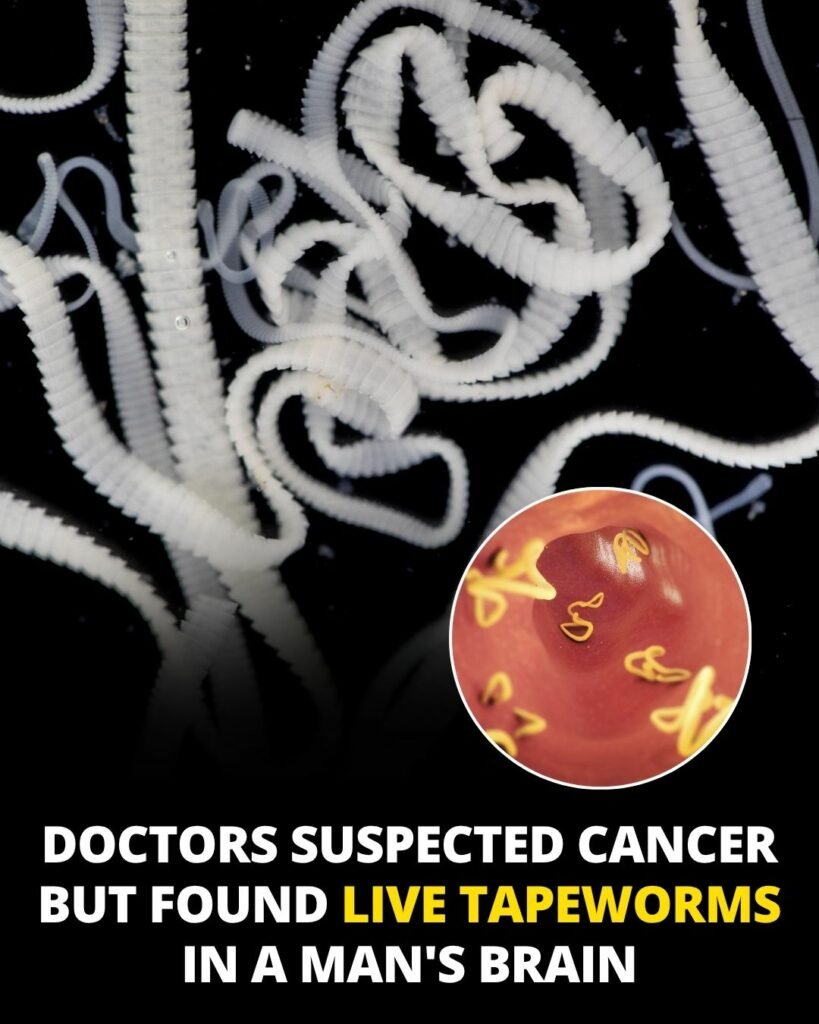
It wasn’t cancer but a rare condition where the brain is infested with live tapeworm larvae.
This case became a point of interest to many people.
The story will remind us of the essence of food safety, proper diagnosis, medical care, and personal hygiene.
As you read further, you’ll find out what happened to the man.
The Shocking Diagnosis
The man sought medical help because he was experiencing brain symptoms.
Imaging scans revealed that his brain has abnormal lesions that resemble those seen in brain tumors.
Due to that result, the doctors considered the possibility that he had brain cancer.
But further tests proved that brain cancer remains a possibility.
Further examinations and tests revealed that those lesions were not cancerous.
However, they found that the brain is infested with living tapeworm larvae that have made their way to the brain.
Such a diagnosis prompted the medical team to revise the patient’s original treatment plan.
The doctors have shifted their focus to treating the parasitic infection.
This remains a great example of why doctors often run further tests to ensure that patients are accurately diagnosed.
A correct diagnosis can help medical experts to provide the right treatment for the problem.
What Is Neurocysticercosis?
Neurocysticercosis is the parasitic infection caused by the larval form of the pork tapeworm, Taenia solium.
This condition is alarming, but patients must understand how they are infected.
The common misconception about this condition is that eating pork causes these tapeworms to invade your brain.
But this is not how it usually develops.
A person can be infected with neurocysticercosis by accidentally or unknowingly ingesting microscopic tapeworm eggs from contaminated water, food, or hands.
When these tapeworms go inside the body, the eggs will hatch there into larvae and travel to different tissues through the bloodstream.
Because of their size, it’s possible that they can reach through your brain.
When these tapeworms reach the brain, they will form cysts quietly, which will remain unnoticed for months to years.
Then they appear at a surprising moment, and the symptoms will slowly appear in your brain.
The Challenges with Neurocysticercosis
The symptoms associated with neurocysticercosis remain the biggest challenges to the infected patient.
This is because the symptoms can resemble other neurological conditions.
Some patients may experience any of the following symptoms:
- Balancing Problems
- Dizziness
- Memory challenges
- Nausea
- Persistent headaches
- Seizure
- Vision changes
- Vomiting
These symptoms may overlap with other neurological conditions like stroke, brain infections, epilepsy, brain tumors, and many others.
Doctors don’t rely on a singular medical test for diagnosis.
That’s why they’re careful in evaluating the medical condition of the patient.
The Source of Infection
It’s essential to understand how the patients are infected.
This is a way to reduce their fear of the condition or the treatment option.
Neurocysticercosis develops when a person swallows tapeworm eggs without knowing.
It’s not because of consuming pork but of eating an undercooked cut.
Aside from that, the tapeworm eggs can be sourced from:
- Contaminated meals
- Unsafe drinking water
- Unhygienic environment (especially the kitchen)
- Not washing hands after using the washroom
The infected patients don’t get infected right away.
But these tapeworm eggs will thrive in the environment of your internal body.
That’s why some managed to stay in your system for so long.
The Limitations of the Brain Scanner
It’s undeniable that Computed Tomography (CT) and Magnetic Resonance Imaging (MRI) scans took the healthcare industry to a new level.
However, their capacity has limitations.
One of their limitations is that they cannot distinguish the brain lesions in different medical conditions.
Those medical conditions with similar brain lesions are:
- Abscesses
- Inflammatory conditions
- Parasitic infections
- Tumors
During the initial stages of medical evaluation, their brain lesions may all appear similar.
Because this can cause confusion and inconclusive results, they will use the combined diagnostic tools, such as:
- Brain imaging
- Blood tests
- Medical history
- Neurological test
- Tissue analysis (when it’s necessary)
Although a brain scanner is helpful, medical doctors are careful in giving conclusions based on the results.
The Considerations for Treatment
Before the condition is treated, numerous factors that doctors may consider.
Some of the essential factors they will look for are:
- Symptoms experienced
- Location of the symptoms
- Degree of inflammation
- Overall health status
- Number of cysts
When the doctors have entirely consulted your condition, they may recommend one or more treatments to the patient.
These are:
- Anti-inflammatory medicines
- Antiparasitic medications
- Anti-seizure medications
- Surgery (when it’s needed)
Targeting parasites may cause a temporary increase in inflammation.
The treatment and progress will be strictly administered and monitored by your health professional.
Daily Habits to Prevent Infection
Despite that, having such a condition is rare; prevention remains an essential step.
Here are some daily habits to prevent getting infected:
- Drink safe water
- Cook the pork properly
- Maintain good hygiene
- Practice sanitary food preparation
- Wash your hands regularly
- Don’t consume meals from an unsure environment.
Aside from preventing tapeworm eggs, these habits will keep you healthy and hygienic.
Why This Story Matters?
This story attracted much attention from people because the result was unusual.
Aside from the surprising findings, one message that remains clear to many is the essence of personal hygiene and sanitary food preparation.
From a medical perspective, the story suggests that further medical tests should be conducted to ensure that the patient receives the right treatment.
Certain conditions or diseases may develop through awkward or unnatural means.
That’s why further tests are determinants of knowing the whole nature of the problem.
Through it, we learn how neglecting critical aspects can harm our overall wellness.
Hygiene, Health, and Complicated Diagnosis
This shocking case, where a man was suspected of having brain cancer, imparts a lesson about the reality of a complicated diagnosis.
Eventually, it was found out that the man had neurocysticercosis, which is a health concern in environments with unsafe food preparation and sanitation levels.
The nature of this condition is not common in developed countries, which makes it surprising to the public.
This entire story reminds us how personal hygiene and health are critical aspects that deserve much attention from us.
Because of an unsafe environment, the man got infected with a condition that affects his entire brain.
There is no shame in looking for early detection or a check-up.
The challenge is in the environment that contributed to the infection.
Doesn’t mean it’s uncommon for developed countries; that’s an excuse for not taking care of your health and hygiene.
In short, we don’t have to be complacent about everything.
Remember that health, hygiene, and habits shape a medical condition.