
You lock your doors at night. The stove gets one last check before bed. There’s a smoke detector somewhere in the hallway, and the batteries are probably fine. Probably.
And you go to sleep assuming your home is safe.
I used to think the same thing. Then I started looking into fire statistics for a piece I was writing, and what I found genuinely changed how I look at the stuff plugged into my walls.
The U.S. Fire Administration says electrical malfunctions caused about 23,700 residential fires in 2023. Not candles. Not someone forgetting a pot on the stove. Electrical malfunctions. Things plugged into outlets. Things humming in the background while families slept.
Those fires killed 305 people and injured 800 more. And here’s the part that got me: that number hasn’t budged in a decade. It’s been between 23,000 and 26,000 every year for ten straight years. We keep buying more devices, plugging in more chargers, running more appliances, and the fires keep happening at the same rate.
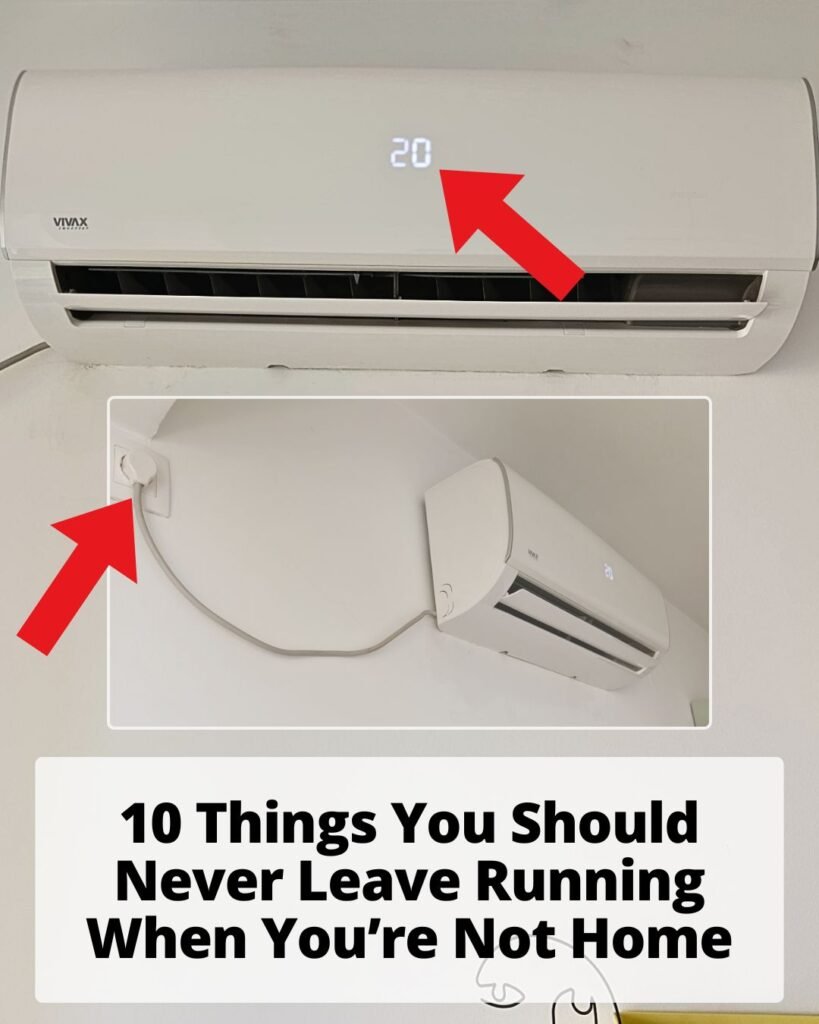
So I went through the data and pulled out the ten household items that firefighters know are dangerous, but most of us never think twice about.
1. Your Air Conditioner
I know. This was the one that caught me off guard too.
The National Fire Protection Association tracks fires caused by fans and air conditioning units. In fact, the numbers aren’t small. About 1,400 home fires per year. In bedrooms alone, it’s roughly 1,023 fires annually, which works out to about 5 percent of all bedroom fires coming from a fan or AC unit.
Why This Happens
Think about how you use your AC. You turn it on in June, and it runs for hours every day until September. The motor works constantly. Dust collects inside the unit where you can’t see it. As a result, wiring that was fine three summers ago develops small faults from the vibration and heat cycling.
Window units worry me the most. They sit in wooden frames, pull serious power, and people often have them plugged into whatever outlet is closest, sometimes through an extension cord. If the circuit behind that wall can’t handle the draw, the wiring heats up. Slowly. Invisibly. Until one night it doesn’t just heat up. It ignites.
If your AC is over ten years old, get the wiring checked. And for window units, plug them directly into a wall outlet. Always.
2. Extension Cords
Here’s something I didn’t know until I read the USFA guidance: they specifically warn against plugging major appliances into extension cords. Not as a suggestion. As a fire safety warning.
However, look around your house right now. I’d bet there’s at least one extension cord that’s been in the same spot for years. Behind the TV stand. Under the rug by the couch. Snaked along the baseboard into the bedroom.
The Problem Nobody Thinks About
Manufacturers build extension cords for temporary use. A weekend project. A holiday decoration. Not as a permanent part of your home’s electrical system.
When you run heavy loads through them month after month, they warm up. Tuck one under a rug where the heat can’t escape, and you’ve created a slow-building hazard that sits there for years without anyone noticing. The insulation cracks as it ages. The wires inside fray at the bend points. And once the internal connection degrades enough, the cord itself becomes the ignition source.
I walked through my own house after reading this and found three extension cords I’d completely forgotten about. One had been behind a bookshelf for at least four years. The plastic was yellowed, and the plug was warm to the touch.
An electrician can add outlets to a room for a couple hundred dollars. That’s cheaper than what a fire costs.
3. Your Clothes Dryer
This one most people have at least heard about, but almost nobody actually does anything about it. I’m guilty of this too.
You clean the lint trap after every load. Good. But lint also collects in the vent hose behind the dryer and in the ductwork that runs to the outside of your house. Over time, that buildup chokes the airflow, the dryer runs hotter to compensate, and the lint sitting in that hot, restricted space can catch fire.
Signs You Shouldn’t Ignore
Your clothes need two cycles to dry. The top of the dryer feels hot while it’s running. There’s a faint burning smell.
In other words, any one of those means your vent system needs cleaning. Pull the dryer out from the wall, disconnect the hose, and clean everything you can reach. If the duct goes through the wall or ceiling, hire someone. It usually costs between $100 and $150.
And here’s a detail I only learned recently: those flexible plastic or foil dryer hoses? They’re a fire hazard on their own. They sag, they trap lint in the folds, and they crush behind the dryer. Swap yours for a rigid metal duct. Twenty dollars. Thirty minutes.
4. Battery Chargers and Lithium-Ion Batteries
Count the chargers in your house. Phone charger on the nightstand. Laptop on the kitchen counter. Tablet charging on the couch. Maybe an e-bike in the garage. A power tool battery in the basement.
Firefighters across the country have seen a sharp rise in fires caused by lithium-ion batteries, and it’s showing up in the USFA’s electrical malfunction data.
What Actually Goes Wrong
Cheap third-party chargers are the biggest culprit. They don’t regulate power properly, so they overheat and short out. If you bought a $6 replacement charger off a random website, you probably got what you paid for.
But even good chargers cause problems when you use them wrong. Charging a phone on your bed means the battery is surrounded by fabric that traps heat. If something goes wrong with the battery while it’s buried in a pillow, the pillow can catch fire before you even notice the phone is hot.
E-bike and scooter batteries scare me the most. They store much more energy than a phone battery. When they fail, the fire is fast and intense. New York City has had enough of these fires that they’ve issued specific warnings about indoor charging.
Charge on a hard surface. Replace damaged cables instead of wiggling them into position. If any battery swells, smells off, or runs hot when it shouldn’t, get rid of it properly.
5. Your Television and Entertainment Setup
The NFPA lumps TVs in with all electronic and entertainment equipment, so the exact number for televisions alone isn’t available. But the broader category accounts for roughly 358 fires per year in living rooms and about 906 in bedrooms.
How a TV Becomes a Fire Risk
Modern flat screens are safer than the old tube TVs your parents had, but they still produce heat. Stick a TV inside a tight entertainment center with a gaming console, a cable box, a sound bar, and a streaming device, all plugged into the same power strip, and you’ve got a lot of heat concentrated in a small space with no ventilation.
Besides that, dust settles on the circuit boards inside these devices. It builds up over months and years. Combined with the heat from five gadgets in a confined area, it raises the risk of an electrical short.
Give your electronics space. Keep the vents clear. If anything starts buzzing, smelling weird, or running hotter than it used to, that’s your cue to address it.
6. Lamps and Light Fixtures
This category is bigger than most people realize. The NFPA says electrical distribution, lighting, and power-transfer equipment cause 30 percent of bedroom fires and 17 percent of living room fires. That includes wiring, outlets, electrical panels, and yes, the lamp on your nightstand.
Where People Go Wrong
The most common mistake is using a bulb with a higher wattage than the fixture is rated for. The socket overheats. The insulation around the wiring melts. And whatever’s sitting close to that lamp – a book, a curtain, a tissue box – becomes fuel.
I’ve also seen people drape scarves or thin fabric over lampshades to soften the light. It looks nice. It’s also putting flammable material right next to a heat source.
Check the wattage rating on your fixtures. It’s usually printed inside the socket. Replace any bulb that exceeds it. And inspect your lamp cords, especially older ones. If the insulation is cracked or the cord feels stiff and brittle, replace the lamp.
7. Space Heaters
The USFA counted 27,900 heating-equipment fires in 2023. Space heaters are a big part of that number, and the reason is simple: they produce heat, and people put them next to things that burn.
Curtains. Bedding. Clothes piled on a chair. A stack of papers on a desk. A rug.
The Real Danger Is Overnight Use
People put a space heater next to their bed in winter and fall asleep with it running. For instance, blankets shift during the night. A corner of the comforter touches the heater. Within minutes, it catches fire.
Three feet of clearance from anything flammable. That’s what fire safety experts recommend. And never leave one running while you sleep. If you use one regularly, spend a little more on a model with auto-shutoff that trips if the unit tips over or overheats. The cheap ones without that feature are the ones that cause the worst fires.
One more thing: plug it into the wall. Not an extension cord. Not a power strip. The wall.
8. Your Washing Machine
Nobody thinks of their washing machine as a fire risk. But it has a motor, wiring, and electrical connections that wear out over time like anything else.
The water pump motor can overheat. Wiring behind the machine can fray and spark. If the machine vibrates enough over the years to loosen a connection, you’ve got exposed wires near water and other surfaces.
Similarly, rubber supply hoses crack and leak as they age. If that water reaches the outlet or wiring behind the washer, you’ve got a short circuit.
Once a year, pull the machine out and look behind it. Replace rubber hoses with braided stainless steel ones; they last longer and don’t crack. If the machine makes a new noise or you smell something burning during a cycle, stop using it and call someone.
9. Your Refrigerator
This one is easy to forget because a fridge just runs. All day, every day, all year. The motor and compressor never stop working.
The Part You Never See
Behind or underneath your fridge, there are condenser coils covered in dust. That dust forces the compressor to run harder. More effort means more heat. More heat around old wiring means more risk.
Because the back of the fridge sits against the wall with almost no airflow, all that heat just sits there. Consequently, in older fridges with aging electrical components, it’s a slow-building problem that nobody notices because nobody looks back there.
Pull the fridge out twice a year and vacuum the coils. It takes ten minutes. If your fridge is more than 15 years old, have someone inspect the wiring.
And check what else is plugged into that outlet. A fridge should have its own dedicated outlet. If yours shares with a toaster or a microwave through a splitter, fix that.
10. Overloaded Power Strips and Outlets
Most homes were built with fewer outlets than modern life demands. So people stack power strips, plug adapters into adapters, and run six devices off a circuit designed to handle two.
Why That’s Risky
Every circuit in your home has a maximum load. Exceed it, and the wiring heats up. That’s what circuit breakers are for. But in older homes, the panel might not trip when it should. Over time, the breakers wear out, and connections get loose. As a result, the safety net you’re counting on might not actually catch you.
Power strips give you more plugs, not more capacity. Instead, daisy-chaining one strip into another doubles the load on a single outlet. The outlet doesn’t care how many strips you’ve connected. It still has the same capacity it always did.
Here’s a quick test: feel your power strips. If any of them are warm, they’re overloaded. Unplug something. If you notice flickering lights, buzzing from an outlet, or breakers tripping more than once, call an electrician. Those are warning signs that the system is struggling.
What You Can Do This Weekend
Walk through your house room by room. Look at what’s plugged in, how long it’s been there, and whether the cords are in good shape. Touch the back of your TV, your dryer, and your fridge. If any of them are hot, that’s worth investigating.
If your home is more than 30 years old and the wiring hasn’t been updated, an electrician can do a full inspection. Outdated panels, aluminum wiring, ungrounded outlets. Most homeowners have no idea whether their house has these issues, and any one of them increases fire risk.
After all, most of these fires are preventable. The items on this list aren’t obscure or unusual. They’re in every home. The difference is knowing which ones to watch and taking an hour to check on them.
That’s it. One walk-through, a few things unplugged or replaced, and your home is meaningfully safer than it was yesterday.