
Imagine a cancer treatment with no incision, no needle, no radiation, and no chemotherapy. You lie on a table, a machine points sound at your liver, and about an hour later you go home.
That is not a description of the future. It is happening right now, in more than a hundred American hospitals, and it has a name. Histotripsy.
The FDA first approved it for liver tumors back in October 2023. I am writing about it now, almost three years later, for a specific reason. Plenty of medical breakthroughs get a big headline and then quietly disappear because they do not work outside the laboratory. This one did not disappear. It spread. Doctors have used it on real patients in real numbers. Now there’s finally enough data to talk about it honestly.
So, let’s go through what it is, what it can do, what it cannot do, and what is coming next.
What Histotripsy Actually Is
The name comes from Greek. Histo means soft tissue, and tripsy means to break down. So the word literally describes breaking down tissue, which is exactly what happens.
Researchers at the University of Michigan developed the technology. A company called HistoSonics now builds the machine that delivers it, the Edison system.
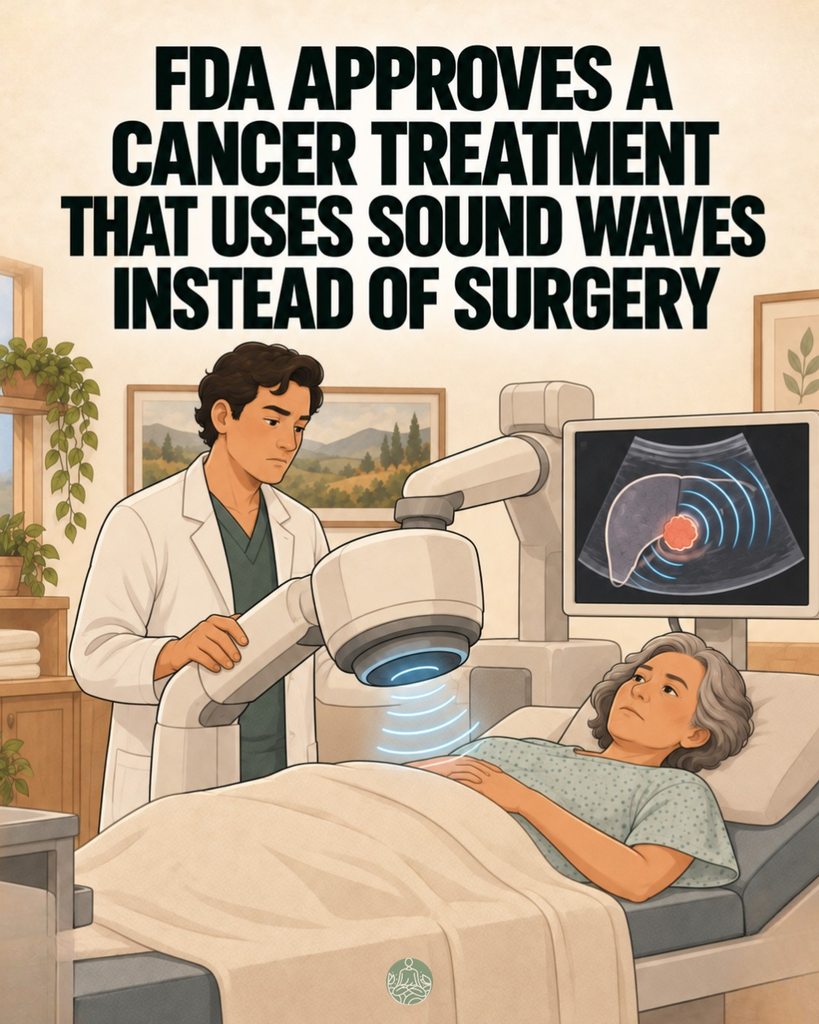
Here is how it works. The machine sends focused ultrasound waves into the body. It concentrates all that energy on one small spot inside the tumor. There, the pressure changes so violently that microscopic bubbles form and collapse. The force of those bubbles bursting tears the tumor apart at a cellular level.
The machine does not burn the tumor. It does not freeze it. It breaks the tumor mechanically into liquid. Your immune system then carries the debris away as waste over the following weeks.
This is the part I find most remarkable. Ultrasound is the same harmless technology doctors use to look at babies in the womb. Focus enough of it on one point, and it destroys a tumor. The tissue a few millimetres away stays completely untouched.
The machine also carries its own ultrasound imaging. So the doctor watches the bubble cloud on a screen in real time, and sees the tumor break down as it happens (more from the University of Michigan here).
What The Treatment Is Actually Like
This is what most articles skip, and it is what patients actually want to know.
Doctors perform histotripsy as an outpatient procedure. You arrive in the morning, and you go home the same day.
You go under general anaesthesia. Not because the procedure hurts, but because you have to lie completely still for the targeting to stay accurate. A doctor at Hackensack Meridian in New Jersey joked that the most invasive part is the anaesthetist putting in the IV. That is not far from the truth.
The treatment itself takes under an hour. Most of your time in the hospital is preparation and waking up afterwards.
There is no wound, because nothing went in. No stitches, no drain, no scar. Compare that with liver surgery. Recovery there takes weeks, and the incision itself brings a real risk of bleeding and infection.
One more practical detail that matters enormously. Many liver treatments require patients to pause their chemotherapy, and pausing chemo gives the disease a window to progress. With histotripsy, you generally do not need that pause. A patient can treat a tumor without interrupting the rest of their care.
Why Liver Tumors Are So Difficult To Treat
To understand why this technology matters, it helps to know why the liver is such a hard organ to work on in the first place.
The liver is the most common place in the body for cancer to spread to. Tumors that start in the colon, the breast, the pancreas, or the stomach very often end up there. The blood supply carries them. So most people getting treatment for liver tumors did not start with liver cancer at all. That is one reason the rise in colon cancer among people under 50 matters far beyond the colon itself.
Then there is the problem of quantity. Liver tumors frequently arrive in groups rather than one at a time. And a surgeon cannot keep removing pieces of liver indefinitely.
Many liver cancer patients also have cirrhosis or another liver disease. That makes their remaining liver tissue both damaged and precious. Removing a chunk of it may not be survivable even when the tumor itself is operable.
And the liver is dense with major blood vessels and bile ducts. A tumor sitting against one of them can be too dangerous to cut out and too awkward to burn. The blood flowing past carries the heat away.
Histotripsy fills exactly that gap. If you want a sense of how your own liver is doing, start with the enzyme numbers on a standard blood panel. I have covered how to read your blood test results.
Why It Is Different From Surgery, Radiation And Chemotherapy
Every existing option for a liver tumor comes with a cost to the rest of the body.
Surgery means an incision, blood loss, anaesthesia for hours and a long recovery. Some patients are simply too frail or too sick for a surgeon to operate on at all.
Radiation travels through healthy tissue on its way to the tumor and damages what it passes through. Chemotherapy circulates everywhere, which is why it brings hair loss, nausea, and exhaustion.
Thermal ablation, which burns or freezes tumors through a needle, is closer to histotripsy in spirit. But it still requires a needle through the skin and into the liver. Heat also spreads unpredictably near large blood vessels, which carry it away and can leave part of a tumor alive.
Histotripsy is non-thermal, which is the key word. No heat means no heat sink problem. So tumors sitting close to major blood vessels or bile ducts become treatable when they might not have been before.
Also, and I do not want to oversell this, the targeting is genuinely precise. The machine confines the destructive zone to a small focal point that the doctor watches on screen. Radiation cannot do that. It affects everything in its path.
The Immune System Surprise
Now for the part of this story that could turn out to matter more than everything above.
In animal studies at Michigan, researchers used histotripsy to destroy only 50 to 75 percent of a liver tumor in rats. Then they simply stopped. The rats’ own immune systems cleared away the rest. More than 80 percent showed no recurrence and no spread.
A follow-up study suggested why. Cancer cells hide behind their outer wall. That wall conceals the proteins that would otherwise flag them to the immune system as a threat. Surgery removes those markers along with the tumor. Radiation and chemotherapy destroy them. Histotripsy breaks the cell wall apart and leaves those markers on show. It essentially hands the immune system a wanted poster for that specific cancer.
If that holds up in humans, it changes what this technology is. It stops being a way to destroy one tumor in one place. It becomes something that teaches the body to hunt the same cancer elsewhere.
I want to be very clear about one thing, though. These were rats. That is not a small caveat. Cancer research is full of treatments that cured rodents beautifully and did nothing at all for people. Researchers are now looking at combining histotripsy with immunotherapy drugs, and that work is still in progress. It is worth being excited about, and it is not yet a promise. I have written before about how mRNA technology may help cancer patients. This sits in the same category: genuinely promising, not yet proven.
How Far It Has Spread Since Approval
Three years on, this is no longer a single machine in one university hospital.
By mid-2026, over 110 hospitals across the United States offered histotripsy for liver tumors. The list runs from major centers like Johns Hopkins down to regional hospitals in Alabama, Kansas, and West Virginia. Johns Hopkins keeps its system inside the radiology department, where interventional radiologists already work with live imaging every day.
It has moved beyond the United States as well. Hong Kong became the first place in Asia to adopt it, and hospitals in several other countries have followed.
The scale of the need explains the speed. The American Cancer Society expects around 42,000 new liver or bile duct cancer diagnoses in the United States in 2026. That number leaves out the far larger group whose cancer started somewhere else and spread to the liver.
This is also a good moment to say something obvious that people forget. The liver does an enormous amount of quiet work and rarely complains until something is badly wrong. If you want to look after yours, start with the silent daily habits that damage your organs.
What Is Coming Next
Liver was only the beginning, and the pipeline is moving fast.
In May 2026, HistoSonics submitted a request to the FDA to expand the Edison system to kidney tumors. A trial called HOPE4KIDNEY, which enrolled 67 patients, backs the submission. Around 680,000 people in the United States live with kidney tumors, and analysts expected roughly 80,000 new cases in 2026.
Kidney matters for a particular reason. The standard treatments, partial removal of the kidney or thermal ablation, both cost you working kidney tissue. A non-invasive option that spares that tissue would be a serious step forward. It matters most for people who need every bit of kidney function they have. If you are unsure how yours is doing, these are the signs that your kidneys are struggling.
Pancreatic tumors are next in line, with a submission planned for the end of summer 2026. Pancreatic cancer has one of the worst survival rates of any cancer. Doctors usually find it late, and it is hard to operate on. So anything new there deserves attention.
Beyond that, the company has said it is working toward thyroid, breast, uterine fibroids, bladder, and prostate applications. Uterine fibroids stand out to me. Fibroids are extremely common in women over 40, and the current options are limited and often unpleasant.
Everything past the liver is still investigational. The FDA has not approved any of it yet.
The Honest Limitations
Now the part I would want to read if this were my family, and the part press releases leave out.
In August 2026, researchers published a study in JAMA Network Open. They reviewed 972 adults who had histotripsy between 2023 and 2026. The reassuring findings came first. Most of those procedures happened as outpatient visits, with low rates of laboratory toxicity and complications.
But the researchers also noted that several practice patterns merit attention. They raised real questions about which patients doctors were choosing for it. When a technology spreads to a hundred hospitals in three years, adoption can outrun the evidence for who actually benefits.
There are practical limits too. Histotripsy needs a clear ultrasound window to the tumor. So ribs, bowel gas, or lung tissue in the way can put a tumor out of reach. Very large tumors and tumors scattered in high numbers are not good candidates. Body size can interfere with reaching a target.
And this treats what the doctor can see and target. It is a local therapy, not a cure for cancer that has already spread widely. The immune effects that might change that remain unproven in humans.
Anyone who tells you this is a cure for cancer is either confused or selling something.
Who Might Be A Candidate
I am not a doctor, and this article is not medical advice. But if you or someone close to you has a liver tumor, here is what to know before that conversation.
Questions Worth Asking
Ask whether histotripsy is available at your hospital or at a center within reasonable travel distance. With over a hundred sites, there may be one closer than you expect.
Ask whether your specific tumor is reachable. Location, size, and number all matter, and only imaging can answer it.
Ask how it would fit with your other treatment rather than replace it. Some patients get one lesion treated with histotripsy while a surgeon or ablation handles the rest. And you usually do not need to pause chemotherapy, which is a genuine advantage.
Ask about insurance coverage, because a newer procedure does not always have straightforward reimbursement.
And ask what happens if it does not fully work. Knowing the backup plan before you start is always the right move, whatever the treatment.
The Bottom Line
Three years ago this was a headline. Today it sits in more than a hundred hospitals, with nearly a thousand patients behind it and published data to match.
It is not a cure for cancer. It does not work for every tumor or every patient. The questions about who should get it are real and unresolved.
But the direction of travel is unmistakable. Cancer treatment has spent a century getting more aggressive. This is one of the first serious moves in the opposite direction. Destroy the tumor, leave everything else alone, and send the patient home the same afternoon.
Sound waves. No blade, no burn, no radiation. Whatever else happens, that is a genuinely remarkable thing to be able to write.
Had you heard about histotripsy before reading this? Let me know in the comments below. And if someone in your family is dealing with liver cancer, share this with them.
Sources
University of Michigan News, “Tumor-destroying sound waves receive FDA approval for liver treatment in humans,” 9 October 2023.
Sears et al., JAMA Network Open, research letter on national histotripsy practice patterns and short-term outcomes, August 2026. Cohort of 972 adults treated 2023-2026.
HistoSonics, “HistoSonics Moves to Advance Additional Histotripsy Applications Announcing FDA Submission for Kidney Tumors,” 11 May 2026. Supported by the #HOPE4KIDNEY pivotal trial.
Johns Hopkins Medicine, Radiology Update, Winter 2025-2026.
That is not a description of the future. It is happening right now, in more than a hundred American hospitals, and it has a name. Histotripsy.
The FDA first approved it for liver tumors back in October 2023. I am writing about it now, almost three years later, for a specific reason. Plenty of medical breakthroughs get a big headline and then quietly disappear because they do not work outside the laboratory. This one did not disappear. It spread; it has been used on real patients in real numbers, and there is finally enough data to talk about honestly.
So, let’s go through what it is, what it can do, what it cannot do, and what is coming next.
What Histotripsy Actually Is
The name comes from Greek. Histo means soft tissue, and tripsy means to break down. So the word literally describes breaking down tissue, which is exactly what happens.
The technology was developed at the University of Michigan, and the machine that delivers it is called the Edison system, built by a company called HistoSonics.
Here is how it works. The machine sends highly focused ultrasound waves into the body and concentrates all that energy on one small spot inside the tumor. At that spot, the pressure changes so violently that microscopic bubbles form and then collapse. The force of those bubbles forming and bursting tears the tumor tissue apart at a cellular level.
The tumor is not burned. It is not frozen. It is mechanically broken into liquid, and then your immune system carries the debris away as waste over the following weeks.
This is the part I find most remarkable. Ultrasound is the same harmless technology used to look at babies in the womb. Focus enough of it on one point, and it becomes powerful enough to destroy a tumor, and the tissue a few millimetres away is left completely untouched.
The machine also has ultrasound imaging built in, so the doctor watches the bubble cloud on a screen in real time and sees the tumor breaking down while it happens (more from the University of Michigan here).
What The Treatment Is Actually Like
This is what most articles skip, and it is what patients actually want to know.
Histotripsy is done as an outpatient procedure. You arrive in the morning, and you go home the same day.
You are put under general anaesthesia, not because the procedure hurts, but because you have to lie completely still for the targeting to stay accurate. A doctor at Hackensack Meridian in New Jersey joked that the most invasive part is the anaesthetist putting in the IV, and that is not far from the truth.
The treatment itself takes under an hour. Most of your time in the hospital is preparation and waking up afterwards.
There is no wound, because nothing went in. No stitches, no drain, no scar. Compare that with liver surgery, where recovery is measured in weeks, and the incision itself brings a real risk of bleeding and infection.
One more practical detail that matters enormously. Many liver treatments require patients to pause their chemotherapy, and pausing chemo gives the disease a window to progress. With histotripsy, that pause is generally not needed, so a patient can have a tumor treated without interrupting the rest of their care.
Why Liver Tumors Are So Difficult To Treat
To understand why this technology matters, it helps to know why the liver is such a hard organ to work on in the first place.
The liver is the most common place in the body for cancer to spread to. Tumors that start in the colon, the breast, the pancreas, or the stomach very often end up there, carried by the blood supply. So the majority of people being treated for liver tumors did not start with liver cancer at all. That is one reason the rise in colon cancer among people under 50 matters far beyond the colon itself.
Then there is the problem of quantity. Liver tumors frequently arrive in groups rather than one at a time, and a surgeon cannot keep removing pieces of liver indefinitely.
Many liver cancer patients also have cirrhosis or another underlying liver disease, which means their remaining liver tissue is already damaged and precious. Removing a chunk of it may not be survivable even when the tumor itself is operable.
And the liver is dense with major blood vessels and bile ducts. A tumor sitting against one of them can be too dangerous to cut out and too awkward to burn, because the blood flowing past carries the heat away.
This is exactly the gap histotripsy was built for. If you want a sense of how your own liver is doing, the enzyme numbers on a standard blood panel are the first place to look, and I have covered how to read your blood test results.
Why It Is Different From Surgery, Radiation And Chemotherapy
Every existing option for a liver tumor comes with a cost to the rest of the body.
Surgery means an incision, blood loss, anaesthesia for hours and a long recovery, and some patients are simply too frail or too sick to be operated on at all.
Radiation travels through healthy tissue on its way to the tumor and damages what it passes through. Chemotherapy circulates everywhere, which is why it brings hair loss, nausea, and exhaustion.
Thermal ablation, which burns or freezes tumors through a needle, is closer to histotripsy in spirit. But it still requires a needle through the skin and into the liver, and heat spreads unpredictably near large blood vessels, which carry the heat away and can leave part of a tumor untreated.
Histotripsy is non-thermal, which is the key word. No heat means no heat sink problem, so tumors sitting close to major blood vessels or bile ducts become treatable when they might not have been before.
Also, and I do not want to oversell this, the targeting is genuinely precise. The destructive zone is confined to a small focal point that the doctor can see on screen. Radiation cannot do that. It affects everything in its path.
The Immune System Surprise
Now for the part of this story that could turn out to matter more than everything above.
In animal studies at Michigan, researchers destroyed only 50 to 75 percent of a liver tumor in rats with histotripsy and then simply stopped. The rats’ own immune systems cleared away the rest. More than 80 percent showed no recurrence and no spread.
A follow-up study suggested why. Cancer cells hide behind their outer wall, which conceals the proteins that would otherwise flag them to the immune system as a threat. Surgery removes those markers along with the tumor. Radiation and chemotherapy destroy them. Histotripsy breaks the cell wall apart and leaves the markers exposed, essentially handing the immune system a wanted poster for that specific cancer.
If that holds up in humans, it changes what this technology is. It stops being a way to destroy one tumor in one place and becomes something that teaches the body to hunt the same cancer elsewhere.
I want to be very clear about one thing, though. These were rats. That is not a small caveat. Cancer research is full of treatments that cured rodents beautifully and did nothing at all for people. Researchers are now looking at combining histotripsy with immunotherapy drugs, and that work is still in progress. It is worth being excited about, and it is not yet a promise. I have written before about how mRNA technology may help cancer patients, and this sits in the same category of genuinely promising but not yet proven.
How Far It Has Spread Since Approval
Three years on, this is no longer a single machine in one university hospital.
By mid-2026, over 110 hospitals across the United States were offering histotripsy for liver tumors, from major centers like Johns Hopkins down to regional hospitals in Alabama, Kansas and West Virginia. Johns Hopkins keeps its system inside the radiology department, where interventional radiologists already work with live imaging every day.
It has moved beyond the United States as well. Hong Kong became the first place in Asia to adopt it, and hospitals in several other countries have followed.
The scale of the need explains the speed. The American Cancer Society expects around 42,000 people in the United States to be diagnosed with liver or bile duct cancer in 2026, and that number does not include the far larger group whose cancer started somewhere else and spread to the liver.
This is also a good moment to say something obvious that people forget. The liver does an enormous amount of quiet work and rarely complains until something is badly wrong. If you want to look after yours, the most useful place to start is with the silent daily habits that damage your organs.
What Is Coming Next
Liver was only the beginning, and the pipeline is moving fast.
In May 2026, HistoSonics submitted a request to the FDA to expand the Edison system to kidney tumors. The submission is backed by a trial called HOPE4KIDNEY, which enrolled 67 patients. Around 680,000 people in the United States are living with kidney tumors, and roughly 80,000 new cases were expected in 2026.
Kidney matters for a particular reason. The standard treatments, partial removal of the kidney or thermal ablation, both cost you working kidney tissue. A non-invasive option that spares that tissue would be a serious step forward for people who need every bit of kidney function they have. If you are unsure how yours is doing, these are the signs that your kidneys are struggling.
Pancreatic tumors are next in line, with a submission planned for the end of summer 2026. Pancreatic cancer has one of the worst survival rates of any cancer, largely because it is usually found late and is difficult to operate on, so anything new there deserves attention.
Beyond that, the company has said it is working toward thyroid, breast, uterine fibroids, bladder, and prostate applications. Uterine fibroids stand out to me because fibroids are extremely common in women over 40, and the current options are limited and often unpleasant.
Everything past the liver is still investigational. None of it is approved yet.
The Honest Limitations
Now the part I would want to read if this were my family, and the part press releases leave out.
In August 2026, researchers published a study in JAMA Network Open reviewing 972 adults who had histotripsy between 2023 and 2026. The reassuring findings came first. The procedure was mostly done as an outpatient, and rates of laboratory toxicity and procedural complications were low.
But the researchers also noted that several practice patterns merit attention and raised real questions about which patients were being selected for it. When a technology spreads to a hundred hospitals in three years, adoption can outrun the evidence for who actually benefits.
There are practical limits too. Histotripsy needs a clear ultrasound window to the tumor, so tumors hidden behind ribs, bowel gas, or lung tissue may be unreachable. Very large tumors and tumors scattered in high numbers are not good candidates. Body size can interfere with reaching a target.
And this treats what the doctor can see and target. It is a local therapy, not a cure for cancer that has already spread widely, and the immune effects that might change that remain unproven in humans.
Anyone who tells you this is a cure for cancer is either confused or selling something.
Who Might Be A Candidate
I am not a doctor, and this article is not medical advice. But if you or someone close to you has a liver tumor, here is what is worth knowing before the conversation.
Questions Worth Asking
Ask whether histotripsy is available at your hospital or at a center within reasonable travel distance. With over a hundred sites, there may be one closer than you expect.
Ask whether your specific tumor is reachable. Location, size, and number all matter, and only imaging can answer it.
Ask how it would fit with your other treatment rather than replace it. Some patients have one lesion treated with histotripsy while others are handled surgically or with ablation, and the fact that chemotherapy usually does not need to be paused is a genuine advantage.
Ask about insurance coverage, because a newer procedure does not always have straightforward reimbursement.
And ask what happens if it does not fully work. Knowing the backup plan before you start is always the right move, whatever the treatment.
The Bottom Line
Three years ago this was a headline. Today it is a machine in more than a hundred hospitals, with nearly a thousand patients treated and published data behind it.
It is not a cure for cancer. It does not work for every tumor or every patient, and the questions about who should get it are real and unresolved.
But the direction of travel is unmistakable. Cancer treatment has spent a century getting more aggressive, and this is one of the first serious moves in the opposite direction. Destroy the tumor, leave everything else alone, and send the patient home the same afternoon.
Sound waves. No blade, no burn, no radiation. Whatever else happens, that is a genuinely remarkable thing to be able to write.
Had you heard about histotripsy before reading this? Let me know in the comments below, and if someone in your family is dealing with liver cancer, this might be worth sharing with them.