
Whatever your age is, we fear having joint pain.
It affects your lifestyle, routine, and capacity to do work.
Just imagine that you experience joint pain that stops you from standing up, sitting properly, or kneeling.
Aside from you, millions are suffering from osteoarthritis.
This condition not just affects your joints, but weaken it overtime.
That’s why it was talked about because a new study suggests that there’s a possibility to make a treatment from join pain.
In this article, we are going to discuss this “alleged” breakthrough.
Why is Osteoarthritis Challenging to Treat?
Osteoarthritis is a condition in which the cartilage in your joints breaks down.
When the cartilage wears away, it causes the bones to rub together.
It resulted in swelling, stiffness, discomfort, and reduced movement.
The treatments available right now can’t fix the damage, only alleviate or manage the pain.
New Treatment Intention
Currently, the treatment options for osteoarthritis aim to manage the discomfort in the joints.
This is why the researchers are setting new experiment to treat the pain itself.
The goal is to heal the affected joints.
In this way, the proposed treatment is meant to restore the cartilage, improve the joint movement, and lessen the inflammation.
This idea is ambitious and a big milestone in osteoarthritis treatment.
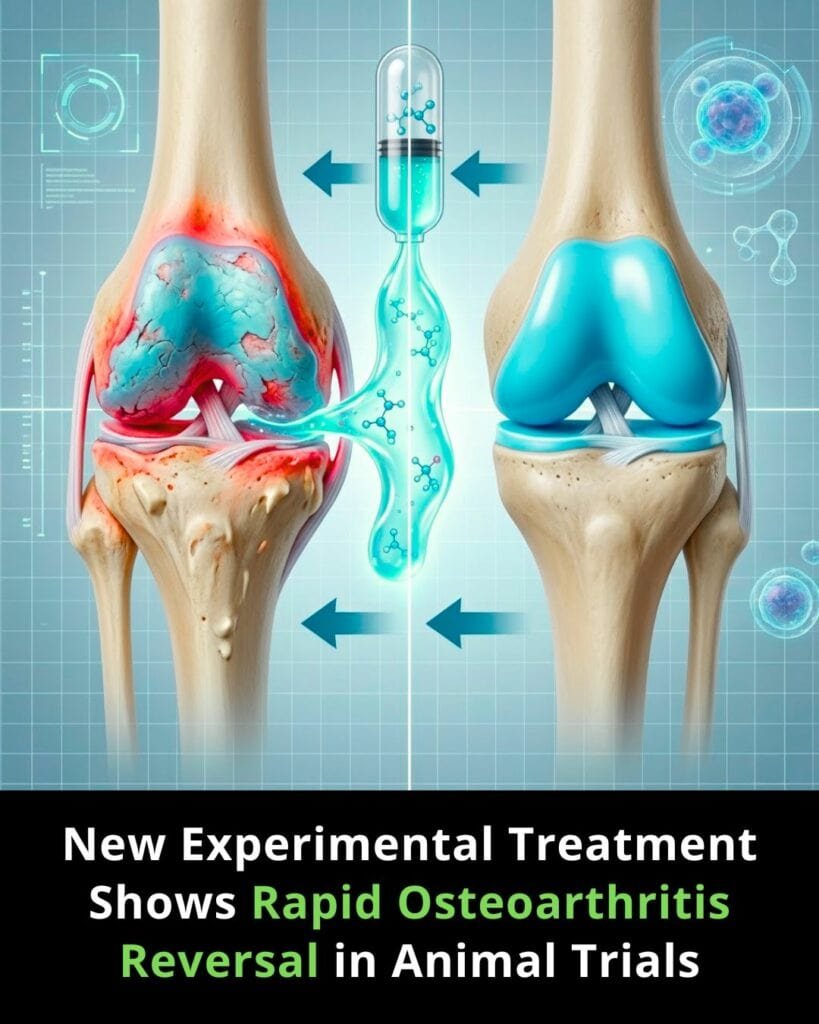
How Does it Work?
Here are the ways that this treatment might work:
- Allow the affected joints to recover.
- Set the cartilage into repair mode.
- Reduce the impact of inflammation from joint pain.
Why This Treatment Matters a Lot?
If this experimental treatment succeeds and becomes a viable option, this could change how we perceive joint pain.
The treatment options available today are physical therapy, pain medications, joint replacement surgery (for severe cases), and lifestyle changes.
These options never promise or help in reversing the discomfort.
That’s why the breakthrough of having osteoarthritis treatment, once it succeeds, treats the root cause of joint pain.
Too Early to Call
Although this is ambitious and exciting to us, this experiment is far from the beginning.
The research conducted is in its early phase.
However, the current experiment shows effectiveness in animal tests.
For now, there is still much work to do
The following reasons:
- Research about this treatment takes some time to complete.
- Human trials are yet to be conducted.
- The safety of this treatment in the long term is not yet ensured.
How to Maintain Your Joint Health?
Before your joints become vulnerable or on the verge of getting weaker, there are ways to protect your joints.
Some of these ways include lifestyle changes.
Here are some of the ways to maintain your joint health:
- Engage in physical activities more often.
- Maintain a healthy weight.
- Eat meals that are rich in nuts, whole grains, fruits, vegetables, and omega-3s.
- Do not ignore the sudden feeling of discomfort.
- Reduce getting sedentary every day.
The Future Outcome (A Possibility)
When the experiment succeeds, its availability to the public becomes the most-awaited.
Once a dream, healing cartilage becomes possible and is subject to further study.
If this treatment succeeds, it enhances the quality of life, improves joint health, and aids in cartilage repair surgery.
Imagine if this treatment succeeds, achieving a sought-after status easily.
This benefits the masses, especially those striving to maintain a healthy lifestyle.
A Treatment for Joints, Great for Health Points
It may be unfortunate that your joints are getting vulnerable or weaker.
Once your cartilage starts to be affected, it can greatly affect your daily life.
The promise of osteoarthritis treatment, which targets the root cause of the pain, sheds light on how we value wellness and a healthy lifestyle.
With treatment for joints subject to further study, it serves as a protection for joint health.
Now that there’s a possibility for an osteoarthritis treatment, it doesn’t mean we have to be complacent and abandon the idea of a healthy lifestyle.
Move more. Eat healthily. Maintain a healthy weight.
Don’t forget that balance is still the key.