
I still remember the moment I walked into our hotel room after the wedding.
Rose petals covered the bed. Two champagne glasses sat waiting on the nightstand. Soft light glowed from the corner lamp behind closed curtains. Everything looked exactly the way I had imagined it.
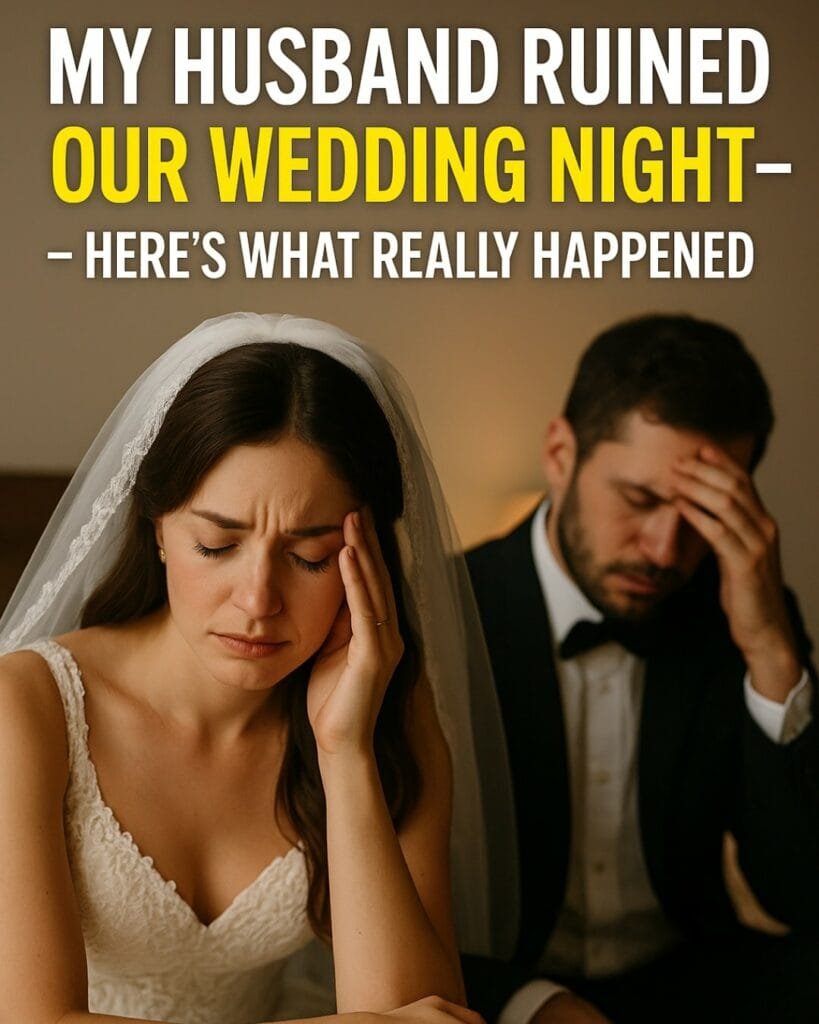
Then my husband walked in behind me, dropped onto the edge of the bed without looking at me, pulled out his phone, and started scrolling through the wedding photos people had already posted.
“Did you see what your uncle said during his toast?” he said, laughing at his screen. “That was embarrassing.”
I stood there in my wedding dress, holding my shoes in one hand, waiting for him to look up.
He didn’t.
I sat beside him. He showed me a blurry photo someone took of the cake, then complained about the DJ playing the wrong song during our first dance. A minute later, he laughed at a video of his best man tripping on the dance floor.
Thirty minutes passed.
I finally said, “Are we going to talk about us at all tonight?”
He looked at me like I had said something strange. “We just spent twelve hours talking about us. I’m exhausted. Can we just relax?”
I went into the bathroom, closed the door, sat on the edge of the tub in my wedding dress, and cried.
That was my wedding night.
Every Bride Builds A Picture. Reality Doesn’t Always Match It.
I had spent months imagining that evening. Not a movie scene. Just my husband looking at me, holding my face in his hands, and saying something that made the whole day feel real.
Instead, I got a man laughing at his phone while I sat next to him in a $3,000 dress wondering whether I had made a mistake.
And I know I’m not alone.
I’ve talked to enough married women to know that messy wedding nights are far more common than anyone admits. One friend told me her husband fell asleep in the car on the way to the hotel. Another said they spent the first hour arguing about something his mother said during the reception. Another said they were both so exhausted they ordered room service, ate in silence, and passed out before midnight.
None of those women are in bad marriages.
They learned something on night one that took me longer to understand: the wedding night is not a preview of your marriage. It’s just one night.
What Actually Goes Wrong (And Why It’s Usually Not A Crisis)
By the time the last guest leaves, most couples have been performing for eight to twelve hours straight. Smiling for cameras. Hugging relatives they barely know. Managing logistics. Standing in shoes that stopped being comfortable around hour three. Eating in rushed bites between obligations.
When the door finally closes and the two of you are alone, you’re not stepping into a romantic scene. You’re stepping into the aftermath of one of the most physically and emotionally draining days of your life.
That’s why so many first nights go sideways.
One person craves connection while the other needs silence. Someone wants to process the day out loud while their partner can barely keep their eyes open. The bride feels romantic while her husband is overstimulated and wants nothing more than to take off his shoes and sit in silence.
That doesn’t mean something is broken. It means two people just spent every drop of energy they had on the same day and arrived at the end of it in completely different states.
The Difference Between A Bad Night And A Bad Sign
Here is where I want to be direct, because this distinction matters.
My husband scrolling through his phone was thoughtless. It hurt. But it wasn’t cruel. He genuinely didn’t realize what I needed in that moment because he was processing the day in his own way.
That’s fixable.
A partner who pressures you into intimacy after you’ve said you’re not ready is a different situation. So is someone who mocks you for being emotional, or punishes you with silence and anger because you didn’t perform the way they expected. Those patterns require serious attention.
Marriage does not remove the need for consent. Being someone’s wife does not mean you owe your body on demand. If your wedding night felt uncomfortable because of awkwardness or exhaustion, that’s a normal human experience. If it felt uncomfortable because your partner made you feel afraid, small, or trapped, that deserves honesty, not excuses.
What Saved My Marriage Wasn’t The Night. It Was The Morning.
I woke up the next day still hurt.
My eyes felt puffy from crying. My husband sat on the balcony with coffee, already awake. I considered ignoring the whole thing. Pretending last night had been fine. Starting the honeymoon with a clean slate and a fake smile.
Instead, I sat down across from him and said:
“Last night really hurt me. I don’t want to fight about it. But I need you to know that I felt invisible, and that’s not how I wanted to start our marriage.”
He was quiet for a long time.
Then he said, “I didn’t realize. I think I was so overstimulated from the day that I just shut down. I wasn’t trying to ignore you. I’m sorry.”
It wasn’t a dramatic apology. He didn’t fall to his knees. But he listened. He didn’t get defensive. He didn’t call me too sensitive.
And in that five-minute conversation on a hotel balcony, I learned more about my husband than I did during our entire engagement.
I learned that he shuts down when he’s overwhelmed. That he doesn’t naturally read emotional cues when he’s exhausted. And that when I tell him clearly what I need, he actually wants to give it to me. He just can’t guess it on his own.
That conversation became the blueprint for how we handle every disagreement in our marriage.
Three Things That Actually Help After A Rough First Night
Start with what you felt, not what they did. “You ignored me all night” puts your partner on the defensive. “I felt invisible last night” opens a door. Your partner is far more likely to listen when you describe what happened inside you than when you hand them a verdict about what they did wrong.
Ask what was going on for them. Your partner had an experience that night too. Maybe they were anxious or overwhelmed. They might have had no idea you were hurting because they were stuck inside their own head. Asking that question isn’t letting them off the hook. It’s how you figure out the actual problem instead of arguing about symptoms.
Separate the night from the marriage. One bad evening does not predict thirty years. But the way you handle one bad evening can set the tone for every disagreement that comes after it. If you can talk honestly about a rough wedding night without it turning into a war, you are building a skill that will carry you through things much harder than this.
The Real Test Was Never The Wedding Night
My wedding night was not what I imagined.
There were no champagne toasts. No slow dancing in the hotel room. No tearful “I can’t believe you’re my wife” speech.
There was a man on his phone and a woman crying in the bathroom.
But that marriage, the one that started with a disaster, became one built on honesty, hard conversations, and two people who learned how to turn toward each other instead of away.
The wedding night doesn’t define your marriage. What defines it is what you do with the morning after.