
It’s 5 am, and my day is starting with a quick jog.
This has always been my routine ever since I committed to having a healthy lifestyle and routine for myself.
I used to think that when you do this often, your body won’t have a problem.
As a young adult, I thought my problems were going down from 10 to 1.
But then, in the middle of my jogging, I suddenly got a heel pain.
The pain is sharp, real pain that I even blamed my shoes for.
I also blamed my sleeping position, the terrain, and everything I encountered during the jogging.
However, it’s no other than plantar fasciitis.
I thought this pain would become unbearable and would remain unfixed, but with proper massage, stretching, and some natural ways, my feet are getting better.
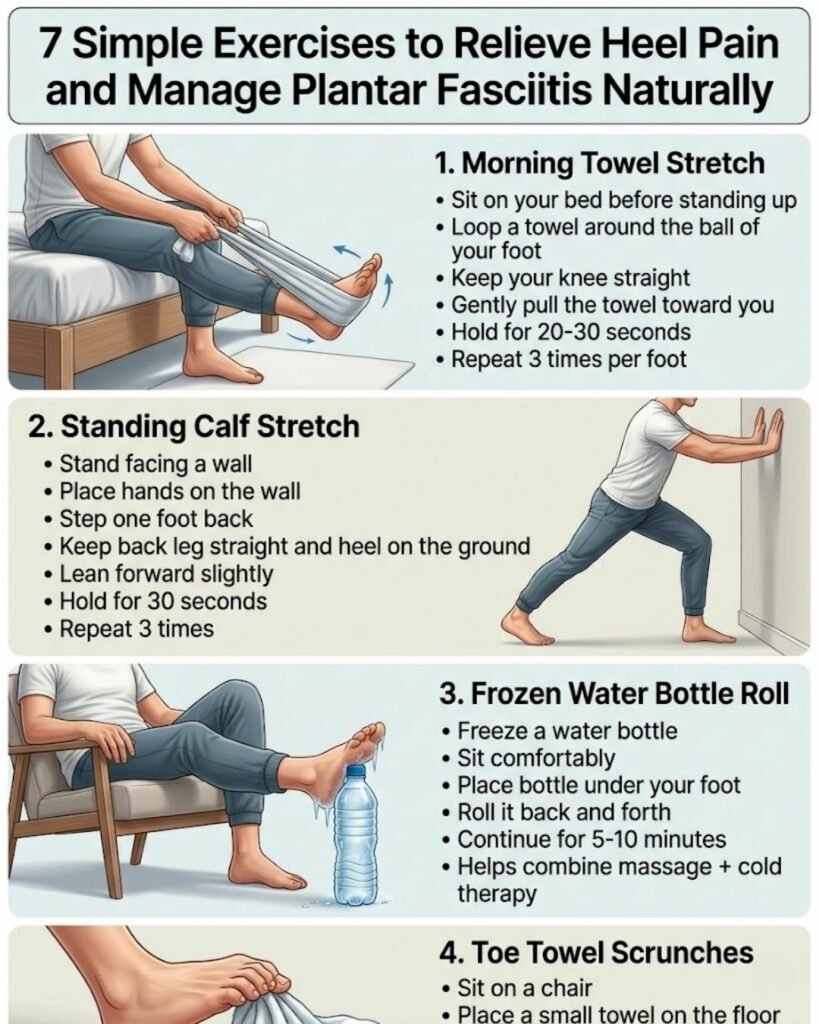
With simple massage and stretching, my feet’s condition improved. But there are other ways to naturally reduce heel pain and manage it.
Today, you are going to identify the 7 natural and effective exercises to manage heel pain.
What Is Plantar Fasciitis?
Let’s first understand what plantar fasciitis is.
As you all know, your plantar fascia is a thick band of tissue that runs along the bottom of your foot.
This is connected to your heel bone to your toes and supports the arch while absorbing the shock as you walk.
Should this tissue be strained or irritated, this becomes the plantar fasciitis.
This sharp heel pain is felt during:
- Standing for too long
- After exercising
- During the first steps in the morning
- Sitting for too long
The pain will be felt more when:
- Your shoes are unsupported
- You run or walk excessively
- You gain more weight
- You have tight calf muscles
- You have high arches
- You have flat feet
When you have plantar fasciitis, these are the 7 ways you can manage it and reduce the heel pain.
1. Morning Towel Stretch
Heel pain in the morning is the worst part of plantar fasciitis.
This is because the plantar fascia is tightened overnight as you sleep.
As you suddenly stand up in the morning, the tissue is quickly stretched, and you will feel it on your heel immediately.
This is why the towel stretch in the morning can help you deal with that.
Here’s how you can do it:
- Don’t stand up immediately, rise and sit on your bed.
- Loop a towel around the ball of your foot.
- Maintain straightness in your knee.
- Pull the towel toward you gently until you feel a stretch in your foot and calf.
- Hold it for about 20 to 30 seconds.
- Repeat it on each foot for at least 3 times.
This stretch allows you to loosen the tight tissues before your foot carries your body weight.
To make it effective, always place a towel beside your bed so you can use this technique.
2. Standing Calf Stretch
Another hidden cause of your heel pain is having tight calf muscles.
When your calves are firm, the tension increases in the plantar fascia and your heels.
A regular stretch is an effective way to improve your movement and lessen the strain.
Here’s how you can do it:
- Stand by facing a wall.
- Place your hands against the wall
- Step one foot behind you
- Keep your back knee straight and let your heel flat on the floor.
- Slowly lean forward on the wall
- Maintain it for at least 30 seconds.
- Repeat it three times
In this way, your calf’s flexibility will gradually improve and help reduce pulling on the heel.
3. Frozen Water Bottle Roll
This exercise is too effective after a long day.
It is a combination of foot massage and cold therapy employed in one technique.
The massage can tighten the tissue, while the cold may help in minimizing discomfort and inflammation.
This is how you can do it:
- Freeze a water bottle.
- Sit in a chair comfortably.
- Place the bottle under the foot.
- Maintain it for a few minutes.
- Slowly roll the bottle back and forth for 5 to 10 minutes.
It’s a great thing that cold and massage relieve your pain after a long or tiresome day.
4. Toe Towel Scrunches
The feet contain small muscles that are responsible for your movement stability and arch.
However, many people don’t see how essential they are until the pain starts to intensify.
That’s why the purpose of toe towel scrunches is to wake up those “sleeping” muscles.
This is how you can do it:
- Place a flat towel on the floor.
- Sit in a chair barefoot
- Use the toes to pull the towel toward you.
- Continue doing it for about a minute or two.
This may look easy and simple, until your toes have been too physically inactive for years.
5. Plantar Fascia Stretch
This technique is effective in targeting the irritated tissue that causes the pain.
However, it requires consistency in doing simple exercises.
It can help improve the flexibility and minimize the stiffness of the plantar fascia through stretching.
Here’s how you can do it:
- Sit in a chair.
- Cross one foot over the other knee.
- Gently grab your toes and pull them toward the shin.
- Maintain it for about 20 to 30 seconds.
- Repeat it three times.
This technique is effective when you feel the stretch even at the bottom of the foot.
6. Heel Raises
When you have a weak calf muscle, it can worsen foot support and stability in your plantar fasciitis.
Stronger calf muscles help reduce the stress and absorb the pressure on your heel.
That’s why heel raising is an effective technique to enhance your balance and strengthen your lower legs.
This is how you can do the heel raise:
- Stand near the chair or wall for support.
- Rise onto your toes slowly.
- Maintain it for 2 seconds.
- Lower it slowly
- Repeat the process about 10 to 15 times.
You can also perform a heel raise by using one foot.
7. Marble Pickups
This technique may feel childish, like reminiscing about your elementary days.
But this technique is quite effective.
You can do it by following the steps:
- Place small objects or marbles on the floor.
- Use your toes to pick up the objects
- Drop them in a bowl or container.
- Do this play for several minutes.
This technique helps strengthen the tiny muscles in the feet to support arch stability and balance.
Although marble pickups are named after the marbles themselves, you may also use other available small objects at home.
Be it a marble or any other object, the procedure is still the same.
Bonus: Other Ways to Manage Heel Pain
Aside from the 7 effective ways to relieve heel pain, here are some of the additional ways to minimize the possibility of getting plantar fasciitis:
- Wear supportive shoes with cushioned soles and strong heel support.
- Never perform activity changes too quickly; your feet hate surprises.
- Make a daily stretch for five minutes to keep your tissues flexible.
- Maintain a healthy weight to achieve comfortable brisk walking.
- Take some time to rest, whether brief or longer.
When to Consult a Doctor?
Although the goal of these 7 mentioned ways is to alleviate heel pain, there would be cases where plantar fasciitis would require a doctor’s appointment.
Consult a health professional if:
- The pain recurs for months
- Brisk walking becomes challenging
- Increase in swelling
- Pain is accompanied by numbness
- Symptoms are getting worse even when you’re stretching
We expect that foot specialists and physical therapists may provide additional treatment options, depending on your case.
Heel Pain, Make It Heal Again
Heel pain can affect a person’s entire physical self.
When it strikes you, your entire routine and life are affected.
One day you are enjoying what you do, the second day you have heel pain.
That is the reason why Achilles from Greek mythology is attributed to the Achilles’ heel.
Should your heel be in pain again, know that there are treatable ways to do it.
This is a wake-up call to take care of your feet, so you continue enjoying a lot of activities with ease and comfort. The next time your heel is in pain, know that there are effective techniques to manage the pain and the plantar fasciitis.