
Do you see yourself taking a mirror shot at the gym?
A typical assumption we have when somebody does this is that they’re going to be fit and healthy.
Many of us thought that waking up early, spending hours at the gym, changing our diet, and following a new lifestyle pattern are the keys to fitness.
However, this is far from over.
There is still much work to do, but of course, consistency should be at the top of your mind.
A recent study published last March stated that physical activity and spending more time sleeping support a healthy heart.
Moreover, this study says that exercising daily and adding a few minutes to your sleep can help reduce strokes and heart attacks.
This could be great news for everyone.
But how can exercise and quality rest help lower a person’s risk of heart complications?
Here is what you should know about this article.
Why is Taking Care of Your Heart Essential?
Imagine your heart as the electric water pump that automatically distributes blood flow throughout your body.
You want its flow to be free from obstacles and pipe leaks.
Our heart functions just like that, but unlike in our home, its function is far more numerous than an electric water pump.
The heart functions by:
- Pump the blood
- Deliver oxygen
- Transport the nutrients
- Ensure well distribution
Unlike you, the heart is working nonstop. That’s the reason taking care of it is crucial for your overall wellness.
However, heart disease remains one of the leading causes of death for most people around the world.
Several lifestyle-related factors are contributing to the rise of heart disease cases.
Some of them are the following:
- Insufficient nutrition
- Smoking
- Obesity
- Stress
- Increase in blood pressure
- Poor sleeping habits
- Sedentary lifestyle
- Lack of exercise
Although most of these risk factors can be avoided, some people face various challenges that can also affect their heart health.
Even being emotionally unstable can also contribute to heart problems.
That’s why a changed lifestyle is not just a trend, but a necessity to become healthy.
Habits like a few extra minutes of sleep and more physical activities can secure your heart health.
The Study Behind This
This recent study, published in March, examined how adding extra minutes of sleep duration and physical activity affects the heart.
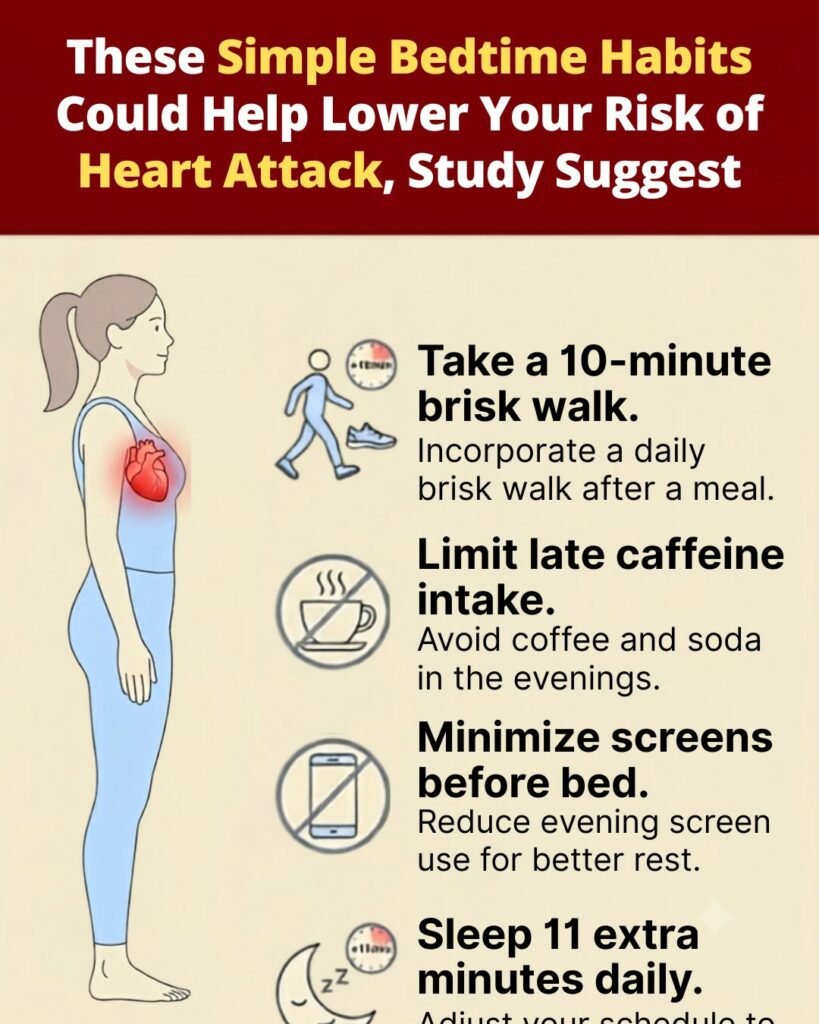
Researchers found that adding 11 minutes to your hours of sleep and 10 minutes to your physical activities can reduce cardiovascular risks.
Although you might question how these few minutes provide benefits to your wellness, the study observed that they can significantly improve your health.
Such behavior may help the body protect heart health even when performed daily.
The Role of Sleep in Your Heart Health
Sleeping is one of the most undermined or least appreciated habits we have.
Many people always assume long sleeping hours as part of laziness.
It isn’t.
However, many of us take it for granted.
That’s why many of us would spend more time doing anything rather than resting, especially at night.
When sleepless nights or sleeping for a few hours become frequent, chances are that you may have a challenging time changing this unhealthy habit.
Frequent insufficient sleep can cause:
- Increases the risk of heart complications
- Higher chance of becoming obese
- Spike in blood pressure level
- Getting Type-2 Diabetes
- Inflammation levels soared
Researchers emphasized the biological essence of sleeping; without it, we can’t function well.
Sleeping is essential as it deals with essential processes, such as:
- The brain keeps processing gathered information.
- Cells can recover, repair, or reproduce by themselves.
- Regulation of the hormones
- Heart rate will slow down
- Decrease in blood pressure
The Benefits of Extra-11 Minutes
Many healthy habits are unachievable because we lack consistency.
That’s why we should begin by having the right mindset and motivation to do this.
Our sleeping hours are inconsistent; it’s not always recommended to add a few hours of sleep.
Instead, add 11 extra minutes to your sleep.
It makes you feel consistent with the goal, and the habit is simply achievable.
Those 11 extra minutes can be in the form of:
- Not consuming caffeine during late nights.
- Reduce nighttime screen use.
- Preparing for nighttime rest earlier.
- Make your sleeping schedule consistent.
The key to achieving this goal is to make small adjustments that can support quality rest.
Those extra 11 minutes can be your leeway to reduce the likelihood of being unable to sleep in the middle of the night.
The Crucial Role of Physical Activities
Aside from quality rest or sufficient sleep, engaging in physical activities is effective in maintaining better heart health.
Exercising can help your body function well.
It can also help you specifically in:
- Achieve a healthy body weight
- Lessen the impact of stress
- Enhance cholesterol levels
- Maintain a normal blood pressure
- Improve the heart muscle
- Support normal blood circulation
People assume that exercising is expensive or ineffective.
These assumptions are false.
Exercise isn’t exclusive to the gym.
There are numerous ways to engage in physical activities without spending on a gym membership.
Staying physically active makes you feel confident and refreshed.
The only thing you need to boost is your willingness and consistency.
Examples of Physical Activities
Hang in there. I know you’re thinking about how to start doing some physical activities.
Don’t worry, we can help you with that by introducing you to some examples of physical activities that can help you achieve a healthy heart.
Reminder, you don’t need a gym membership or become a runner to do it.
Here are some physical activities you can do:
- Stairs climbing
- Hiking
- Brisk walking
- Cycling
- Skipping rope
- Swimming
- Active gardening
- Jogging
- Dancing
- Any bodily movement
Any physical activity that allows your body to move more and your heart to beat more is great for heart health.
But never force your body and heart so much.
The Impact of Exercise and Sleep
The most interesting parts of the study are the combined impact of sleep and exercise on heart health.
It also explains the relationship between these habits, which show how the heart is frequently protected by either sleep or exercise.
When you exercise frequently, it can make you:
- Fall asleep quickly
- Undergo deep sleep often
- Feeling refreshed after waking up
On the other hand, a quality rest can help you with:
- Remain motivated the entire day.
- Select healthier and well-balanced meals.
- Become energetic during physical activities.
A combination of quality sleep and sufficient exercise can help you thrive mentally and emotionally.
Through this study, both lifestyle habits are perceived as partners for improving heart health.
Real-Life Application
Paint the scenario in your mind and think that it’s you.
Mark is a busy guy.
He is torn with family responsibilities, corporate commitments, household tasks, and personal relationships.
It is challenging for him to focus on improving his health.
Since Mark is aware of his current schedule, he decided to slowly improve his lifestyle by making these two adjustments:
- He slept 11 minutes earlier.
- He walks for about 10 minutes after lunch.
At first, Mark feels nothing. But he keeps doing it.
After a few weeks, Mark noticed that he may have the following:
- Enhanced motivation
- Less fatigue
- Maintaining quality sleep
- Having a stable energy level
His only key to making it happen: his consistency in keeping it up.
If he stopped after trying for the first few days, he wouldn’t see the progress.
Other Benefits You Must Know
The advantages of exercise and quality sleep should not be limited to your heart health.
It should also be observed in some aspects of your health.
Here are the other benefits of consistently exercising and getting extra sleep:
- Enhancement in the energy levels
- Effective in managing your weight.
- Achieve stronger immunity
- Maintain your focus to ensure productivity.
- Having a stabilized mood.
The Four Tools to Lifestyle Change
This article is not just about reducing the risk of having heart problems.
However, understanding the four tools to achieve lifestyle change is what the study wants to know.
Here are the four tools to achieve a healthy heart:
- Consistency
- Fixed mindset
- Unwavering motivation
- Persistent effort
Quality sleep and physical activities may not be the ways to maintain great cardiovascular health.
The crucial part of that is how an individual uses those four tools above to be healthy.
They might be simple, but not complicated enough for you not to try them.
Your heart needs you to make the right choice before it’s too late.