
Nothing is as polarizing and controversial as pickles.
Not the pickles you’ve seen on the court.
But the pickles that you and I have consumed for years.
It sparks controversy due to its high sodium content, while some defend that it is healthy.
Many are still divided over whether pickles are healthy to consume or not.
When the ingredients are properly made, pickles offer nutritional benefits.
It is said to be packed with antioxidants and to solve indigestion.
Although it’s debated, people are still confused about whether it can provide nutrition or if it’s just false advertising.
Why don’t we take time to learn about one of the most preserved foods among households?
What are Pickles?
Pickles are specific vegetables or fruits that are preserved through the use of natural fermentation, salt, and vinegar solution.
Cucumbers are the most common ingredient; however, some foods can be pickled.
These foods are:
- Cauliflower
- Radishes
- Peppers
- Carrots
- Green beans
- Cabbage
- Onions
It’s called a pickle after the process that the cucumber or any fruit/vegetable has undergone.
The preservation process allows the flavor to be salty and distinctively sour, which people will either like or dislike.
The pickling process has two types:
- Vinegar-Based – Specific fruit or vegetables soaked in vinegar with some seasonings. Mostly used in commercial pickles.
- Fermented – Allow the natural fermentation to preserve the veggies, containing probiotics that improve digestion.
Nutritional Value of Pickles
Pickles became popular among households due to their low-calorie content.
Aside from calories, a pickle jar may also contain trace amounts of nutrients, such as:
- Magnesium
- Calcium
- Potassium
- Vitamin K
- Minimal fiber content
People love to pickle the cucumbers due to their low-calorie content.
Despite the traces of nutrients found in the pickle ingredients, its sodium content is significantly high.
Salt is a critical ingredient in preserving pickles.
However, using it in significant amounts of sodium is undeniably essential.
That’s the reason why its healthy status is at risk.
It is where the moderate consumption of pickles came in, because their salt content is high.
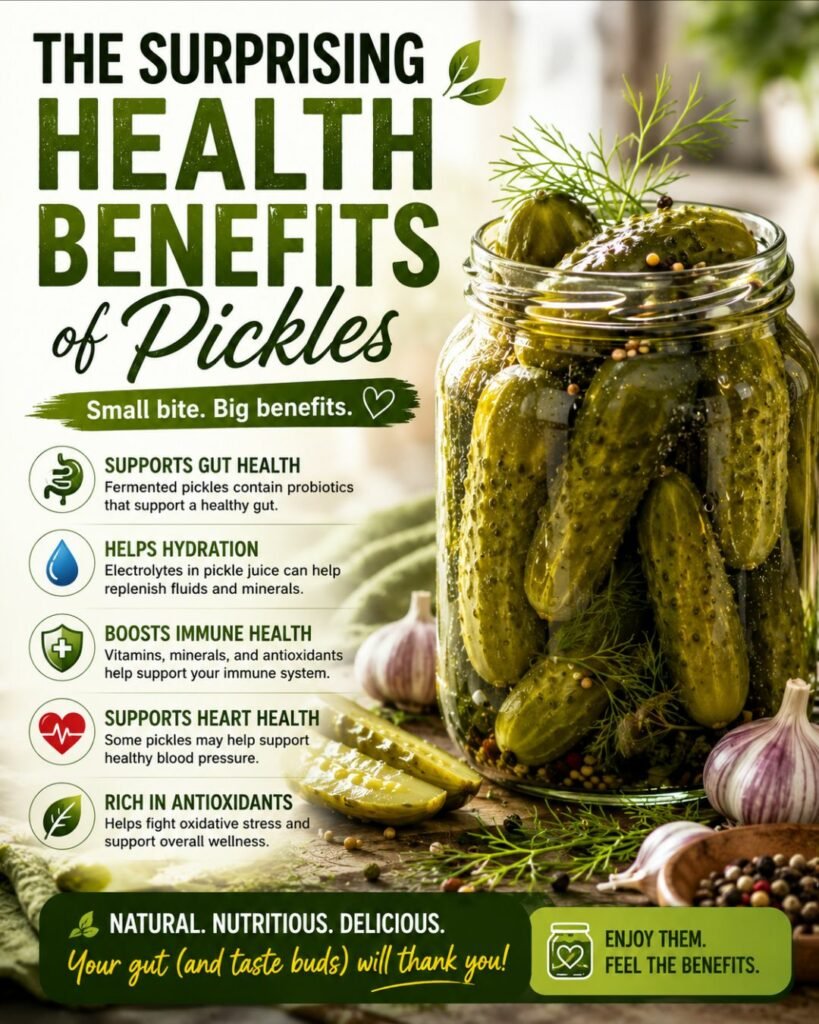
Here are some of the health benefits you can get from consuming pickles:
Fermented-based Pickles are Good for the Guts
Fermented pickles contain probiotics.
It can help a lot in your:
- Digestive process
- Immunity
- Nutrient intake
- Health
However, it’s clear that vinegar-based pickles, which are mostly available in groceries, don’t contain probiotics.
Never forget to read the product label before buying.
Snack Low in Calories
Pickles are low in calories, which is why it’s the best snack option.
Many people are conscious of their weight and calorie intake.
That’s why it is most recommended for people who are athletes and have undergone weight management.
Contain Antioxidants
Cucumbers and other vegetable options contain antioxidant properties.
Antioxidants help in enhancing your overall health.
Although we should not depend on pickles for antioxidants, it is still essential for a balanced diet.
Replenish Your Electrolytes
Pickles have electrolytes due to their high sodium content.
Electrolytes are essential to keep your body active.
This has been the secret weapon of most athletes over the years.
Pickle juice is said to lessen muscle cramps, especially when engaging in intense exercise.
But that doesn’t mean it fills hydration levels as water does.
Added Flavor Without Calorie Cost
Pickles have flavor due to their sodium content and a hint of spices.
That’s why it enhances the flavor of your meal without adding excess calories.
Unlike heavy sauces, pickles do a double job.
The Downsides of Consuming Pickles
Although pickles are promoted as having health benefits to consumers, they can have health issues.
Moderate consumption of it is extremely essential.
Instead of getting the nutrition, you got challenges from overconsumption.
Here are some of the biggest concerns about consuming pickles:
High Sodium intake
High amounts of sodium can lead to an increase in blood pressure, especially when it’s eaten regularly.
This is not suitable for individuals with:
- Heart disease
- Kidney problems
- High blood pressure
Water Retention and Bloating
When your body is exposed to frequent consumption of highly salted foods (like pickles), it can cause bloating or puffiness.
Although high sodium content allows your body to temporarily hold water retention, consuming it regularly will cause water to stay in the body for too long.
Digestive Irritation
Aside from high sodium content, the pickles are also acidic.
Some people must avoid consuming this to prevent experiencing stomach problems, or it can trigger heartburn.
How to Make Healthier Pickles?
There are ways to have healthier pickles.
Either make it yourself or be wise in buying one.
Not all pickle jars are the same; some are healthier, depending on how they’re manufactured.
For better assessment, bear in mind the following tips:
- Always read the nutrition labels when buying one.
- Prefer to purchase pickles that are made from fermentation.
- Never add sugar to sweet pickles.
- Keep the ingredients simple yet natural.
If you prefer to make one, that’s just a better choice.
But never forget these tips above.
How to Make Your Homemade Pickles?
Prefer to have homemade pickles?
Well, that’s the best choice.
Not only will you know how it’s prepared, but you will also be aware of what ingredients are used.
Let’s make the homemade pickles.
Here’s the recipe:
Prepare the needed ingredients:
- Fresh cucumbers (usual choice)
- Vinegar
- Water
- Salt
- Garlic
- Dill
- Desired spices (not much, but not in excessive amounts)
Here’s how you can make your homemade pickles:
- Wash your cucumbers thoroughly. Slice them well.
- Place the sliced cucumbers in a jar.
- You may add the desired spices, dill, and garlic.
- Mix the vinegar, water, and salt in a separate container. Make sure you can adjust the flavor and the sodium content of the pickles
- Combine it with the cucumbers by pouring the mixture into the jar.
- Seal it well and refrigerate it for days.
- After a few days, your pickles are ready to eat.
Here are some of the meals you can add the pickles to:
- Grilled meats
- Rice bowls
- Tuna salad
- Green salads
- Chicken wraps
- Turkey sandwiches
Always remember, consume pickles in moderation.
Don’t add it to your food frequently.
Should Pickles Be Included in Your Daily Diet?
Pickles are a great choice for your diet.
It proved itself to be flavorful, nutritious, beneficial for health, low in calories, and an enhancer to your meals.
Consider the fact that it’s fermented, and your gut health becomes secured.
Aside from that, doing it homemade makes it the best.
But consuming it comes with great caution.
Never consume it in excess or regularly, as it impacts your health.
Enjoy consuming it in moderation. Add it as part of your balanced meal.