
Imagine you’re a mother who spent years being the “strict” parent.
You made sure that the child is:
- Well-protected
- Well-educated
- Well-provided
- Well-attended
- Well-nourished
The mother’s instinct is that no child should become unhealthy or uncared for under her wing.
Then one day, you and your daughter have a sudden argument.
She suddenly dropped the line: “Dad understood me, but you don’t.”
As a mother, that hurts.
Then you thought to yourself: “After all I’ve done to make sure you got what you needed, I suddenly became the antagonist?”
This situation has happened to lots of mothers and children. The painful part is that a child defended their problematic father and turned against their safe mother.
Instead of being thankful, some children confuse their mother’s actions with their father being the great parent all along.
However, there are children who prefer not to choose between their parents and find them too problematic to understand.
For other children, the parent who is least likely to cause “arguments” is the safest, even if they don’t understand the entire situation.
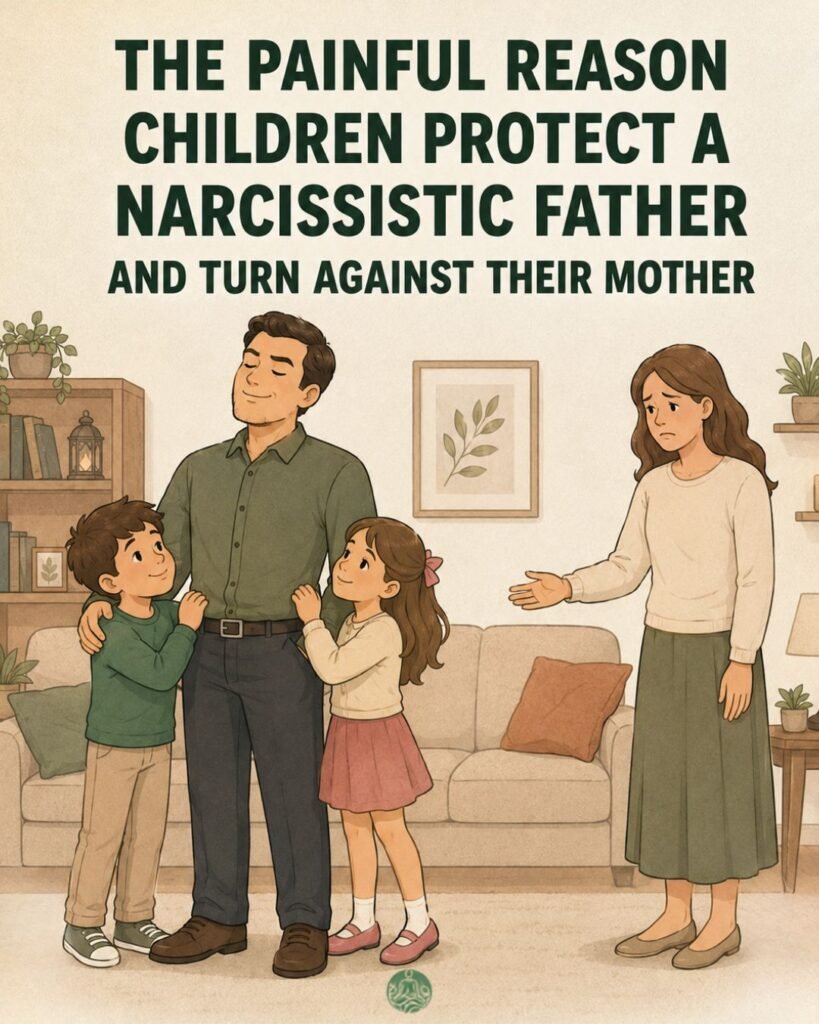
But why does this happen to some mothers and children? Why would they think their narcissistic fathers are the best despite them being problematic?
The reasons will surprise you.
Children and Adults See Arguments Differently
Imagine you are the child who was torn by your parents’ endless fights.
From your perspective, you only saw the fighting and countless arguments.
The huge difference between adults and children in terms of understanding the situation is that adults understand manipulation, which children cannot.
Children depend on their parents to sustain their daily needs, and those things are their top priorities.
Shelter, money, food, transportation, security, and affection. These things can usually trap children, and they are pressured to take sides.
They are not allowed to stay over the fence because they are still dependent on either or both parents for survival.
It doesn’t matter for children whether they felt manipulated or if they took sides with either parent; it depends on whether they believe that parent can sustain their needs.
If children took the side of their problematic father, that choice is about knowing who can provide them with better security and meet their needs.
Although no child has the same answer on the matter, the choice still boils down to their survival needs.
Recent research involving 49 studies and more than 23,000 people suggests that there’s a significant connection between parental conflict and children trapped in the rift.
This is why some children are forced to take sides, out of their need to survive. But some problematic fathers may take advantage of that situation.
Siding with a Problematic Father Feels Safer
Other children understand that loyalty is a safety card to ensure survival.
For example, a father became angry with his son because he disagreed with his stance.
That son realized that arguing further may lead to emotional pressure or punishment.
In some cases, the father would use the card where he’d say something that puts a mother’s image in a bad light.
The son agrees not because his problematic father was right, but because it protects him from being deprived of his needs.
Children understand that further arguing with a controlling parent has no point, but it will only lead to a negative outcome.
However, children who were exposed to severe parental conflict and domestic violence understood that a careful approach matters for their personal protection.
That’s why the safest decision is to turn against their mother.
It’s a reality for some children that other mothers may not understand.
But that’s the only way to prevent fear from manipulating them further.
Fun Parent Can Be the Best Choice
Some children prefer to side with their problematic father because they feel independent.
This is an endless trap that children don’t realize at first.
Other children would confuse being strict with being controlling, especially with mothers.
But this is not always the case.
A mother’s warning, despite the good intention, can be misconstrued as strangling the children’s freedom.
A problematic father would take advantage of this situation and manipulate this strictness to indicate that she intends to control the children.
That’s why some children would side with their problematic father.
Because they were manipulated, children forsake their mother for short-term freedom.
This problem stems from children who can’t handle a “no” and a lack of discernment in a situation.
It has nothing to do with mothers desperate for control, as this could be far from the true intention.
Children Become a Referee in Arguments
Some children prefer to side with their problematic father because of the damaging reputation that parents’ arguments caused.
When children become the referee in their parents’ unending arguments, they will carry that unresolved situation their entire life.
They will feel that they are no longer a child, but the middle ground of their parents’ endless fights.
For other children, siding with their father, despite knowing they’re problematic, was a product of being convinced that a mother is the root cause of the problem.
This can cause children to lose their trust in their mother.
Because the father effortlessly proved that the mother continues to bring more problems into the family dynamics.
It’s also happening because children are tired of listening to their mother’s rants, which can be easily misunderstood as a contributing factor to endless parental arguments.
And for the affected children, they feel the burden of these problems is passed on to them.
How the Strict Mother Becomes the Villain?
The cruelest part is not the children siding with their problematic father, but the part where strict mothers become instant villains.
Instead of becoming the sole source of their children’s emotional comfort, they are antagonized just by being strict enough.
Some children think that lesser restriction means “genuine parenting.”
These children think that their problematic dad is the key to getting that short-term happiness.
Until they realize otherwise.
Although not all children will have the same issues or experiences in their homes, there could be more cruel reasons why children prefer their problematic fathers.
The situation is best understood when the entire context of the family dynamic is unpacked.
The Use of “Narcissist”
In some way, this article mentions such a father as somewhat narcissistic, which can be best understood as generally problematic.
But in this article, this is a typical father who exhibits actions like:
- Selfish
- Unapologetic
- Haughty
- Manipulative
- Manchild
Showing narcissistic traits is not the same as having a narcissistic personality disorder, which professionals can only diagnose.
The article only discussed that some of these narcissistic fathers reveal personality traits that damage the entire emotional and physical stability of a family.
How Should a Safe Parent React?
If you are a safe mother, it’s challenging to accept that fate is like this.
You might think that this could be an easy win for a narcissistic father of your children.
But it’s not.
There is a better way to handle such a matter.
Instead of reacting this way: “Your father is manipulating you!”
You can respond better by:
“You don’t have to choose between us because this problem is our parental responsibility, or you can still talk to me whenever you are ready.”
That way, you avoid letting pressure, misunderstanding, and manipulation dominate the situation.
Don’t force your children to believe in something that the narcissistic father does.
Stay calm and provide the honest answer that children deserve.
A Child’s Decision: Tale of Partial Situation
A child siding with his problematic father and turning against their mother can feel like a betrayal.
We know that feeling.
But we are also aware that a child’s judgment doesn’t tell the entire story.
It was decided for specific reasons, but manipulation could be the biggest reason for it.
Cruel as it may be, a safer mother must be ready for such situations.
The goal of a mother is not to convince, force, or win over their child back.
This is not a competition, but rather a genuine connection that should be dealt with by understanding and kindness.
Be the parent that doesn’t need manipulation to make the child feel safer.
Instead, be the parent that your child needs.
Provide what your child requires.
Show up, stand up, and continue doing your job as a parent.
Let your child decide and let them realize.
At the end of the day, your children will learn the hard way – allowing their problematic fathers to show who they really are.