
There is a plant growing in your garden right now that you probably treat like an enemy. You pull it out. You throw it in the trash. And then you go to the pharmacy and pay good money for a supplement that does almost the same job.
That plant is purslane.
Its scientific name is Portulaca oleracea, but almost nobody says that out loud. Some people call it pigweed. Some call it pussley. Most of us just call it a weed and reach for the hoe.
Today I want to change your mind about purslane. This little plant is one of the most nutritious green things you can put on your plate, and it grows for free, without anyone planting it, in almost every country in the world.
Also, I am going to be honest with you about something. There are a few claims about purslane going around Facebook that are simply not true, and I will correct them here instead of repeating them. And there is one real warning about this plant that most articles never mention. I will cover that too, because you deserve the full picture and not only the nice part.
So, let’s dive into it. :)
What Purslane Actually Is
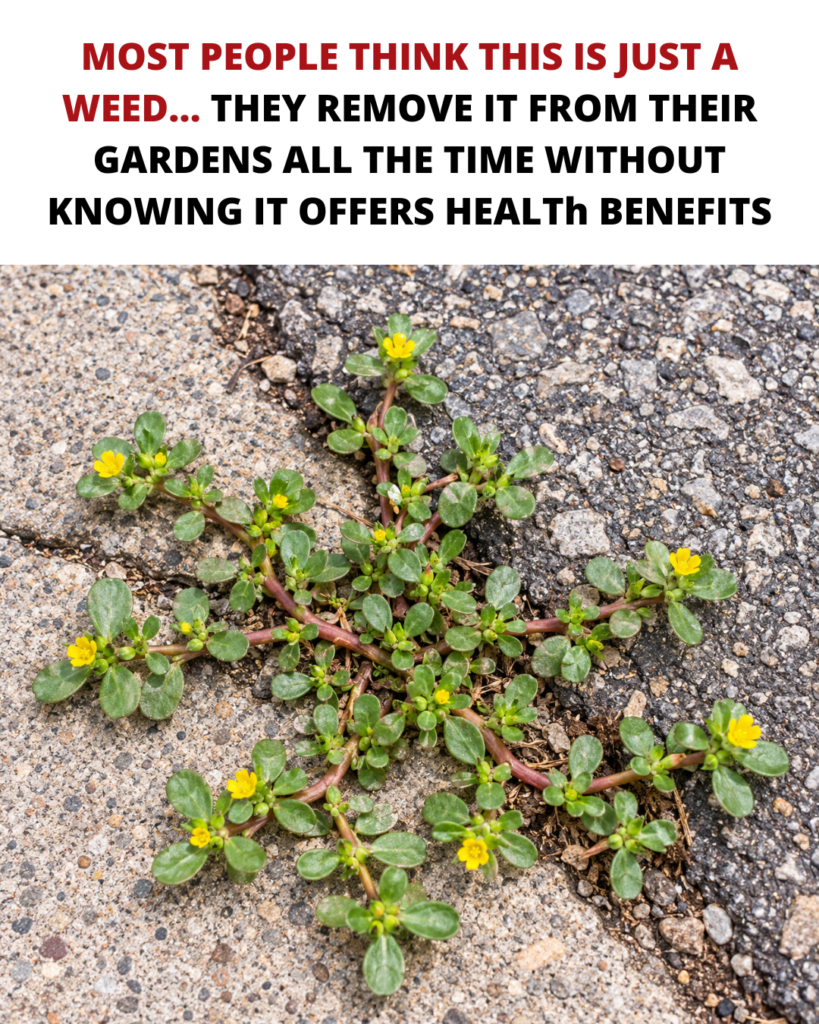
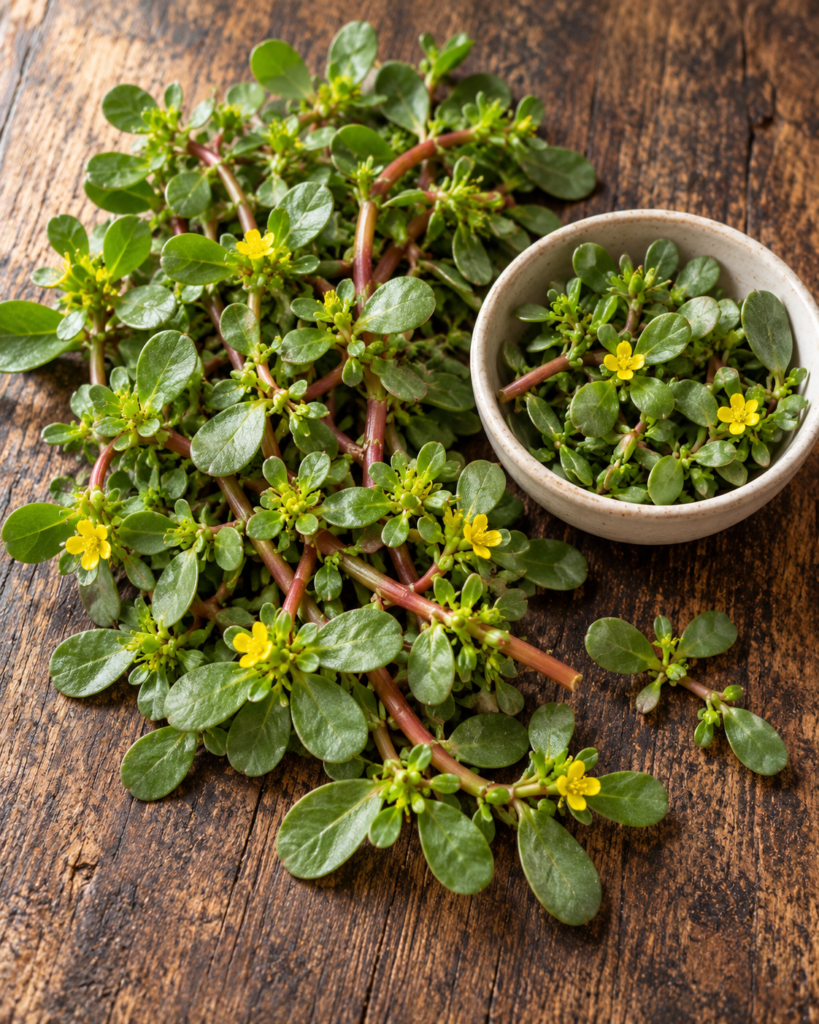
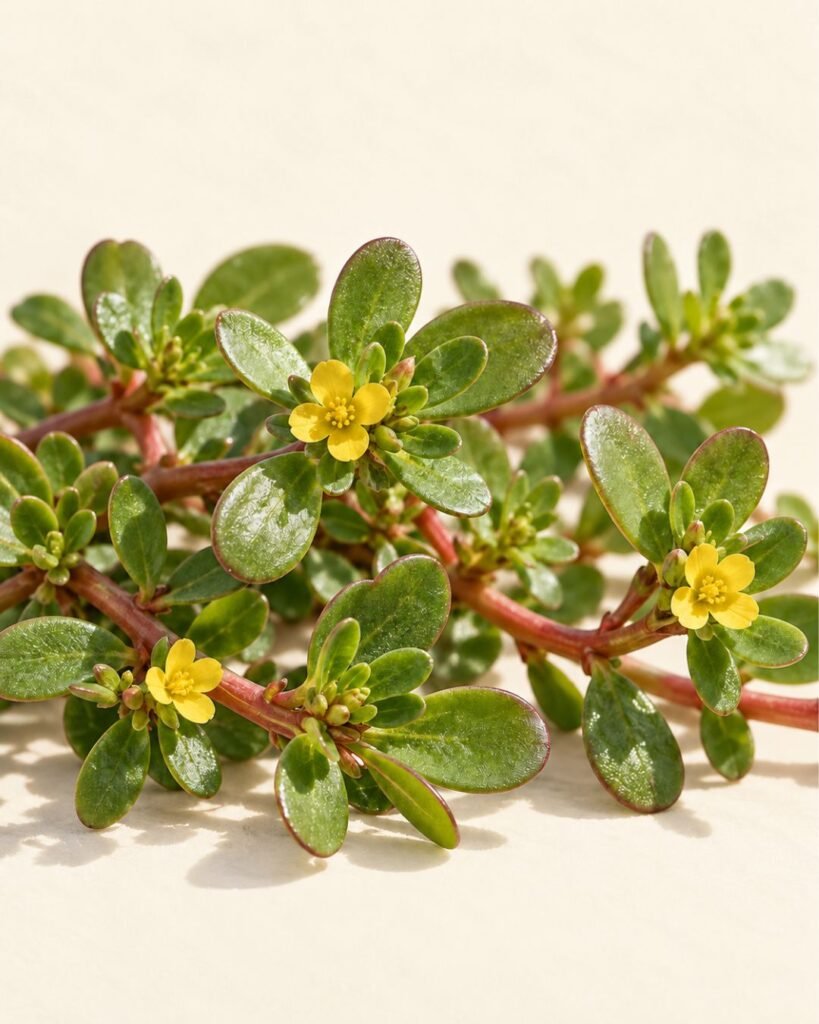
Purslane is a low, spreading plant with thick fleshy leaves and small yellow flowers. The leaves look like tiny green spoons. The stems are often reddish, and they hold water inside them, the same way a succulent does, which is exactly what this plant is.
It started out in India and Persia. From there it traveled, and today you will find it on every continent except Antarctica. In many countries, people grow it on purpose and sell it at the market. In other countries, the same plant gets pulled out and thrown on the compost pile.
The seeds are the reason purslane is everywhere. They are tiny, and they are stubborn. Gardeners report the seeds staying alive in the soil for many years before they sprout, which is why the plant keeps coming back no matter what you do to it. I am not going to give you an exact number of years, because the numbers you see online vary a lot, and I would rather tell you the honest version.
Another good thing is that purslane is completely natural. Nobody engineered it. Nobody patented it. It grows in a well-watered garden bed, and it grows in dry, cracked soil, and in both places it does just fine. That toughness is a big part of why it ended up so nutritious (more on the nutrition here).
The Omega-3 Claim, And What Is Actually True
Here I have to stop and correct something.
You have probably seen the claim that purslane contains more omega-3 than most fish oils. It shows up in almost every Facebook post about this plant. It is not true, and I am not going to repeat it just because it sounds impressive.
What is actually true is impressive enough on its own.
Purslane holds more omega-3 than any other leafy green vegetable we know of. About 300 to 400 milligrams of alpha-linolenic acid sit in 100 grams of fresh leaves (study here). Next to spinach, that is roughly five times more. For a plant that grows between the cracks of your patio, this is remarkable.
But fish oil is a concentrated oil, and purslane is a wet green leaf that is mostly water. Gram for gram, fish oil wins easily, and it is not even close. Also, the omega-3s in fish are EPA and DHA, which your body can use straight away. The omega-3 in purslane is mostly ALA, and your body has to convert it first. That conversion is slow and not very efficient.
So this plant is not a replacement for fish. It is the best leafy green source of omega-3 that you can grow, and that is a different sentence with a different meaning.
One more detail I like. Purslane appears to carry small traces of EPA, the type usually found only in fish and sea plants. That is very unusual for something growing on land. The amounts are small, and I would not build a diet around them, but this is one of the reasons researchers keep coming back to a common weed.
A smaller true number beats a bigger false one every time.
Amazing Antioxidant
Purslane carries two families of pigments called betalains. The reddish ones are beta-cyanins. The yellow ones are beta-xanthins. Those pigments give the stems their red tint and the flowers their yellow color, and both of them are strong antioxidants.
Antioxidants do a simple job. Your cells make waste while they work, and some of that waste damages the cell itself. Antioxidants mop it up. When the mopping falls behind, the damage builds, and that build-up is tied to aging and to a long list of chronic diseases.
Betalains have also been studied as anti-mutagens, which means they may help protect the DNA inside your cells from getting damaged. Research on this is still developing, and I will not promise you more than that.
This plant also brings carotenoids, vitamin C, glutathione, and a serious dose of vitamin E. In one comparison against spinach, purslane came out with about seven times more vitamin E (source). Glutathione deserves its own mention, because your body makes it and uses it as one of its main internal cleaners.
That is a lot of protection from something you were about to throw away.
The Vitamins And Minerals Inside
Now the numbers. All of these are for 100 grams of fresh purslane.
- Potassium, about 494 mg
- Magnesium, about 68 mg
- Calcium, about 65 mg
- Vitamin C, about 27 mg
- Vitamin E, about 12 mg
- Beta-carotene, about 1.9 mg
Potassium is the one I want you to notice. Most of us eat far too much sodium and nowhere near enough potassium, and that imbalance pushes blood pressure up over the years. Weight for weight, purslane carries more potassium than a banana does.
Magnesium comes second on my list. It works inside hundreds of reactions in your body; it helps your muscles relax, and plenty of people are running short on it without knowing.
And here I have to correct a second claim. You will read everywhere that purslane holds the highest vitamin A of all leafy vegetables. It is a good source, no argument there. But when researchers put it side by side with spinach, spinach came out slightly ahead on beta-carotene. So call it excellent and leave it at that.
Other than the ones above, this plant also gives you vitamin K, some iron, and B vitamins including riboflavin and niacin.
What Researchers Are Actually Studying
People make big promises about this plant, so let me tell you where the science really stands.
Most of the research on purslane so far has been done in laboratories and on animals. Human studies exist, but they are small, and there are not many of them. That does not make the findings worthless. It means we should read them as early signals and not as settled facts.
Blood sugar is the area with the most attention. Several small trials have looked at purslane seeds and extracts in people with type 2 diabetes, and some of them reported improvements in fasting blood sugar and in cholesterol numbers. The trials were short, and the groups were tiny, so I would call this promising rather than proven.
Inflammation comes up constantly as well. The flavonoids and the betalains in purslane both show anti-inflammatory activity in the lab, which fits with the omega-3 content and with the long history of traditional use. In Chinese medicine, this plant has been used for centuries, and one of its old nicknames translates roughly as the vegetable for long life.
Wound healing, antibacterial effects, and pain relief have all been tested too, mostly in animals and mostly with concentrated extracts rather than with the leaves you would put in a salad. That difference matters. A concentrated extract in a laboratory is not the same thing as a handful of greens on your plate, and I see a lot of articles quietly skip over that.
So my honest position is this. Eat purslane because it is a genuinely nutritious green that tastes good and costs nothing. Do not eat it expecting it to treat a medical condition, and do not stop any medication because of something a plant might do.
How To Pick Purslane Safely
Before you eat anything out of your garden, there are three things to get right.
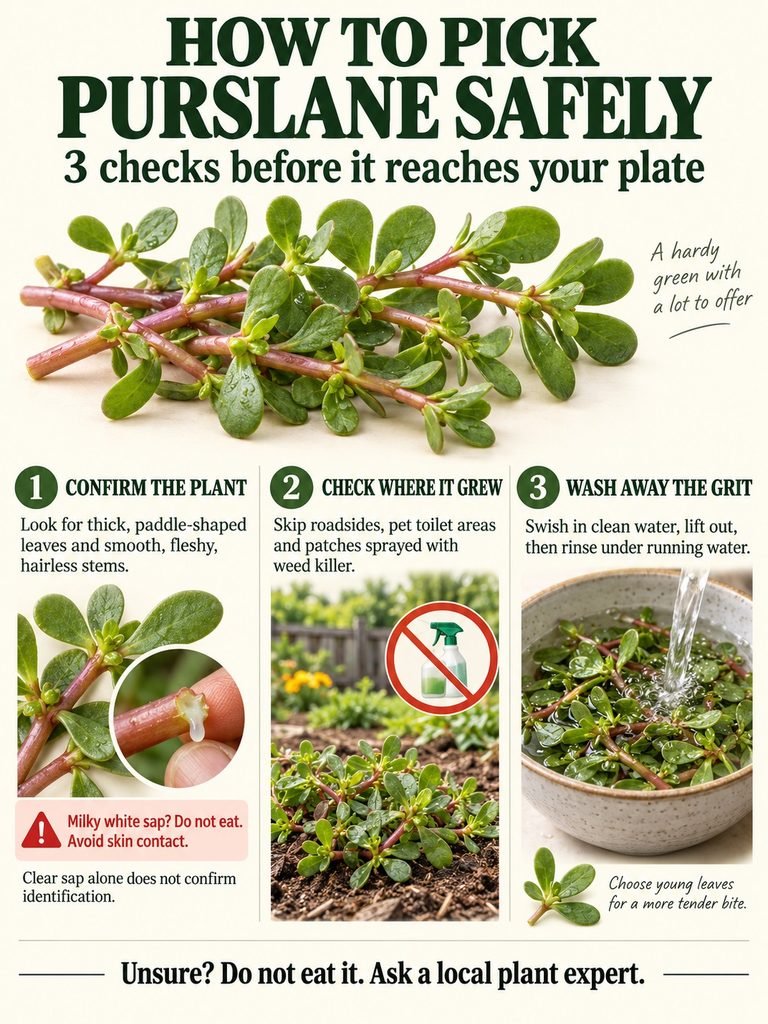
First, be sure it really is purslane. The stems are smooth, hairless, and fleshy, and the leaves are thick and shaped like small paddles. There is a look-alike called spurge that grows in exactly the same places, and spurge is not safe to eat. Snap a stem. Purslane gives you clear juice. Spurge leaks a milky white sap. If you see milk, throw it away.
Second, think about where it grew. Do not pick from the edge of a road, from a place where dogs walk, or from any patch that has been sprayed with weed killer. This matters more than people realize, because purslane is exactly the plant that gets sprayed.
Third, wash it properly. It grows low to the ground, and it collects grit in the leaves. Rinse it in a bowl of water, lift it out, and then rinse it again.
Also, take the young leaves when you can. They are more tender, they taste better, and there is one more reason I will explain in the last section.
How To Eat Purslane
The taste is slightly sour and slightly salty, with a lemony finish and a crunch like a very fresh cucumber. It is genuinely good. This is not one of those health foods you have to force down while holding your nose.
The simplest way is raw, in a salad. Chop the leaves and the tender stems, add a chopped tomato, a small onion, and a good spoon of plain yogurt. Salt, pepper, a little olive oil. That is the whole thing.
I put yogurt in that salad on purpose, and not only for the taste. I will come back to it at the end, because there is a good reason behind it.
You can cook it as well. Purslane goes into soups and stews the way spinach does, and it thickens the liquid a little because of the natural mucilage in the leaves. Some people find that texture strange the first time. Add it in the last few minutes, and it holds up better.
Another option is pickling. In many countries, people pickle purslane in vinegar and keep it through the whole winter. Pickled purslane next to grilled meat is excellent.
Pro tip: if you pick a big bunch and cannot use it the same day, stand the stems in a glass of water like flowers and put the glass in the fridge. It stays crisp far longer that way than it does lying flat in a plastic bag.
Just do not overcook it. High heat damages the omega-3 fats, and those fats are half the reason you are eating this plant in the first place.
Who Should Be Careful With Purslane
Now the part that almost nobody writes about, and the part I think matters most.
Purslane is high in oxalates. Quite high. Mature leaves have been measured at roughly 670 to 900 milligrams of oxalate per 100 grams, and in some growing conditions even more than that. Spinach, rhubarb, and beet greens sit in the same high-oxalate family.
For most people, this is not a problem. The oxalate passes through and leaves the body.
But oxalate binds with calcium and forms crystals, and those crystals are the main material in kidney stones. If you have ever had a kidney stone, or your doctor has told you that you tend to form them, talk to your doctor before you start eating bowls of this plant.
This is not a theoretical worry either. There are published medical case reports of people developing acute kidney injury after eating very large amounts of purslane in a short time (case report). In one of them, a woman ate close to three-quarters of a kilogram in a single meal. That is far beyond a normal serving, and I mention it so you can see where the line sits, not to scare you away from a salad.
So here is how to eat purslane sensibly.
Keep to normal food portions. A handful in a salad, not a mixing bowl.
Eat it together with a calcium food. Yogurt, cheese, or a splash of milk. The calcium binds the oxalate in your gut before it ever reaches your kidneys, and this is exactly why the traditional Mediterranean way of serving purslane with yogurt is so smart. Those old recipes worked out the chemistry long before anyone measured it in a laboratory.
Boil it or pickle it if you plan to eat it often. Both methods pull soluble oxalate out of the leaves and into the water or the vinegar.
And choose the young leaves. They carry noticeably less oxalate than the mature ones, which is the second reason I mentioned them earlier.
A few other people should take care as well. This plant is naturally salty, so watch it if you are on a low-sodium diet. It contains vitamin K, which matters if you take blood thinners. If you are pregnant or breastfeeding, ask your doctor first, because there is simply not enough research to say for sure.
The Bottom Line
Purslane is not a miracle. Nothing you eat is a miracle.
But this is a free, tough, tasty green that carries more omega-3 than any other leaf in your garden, a serious amount of potassium and magnesium, and a good load of antioxidants on top. It grows without help. It survives drought. And it comes back every single year whether you want it or not.
The only reason we throw it away is that somebody a long time ago decided to call it a weed. That one word did all the damage.
This summer, before you pull it out, look at it properly. Snap a stem and check for clear juice. Wash a handful, chop it with tomato and yogurt, and just taste it.
Then decide for yourself whether it belongs in the trash or on the table.
Please let me know how you like purslane, and share your opinions, tips, and family recipes in the comments below!