
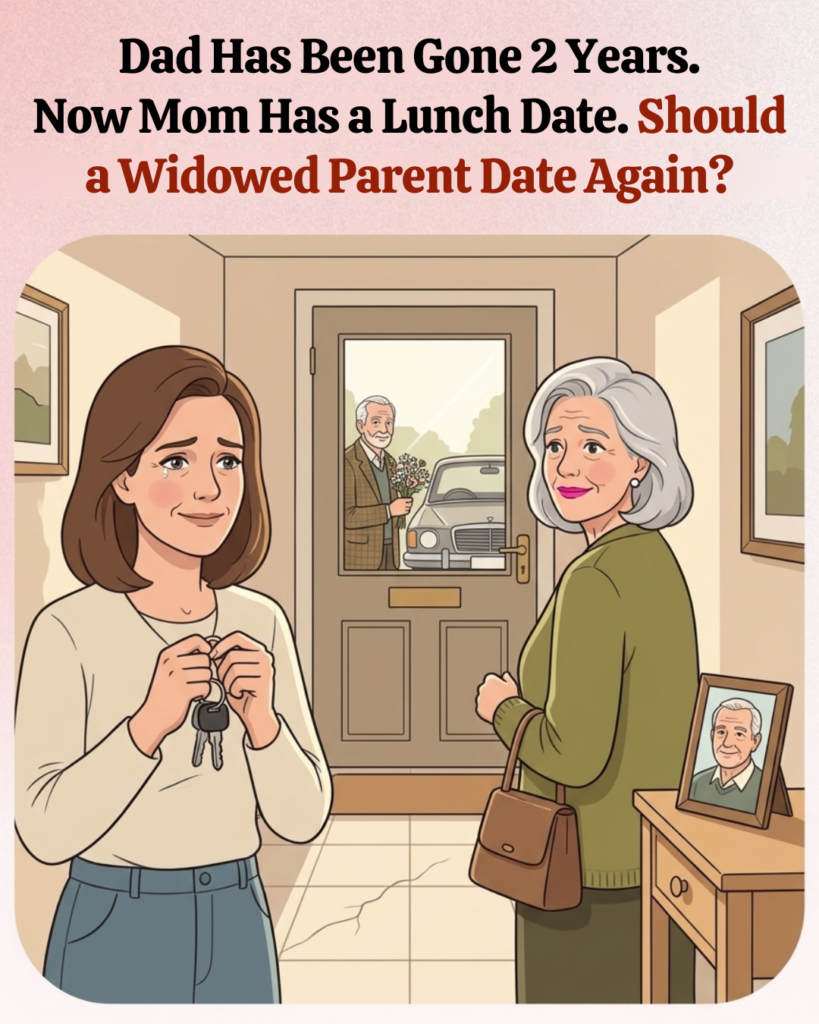
It was a normal Sunday phone call. Your mom told you about her tomatoes, the neighbor’s new dog, the price of eggs. Then, almost in passing, she said that a man from church, Richard, had asked her to lunch on Tuesday. “Just lunch,” she added quickly. “Nothing serious.”
You said something like “that’s nice, Mom.” But after you hung up, you sat in the car for a while feeling something you couldn’t quite name, a strange mix of being happy for her, sad for Dad, a little protective, and if you’re really honest with yourself, a little bit hurt too. Funny how one lunch can do that. Dad has been gone for two years. Two years. Is that a long time or no time at all?
If you’ve been there, you’re far from alone. And if you are the widowed parent reading this, wondering whether it’s okay to want company again, you’re not alone either. This topic causes a lot of quiet hurt in families, mostly because nobody really talks about it openly. In this article I want to go through whether a widowed parent should date again, why so many adult children find it so hard, and what both sides can do to keep the family close. So, let’s go through it.
How Common Is This?
More common than most families expect. Women usually outlive their husbands, so widowed mothers far outnumber widowed fathers. According to research from Bowling Green State University, about 12% of women who were ever married are widowed, compared with only 4% of men.
And yet most widowed people are not rushing back into dating. A Pew Research Center profile of single Americans found that 74% of widowed singles were not looking for a relationship or even casual dates. Among singles 65 and older, three-quarters said the same. So if your parent does start dating, they are actually in the minority. And it probably didn’t happen without a lot of thought.
Pew also found something else. It stayed with me. Nearly half of women 65 and older, 49%, don’t have a partner, compared with 21% of men the same age. That’s a lot of women eating dinner alone every night, watching the news by themselves and going to bed in a quiet house where, for forty or fifty years, there was always somebody to say goodnight to.
So, Should A Widowed Parent Date Again?
I personally think the honest answer is simple. If they want to, yes.
There’s no rule that says a person has to stay alone after their spouse dies. There’s no official waiting period either. Some people feel ready after a year, some after ten, and plenty never want to date again, which is also completely fine. Grief doesn’t work on a calendar. A widow who starts seeing someone after eighteen months didn’t love her husband less than a widow who waits five years. She just has her own path.
What we do know is that loneliness is hard on older adults, both emotionally and physically. As I wrote in 9 things that get harder with age and what helps, staying connected to people matters a lot as we get older. For some widowed parents, a new companion is part of that, someone to go for walks with, to call in the evening, or simply to sit across the table from.
Why Adult Children Struggle With It
That being said, if you’re the adult child and you feel uneasy about it, that doesn’t make you selfish or a bad person. There are real reasons this is hard, and most of them have more to do with love and grief than with the new person.
It Can Feel Like Dad Is Being Replaced
This is usually the biggest one. When you see your mom laughing with another man, a part of you might think, that should be Dad. Even if you know in your head that nobody can replace him, your heart doesn’t always listen. A new man in Dad’s chair at Thanksgiving, or a new woman in Mom’s kitchen, can feel like the last piece of your family as it used to be is slipping away.
You’re Still Grieving Too
Another thing is that children and parents often grieve on different timelines. Your mom lived with your dad every single day, and she may have been grieving for years already if he was sick for a long time. You might have lived in another city and only really felt the loss after the funeral. So when she says she’s ready to move on, you may still be right in the middle of it. Neither of you is wrong. You’re just in different places.
Worry About Money And The Future
Let’s be honest, money is part of it for some families, even if nobody wants to say it out loud. Will the new partner move into the family home? What happens to the will, or the house, or the savings Mom and Dad built together? These worries are natural, and they’re worth talking about calmly, ideally with a lawyer involved, as I mentioned in a previous article about inheritance and the child who cared for the parents. Wanting clarity is fine. Treating every new partner like a gold digger is not.
Fear Of Being Pushed Aside
Some adult children quietly worry that a new partner will take their place. Fewer Sunday calls, holidays spent at his family’s house instead of yours, less time with the grandkids, and maybe one day finding out about important news from someone else because Mom is busy with her new life. It’s not always logical. But it’s real. Especially after losing one parent, the idea of losing a bit of the other one can be scary.
It’s Just Strange To Picture
And sometimes it’s simply awkward. Most of us never imagined our 72-year-old mother on a dating app or getting ready for a date with lipstick and her good earrings. It’s a little like seeing your parents as real people with their own wishes for the first time, and that can take some getting used to.
Old Family Tension Comes Back
Sometimes the new relationship brings up things that were there long before. A sibling who always felt like Dad’s favorite reacts differently than the one who was closer to Mom. One child is happy for her, another refuses to come to Sunday lunch, and suddenly the brothers and sisters are arguing with each other instead of talking to their parent. Losing a parent shakes up the whole family, and a new partner can be the spark that lights old fires.
What The Widowed Parent Is Often Feeling
If you’re the adult child, it might help to see it from the other side for a moment.
Many widowed parents feel guilty about wanting company at all. They worry about what the kids will think, what the neighbors will say, and sometimes what their late spouse would think. Some will tell you their husband or wife actually told them, near the end, “Don’t be alone.” Others never had that conversation and keep wondering if they have permission.
There’s also the simple fact that the house is very quiet. You can love your children and grandchildren with all your heart, and still feel lonely at seven in the evening when the phone doesn’t ring and there’s nobody to tell about your day.
Interestingly, research doesn’t fully support the old saying that “women mourn, men replace.” Sociologist Deborah Carr studied older widowed adults and found that men’s interest in dating depended a lot on their social support. Men with plenty of friends looked quite similar to women. In other words, the urge to find a new partner is often about loneliness, not about forgetting.
If Your Parent Starts Dating Very Soon
This is where many families really struggle. What if Mom starts seeing someone six months after the funeral?
It might feel shocking, but it’s worth knowing that people grieve in very different ways. When a spouse was sick for a long time, with years of hospital visits, sleepless nights and slow goodbyes, a lot of the grieving often happens before the death. Experts call this anticipatory grief. So by the time the funeral comes, the widowed parent may have already cried most of their tears, while the children who weren’t there every day are only starting.
That doesn’t mean every quick new relationship is a good idea. Sometimes people rush into something because they can’t stand being alone. If you’re worried, it’s fair to ask gently, “Are you doing okay, Mom? Really?” Just try to ask out of care, not as a test.
What Adult Children Can Do
First of all, try to separate the person from the situation. Before you decide what you think of Richard, ask yourself honestly whether you would feel the same about anyone in that role. Often the answer is yes, and that tells you the problem is grief, not him.
Then, meet the new person. One lunch, one coffee, without big expectations. You don’t have to love them, and you certainly don’t have to call them Mom or Dad. Just give them a fair chance, the same way you would want your own partner to be treated.
It also helps to talk about your late parent openly. Many adult children are afraid that if Mom is dating, nobody will mention Dad anymore. You can ask for things that matter to you, like keeping his photo on the shelf, visiting the cemetery together on his birthday, or keeping a family tradition he loved. Most widowed parents are happy to say yes, because they haven’t forgotten either.
Talk to your siblings too, but try not to turn it into a team against your parent. Just a tip. Agree among yourselves that everybody can have their own feelings, and that nobody will make your mom choose between her children and her new friend.
And try to say your worries once, kindly, and then let your parent make their own choices. They’re an adult, after all. They raised you, paid the bills and made decisions for decades. Treating them like a teenager who can’t be trusted usually just pushes them away.
What The Widowed Parent Can Do
If you’re the one starting to date again, a few things can make it easier on everybody.
Tell your children yourself, before they hear it from a cousin or see a photo on Facebook. You don’t need their permission, but they deserve to hear it from you. Something simple like “I’ve been seeing someone, and I wanted you to know. Nobody will ever replace your father” can go a long way.
Take introductions slowly. Maybe a casual lunch first, not Christmas dinner with the whole family on the third date. And keep some of the old traditions just for you and the kids, at least for a while.
Pro tip: before any big step, like moving in together or getting married, talk to an estate or elder law attorney and update your will. I’m not a lawyer, and the rules are different in every state and country, but sorting this out early protects your new partner, your children, and you. It also takes away one of the biggest worries adult children have.
When The New Partner Has Family Too
Dating at 70 usually means dating someone who comes with a whole life. His own grown children, grandchildren, maybe his late wife’s photos all over his house. That can be beautiful. It can also be complicated.
Suddenly there are two families with two sets of traditions, two Christmas schedules and two groups of adult children who may be just as worried as you are. His daughter might be wondering the same things about your mother that you’re wondering about him. Keep that in mind, and be kind to each other. You don’t have to become one big happy family overnight, and nobody should force it. A slow, friendly start, maybe one shared barbecue in the summer, works much better than pretending everybody is already close.
What About The Grandchildren?
Little kids usually take it much easier than adults do. To a six-year-old, Grandma’s friend who knows magic tricks is simply a nice man. Older grandchildren might have more questions, especially if they were close to Grandpa. Answer them honestly and simply. “Grandma still loves Grandpa and always will. She also likes having a friend to spend time with.” Children are often better than adults at holding two feelings at once.
When The Worry Is Actually Justified
Most of the time, a widowed parent dating again is a good thing. But sometimes adult children notice real warning signs, and those shouldn’t be ignored. Widowed older adults can be targets for romance scams. According to the Federal Trade Commission, older adults reported losing about $2.4 billion to fraud in 2024, and they were more likely than younger people to report losing money to romance scams.
Be careful if the new person has never met your parent in person but always has a reason why not, asks for money or gift cards, wants help with an “emergency,” pushes for access to bank accounts, or tries to keep your parent away from family and friends. Those are signs to step in gently. Even then, it works better to ask questions with curiosity, like “Have you two video called yet?”, than to start with accusations, which can make your parent defend the person even harder.
The Bottom Line
Should a widowed parent date again? If they want to, they have every right to, and for many it brings back a bit of joy they thought was gone for good. Adult children often struggle with it, and that’s understandable, because it touches their own grief, their memories and sometimes their worries about the future. What helps most is honest talking on both sides, a little patience, and remembering that loving someone new doesn’t erase the person who’s gone. Your mom can miss your dad every day and still enjoy lunch on Tuesday.
Would you be okay with your widowed parent dating again? Let us know in the comment box below.