
You’re standing at the kitchen sink after dinner, whistling some old song while you dry the dishes. Your mother-in-law is visiting for the week. She looks up from her tea and says, very seriously, “Don’t whistle in the house. Not at night.”
You laugh. She doesn’t.
Almost every family has somebody like that. It’s usually a grandmother or an aunt with a whole list of things you must never do inside the house, especially after dark. And the funny thing is, if you compare those lists from one country to another, a lot of them look surprisingly similar, even between places that never had any contact with each other until a few generations ago.
In this article we’ll look at seven everyday habits that, according to old folk beliefs, “invite spirits” into your home. They come from Japan and Russia, from the Balkans and India, and from a few other places too. Most of them also have a very practical explanation hiding behind the spooky one, which I find even more interesting. So, let’s go through it.
A Quick Word Before We Start
These are folk beliefs, the kind passed down at kitchen tables, not rules from any religion and not facts. Many of the examples here come from collections of folklore, like the archive at the University of Southern California, where students record superstitions they grew up with in their own families. So the details can change from one village or family to the next.
I’m not asking you to believe any of it. But these little rules tell us a lot about how people lived before electricity. That’s worth a few minutes of anybody’s time.
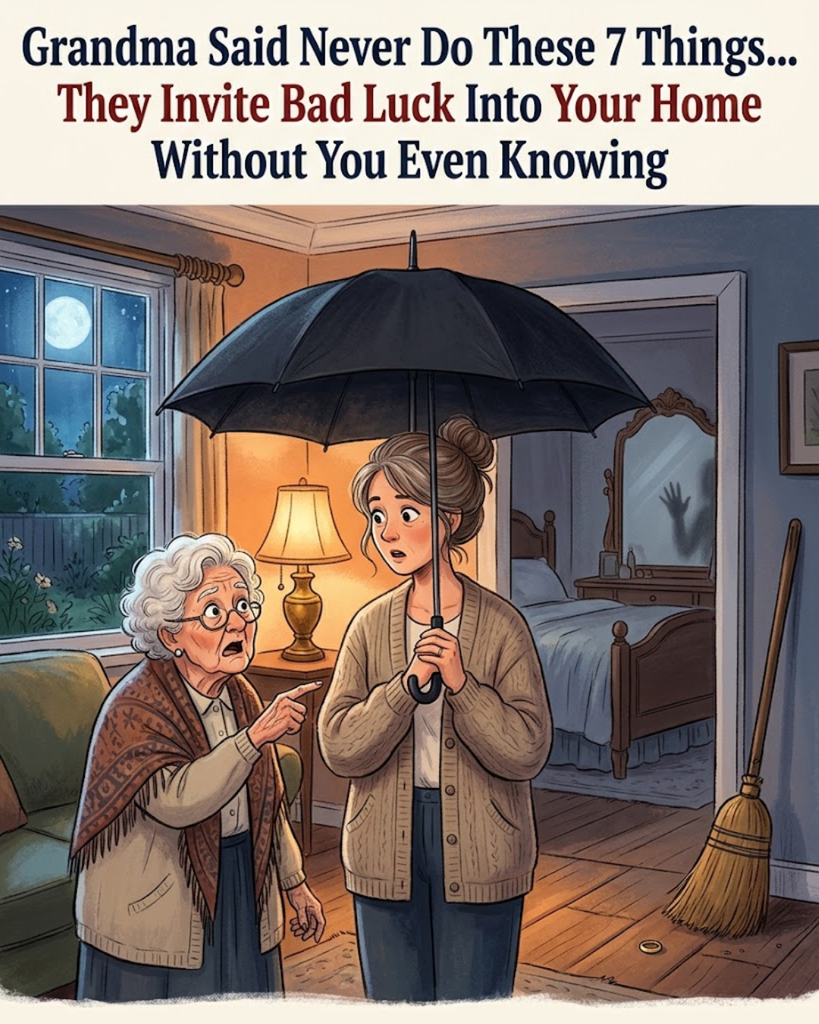
1. Whistling Inside the House, Especially at Night
This is probably the most widespread one of all. In Japan, people say whistling at night wakes up spirits that are drawn to the sound, according to a Japanese informant in USC’s folklore archive. In other parts of the country, they warn that it brings snakes, or even thieves.
Russians have a different worry. There, whistling indoors supposedly makes you lose money. Plenty of Russian grandmothers will still stop you mid-tune with a sharp look. In Serbia, whistling in the house brings in mice, which honestly might be the worst outcome of them all.
The practical side makes a lot of sense. In a quiet village long before streetlights, a whistle in the dark carried a surprisingly long way, across the fields and past the neighbors’ houses, all the way to whoever happened to be standing in the shadows by the road listening for any sign of who was still awake. It could tell a thief that someone was awake, or attract attention you didn’t want. The Japanese collector put it simply: unwanted attention brings unwanted results.
My favorite detail is how specific the warnings get. Japan worries about snakes and Russia worries about your wallet, as if every country picked the thing it feared most.
Cleaning and Grooming After Dark
Two of the most common rules have to do with the end of the day. The house is finally quiet, and that’s exactly when you’re not supposed to do them.
2. Sweeping the Floor at Night
In many Indian households, sweeping after sunset is believed to sweep away the family’s luck and invite bad things in. A lifestyle blogger quoted by Apartment Therapy offered a much more down-to-earth reason. Before good lighting, sweeping in the dark meant you could easily sweep a ring or a gold chain right out the door. Nobody would notice until morning.
The same article mentions a version from the Philippines, where some families won’t sweep at all on New Year’s Eve or New Year’s Day, so they don’t brush the year’s good luck out of the house.
I’ll admit I find this one convincing. Anybody who has ever lost a contact lens on a dark kitchen floor knows exactly how it feels to crawl around on your hands and knees with a flashlight, promising yourself you’ll never take it out over the sink again.
3. Cutting Your Nails at Night
In Japan, an old belief says that cutting your fingernails after dark invites spirits to come after you. Some say it can even shorten your life. One version, recorded in the USC folklore archive, explains that nails were thought to hold a tiny part of your soul. Cut them at night, and those little pieces get released into the dark, where the spirits are.
Similar warnings show up across Asia, from Korea to India. And once again, the practical side is hard to ignore. With only a candle or an oil lamp, using a sharp blade on your fingers at night was a good way to cut yourself, and an infected finger was a serious problem in a time without antibiotics, when even a small wound that turned red and swollen could keep a farmer or a busy mother from working for weeks.
Windows, Mirrors and Umbrellas
The next three are about the house itself, and how we arrange it.
4. Opening Two Windows at Once
If you have friends from the Balkans, you’ve probably heard about the draft. In Serbia, opening two windows so that air runs through the room supposedly brings in evil spirits with the breeze. Many people in the region also blame that same draft for colds and stiff necks.
Visitors find this very funny. Locals don’t. Picture a hot July afternoon in Belgrade, every window closed, a family sweating in the living room, and a grandmother who would rather melt than let a breeze cross the room. It’s a real scene in a lot of homes, even today.
5. Hanging a Mirror That Faces Your Bed
This one comes up in Chinese and Chinese-American families, and also in feng shui advice. According to one account in the USC archive, the idea is that your soul rises and wanders while you sleep. If it sees its own reflection in a mirror, it can get confused. Then it may not find its way back to your body.
The woman who shared that belief didn’t really believe it. But she still wouldn’t put a mirror facing her bed. I think a lot of us are exactly like that with superstitions.
There’s a simple practical reason here too. Waking up at 3 a.m. and catching a dark shape moving in a mirror across the room will scare anybody, even when that shape is just you.
6. Opening an Umbrella Indoors
This is the one most Americans and Brits know. According to Mental Floss, some people trace it back to ancient Egypt. Umbrellas supposedly belonged to royalty there, and opening one out of the sun was disrespectful. Honestly, that story is hard to prove.
The more likely explanation is Victorian. When steel-ribbed umbrellas with a spring mechanism became popular in the 1800s, they snapped open fast and hard. In a small, crowded parlor, that could poke a child in the eye. So “bad luck” was a quick way to make people stop.
7. Leaving a Newborn Alone in a Room
In Bulgarian folk tradition, nobody was supposed to leave a newborn baby alone in its first days, because evil spirits might gather around. According to Radio Bulgaria, if the mother absolutely had to step out, she would leave a broom next to the baby. The evil beings would supposedly stop to count every twig in the broom, which took so long that someone came back before they finished. Or morning arrived, and they lost their power.
I love that story. It’s a clever, slightly funny way to protect the most fragile person in the house.
The same rule applied to the mother for the first week after giving birth. And there’s an obvious, very human reason behind it. A new mother and baby needed somebody nearby to bring water and keep the fire going during those first exhausting days, and a frightening story made sure the whole family took that seriously instead of leaving her to manage on her own.
Some Spirits Were Supposed to Live With You
Not every house spirit was a bad one. In old Russian belief, many homes had a domovoi, a small spirit living behind the stove. According to the same overview of Russian superstitions, he was the least dangerous of the household spirits. But if you made him angry, he could start acting like a poltergeist, knocking things over and keeping everyone awake.
Russians also believed the threshold of the house was a place where these forces were especially strong. That’s one reason going back home for something you forgot is still considered a bad sign there.
Picture a Russian grandmother, coat on and bag in hand, realizing she left her glasses on the kitchen table. In some families, she would rather squint all day than step back over that threshold.
Beyond the Front Door
Some beliefs follow you into the yard. In the Philippines, people often say “tabi tabi po,” which means “excuse me,” when they pass a place where spirits might live, like an old tree or a mound of earth. According to The Aswang Project, which collects Philippine folklore, forgetting to say it could bring a fever or a rash.
And in Iceland, some rocks are believed to be the homes of the Hidden People. According to Guide to Iceland, roads have been rerouted and construction delayed so that these stones wouldn’t be disturbed. That’s a whole country politely asking permission, which I find kind of lovely.
When the “Spirit” Sits on Your Chest
There’s one more night-time experience that shows up in folklore almost everywhere. It deserves its own section, because it’s real and very common.
Some people wake up in the middle of the night and can’t move. There’s a heavy weight on their chest, and they feel that someone is standing in the room or even sitting on them. Doctors call this sleep paralysis.
A Hag, a Presser and a Mare
Every culture seems to have a name for the creature people thought was causing it. In Newfoundland it’s the “old hag.” In Japan it’s kanashibari, which means “bound in metal.” In Turkey it’s the karabasan, “the dark presser,” and the English word “nightmare” itself comes from the old Germanic “mare,” a spirit believed to sit on sleepers, as Mental Floss explains.
According to the Cleveland Clinic, about 30% of people have at least one episode in their lifetime. It happens when you wake up during REM sleep, the dreaming stage, while your muscles are still switched off. It usually lasts a couple of minutes and is more likely when you’re stressed or sleeping badly.
Culture seems to change how frightening it feels. Researchers comparing Egypt and Denmark found that the Egyptian participants had longer episodes and more fear of dying, and many of them believed a supernatural being was behind it, as Live Science reported. Knowing what’s actually happening can take a lot of the fear out of it.
This short TED-Ed animation explains what’s going on in the brain. It’s a nice one to share with a grandchild who has had a scary night.
If it happens often, see your doctor. It can go along with sleep apnea or anxiety, and doctors can treat both. Sleep also changes in our 40s and 50s, sometimes because of hormonal changes, and some people find their sleep position matters too, which I wrote about in the benefits of left side sleeping.
Why So Many of These Rules Happen After Dark
Once you put all seven side by side, you notice a pattern. Almost every one of them is about the night, or about a moment when someone is vulnerable, like a sleeping person or a newborn.
For most of human history, the dark really was dangerous. You couldn’t see who was outside, and a small cut could turn into a serious infection. A spooky story was simply the fastest way to teach a child to be careful, much faster than a long explanation, and grandmothers in every country seem to have figured that out on their own.
There’s a second reason too, I think. Rules like these gave people a small feeling of control. You couldn’t stop a fever or a bad harvest, but you could close the window and lean a broom against the crib. That’s my guess, anyway. It would explain why so many of these rules cluster around babies and the night, the two things people have always felt most helpless about.
Some old habits even turn out to be good for you. Japan, for example, has plenty of traditional routines linked to long, healthy lives. I wrote about a few of them in the Japanese longevity habits.
So, Should You Stop Whistling?
That’s completely up to you. I personally still won’t open an umbrella in the hallway, and I couldn’t give you a single good reason why.
What I do think is worth keeping is the stories themselves. Ask your mother or your aunt about the rules she grew up with, and write them down in a notebook before they’re forgotten, because once that generation is gone, a lot of these little stories disappear with them. Your grandkids will think they’re hilarious now, and they’ll probably be repeating them to their own children one day.
Imagine telling your granddaughter about the Bulgarian broom. She rolls her eyes and says spirits can’t count. Then, the next time she babysits her little cousin, you notice a broom leaning against the crib. She says it was already there. Sure it was.
That’s how these things survive. Half joke, half just in case.
Which of these superstitions did someone in your family swear by? Let us know in the comment box below.