
It’s a cold morning in December. You wake up and something feels off. There’s a strange ache in the roof of your mouth, and you’re so tired you could sleep for another ten hours. You think about the dentist. You think about the flu that’s been going around at work. The last thing you think about is your heart.
That’s almost exactly what happened to a mother named Rena. Her daughter, Kayla Kauffman, later wrote about it for Newsweek. Rena woke up with pain in the roof of her mouth and an exhaustion she couldn’t shake. Most of us would have taken a painkiller and gone to work. She went to the emergency room instead, and it turned out she was having a heart attack. Her story shows how heart attack symptoms in women can look nothing like the movies.
Why did she go? She had once attended a heart health event, and one message stuck with her. The speakers kept repeating it. In women, heart attack symptoms are often quiet and strange, and they don’t always start in the chest. So, let’s go through what those signs look like, what the research says, and what to do when your body sends an odd signal.
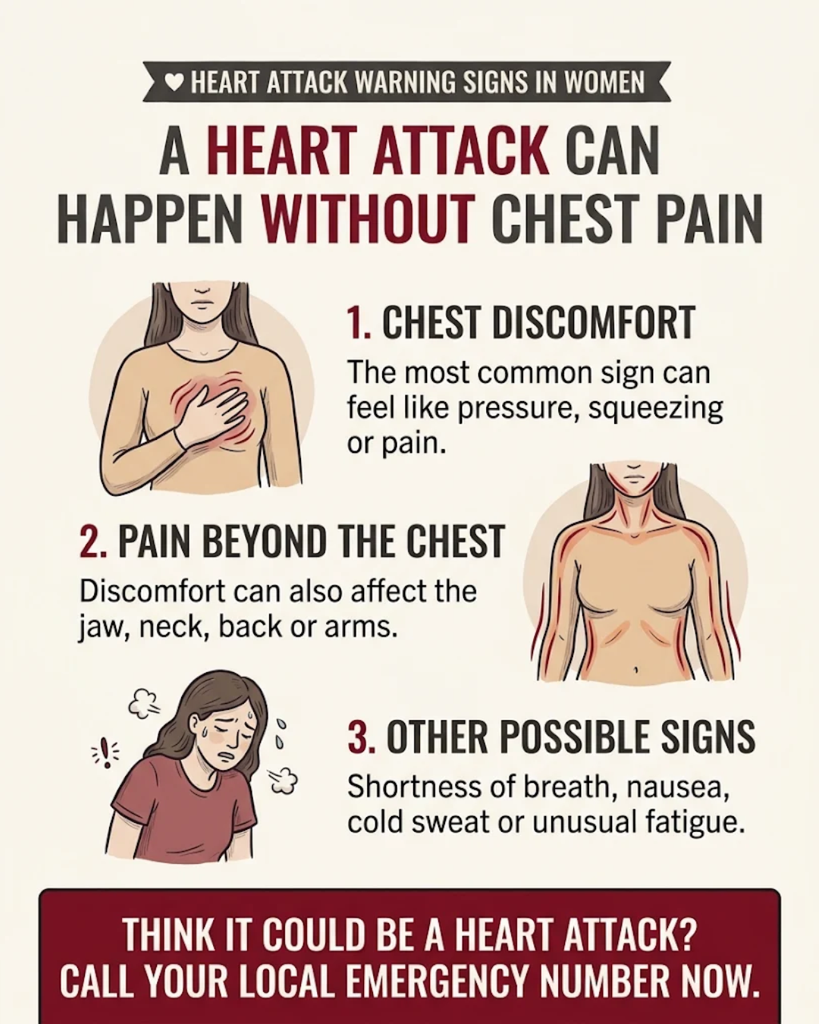
How Heart Attack Symptoms In Women Break The Movie Script
Most of us grew up with the movie version of a heart attack. A man clutches his chest, groans and falls to the floor. Pressure in the chest still tops the list for everyone. Women, though, tend to get extra signals on top of it, and once in a while those extra signals show up alone.
The American Heart Association keeps a list worth saving. It names a squeezing feeling low in the chest or high in the belly, an ache along the jaw, neck or upper back, an upset stomach that may lead to throwing up, and trouble catching your breath. Fainting, indigestion and extreme tiredness are on the list too.
A large study in the journal Circulation looked at younger heart attack patients. The women in it tended to report three or more extra symptoms on top of the chest ache, and almost twice as many of them as the men put it all down to stress or nerves. On average, they waited longer before getting help.
Here is the trouble. Every one of those symptoms has a dozen ordinary explanations. Nausea could be something you ate. A sore back could come from lifting a grandchild. Feeling worn out could simply be November. That’s exactly why so many women talk themselves out of getting help.
The Warning Signs That Can Start Weeks Before
In 2003, nurse researcher Jean McSweeney and her team at the University of Arkansas asked 515 women about the days and weeks before their heart attacks. The answers surprised a lot of doctors. Ninety-five percent of the women said they noticed new or unusual symptoms beforehand, often a month or more before the attack.
The most common early sign wasn’t chest pain. It was unusual fatigue, reported by about 71% of the women. Next came trouble sleeping, at around 48%, and getting winded easily, at around 42%. Just three in ten felt chest discomfort ahead of time. And when the attack finally hit, 43% of these women felt nothing in the chest whatsoever.

Think about what unusual fatigue might feel like in real life. You make the bed and need to sit down afterward. Carrying the laundry basket up the stairs leaves you winded, when last month it didn’t. You sleep eight hours and still wake up drained. On its own, none of this means a heart attack is coming. But if it’s new for you, and it doesn’t go away, it’s worth telling your doctor about. Our article on that heavy feeling on your chest covers another sign worth knowing.
Can Your Heart Really Hurt In Your Jaw Or Teeth?
It sounds odd, but yes. The heart shares nerve pathways with parts of the head and neck. When your heart runs low on oxygen, the brain can feel that pain somewhere else entirely. Doctors call this referred pain.
A dental researcher named Marcelo Kreiner studied this for years. In his research, pain in the face, jaw, throat or teeth was the only symptom in about 6% of patients whose hearts weren’t getting enough blood. In about 4% of heart attack patients, it was the only sign of all. And this kind of pain showed up more often in women than in men.
How is it different from a normal toothache? According to Kreiner’s research, heart-related pain in the face was often felt on both sides. People described it as pressure or burning. It tended to get worse with physical activity and ease up with rest. A bad tooth usually hurts in one spot, and it often throbs when you chew or drink something cold.
None of this means every sore jaw is a heart problem. Most aren’t. But if mouth or jaw pain arrives together with tiredness, queasiness, sweating or a tight, breathless feeling, treat it as serious.
Why So Many Women Wait Too Long
Heart trouble takes more women’s lives every year than every type of cancer put together, the AHA reports. Still, fewer than half of us name it as our biggest health risk. Plenty of women file it under “men’s problems.”
Cardiologist Nieca Goldberg, an American Heart Association volunteer, has pointed out that many women chalk these signs up to reflux, a virus or simple age. She believes many hold off because they’re scared, and because they put their families first. Some women take an aspirin and never call for help at all.
That pattern feels familiar to a lot of us. We drive everyone else to their appointments. We notice when a husband looks pale or a grandchild has a fever. But when our own body sends a signal, we decide to wait and see. With a heart attack, waiting is the dangerous part.
Your Plan For The Moment It Happens
The moment you suspect your heart, dial 911 or the emergency line where you live. Stay out of the driver’s seat. Skip the ride from your son or neighbor too, whenever you can. Paramedics can start treatment the moment they arrive, and they can alert the hospital before you get there.
The emergency operator may tell you to chew an aspirin while you wait. Follow their instructions. A pill is never a replacement for that phone call, though.
Worried you’ll feel silly if it turns out to be nothing? Emergency teams would much rather send you home with indigestion than see you arrive too late. As Rena’s story shows, listening to that small voice saying something isn’t right can save your life.
You can also lower your risk long before any symptoms show up. Regular movement and good rest both help your heart, as we explained in our article on physical activity, rest and heart health. Knowing your blood pressure, cholesterol and blood sugar numbers matters too. If you haven’t had them checked in a while, bring it up at your next checkup.
Actress Elizabeth Banks teamed up with the AHA on a short film about a busy mom who brushes off every warning. It’s funny, and it’s only three minutes long. Many women say it helped them recognize what was happening to them.
Final Thoughts
Your heart won’t always sound the alarm with a crushing pain behind the ribs. Heart attack symptoms in women often start with something smaller. It might be a tiredness that won’t lift, an upset stomach, an ache in the back, or even pain in the jaw or the roof of the mouth.
You know your body better than anyone. When a sensation is new, odd or simply off, skip the waiting game. Call for help, and let the doctors decide whether it’s your heart.
Did you know that heart attack symptoms in women can show up in the jaw or mouth? Has anyone in your family had warning signs like these? Let us know in the comment box below.