
It’s a gray November morning, and you’re out with the dog before breakfast. Halfway down the block, you pass a woman about your age walking fast. She has on a snug black vest with thick pockets across the chest and back, and she nods at you like she knows a secret. By the next corner, you spot another one. Then you remember your sister brought up the same thing on the phone last week.
That secret has a name. People call it weighted vest walking, and it has quietly taken over sidewalks, parks and mall loops all over the country. Kim Holderness, a 49-year-old mom from Raleigh, North Carolina, saw so many neighbors in vests that she told a reporter it looked “almost like an army.” So she and her husband, Penn, made a silly song-and-dance video about it. That clip passed six million views, according to a Washington Post feature on the craze.
The numbers back that up. On TikTok, the #weightedvest tag drew more than 30 million views by late 2025, as Fox reported. Vest makers felt it too. Hyperwear told the Post its sales jumped about 60% in a single year. Still, a popular habit and a proven one are two different things. So it’s fair to ask whether the vest really does what the videos promise.
Why Weighted Vest Walking Took Off After 40
For many women, the pull comes down to bones. Once estrogen drops at menopause, bone tends to thin faster. As Fortune pointed out, citing the National Institute on Aging, about one in five women over 50 has osteoporosis. For men, the figure is closer to one in 20.
OB-GYN Mary Claire Haver, who has more than two million followers on Instagram and TikTok, became one of the biggest fans of the vest. She tells patients that losing muscle with age is “not inevitable,” and she wears one herself. Katie Couric shared her own vest on Instagram, too. When the women you trust on your phone all show up in the same gear, it’s hard not to wonder.
The logic sounds simple. Bones respond to load. Carry a few extra pounds, and every step asks a little more of your hips, legs and spine. In theory, that extra demand pushes the body to hold on to bone and muscle it might otherwise lose.
What The Bone Studies Actually Found
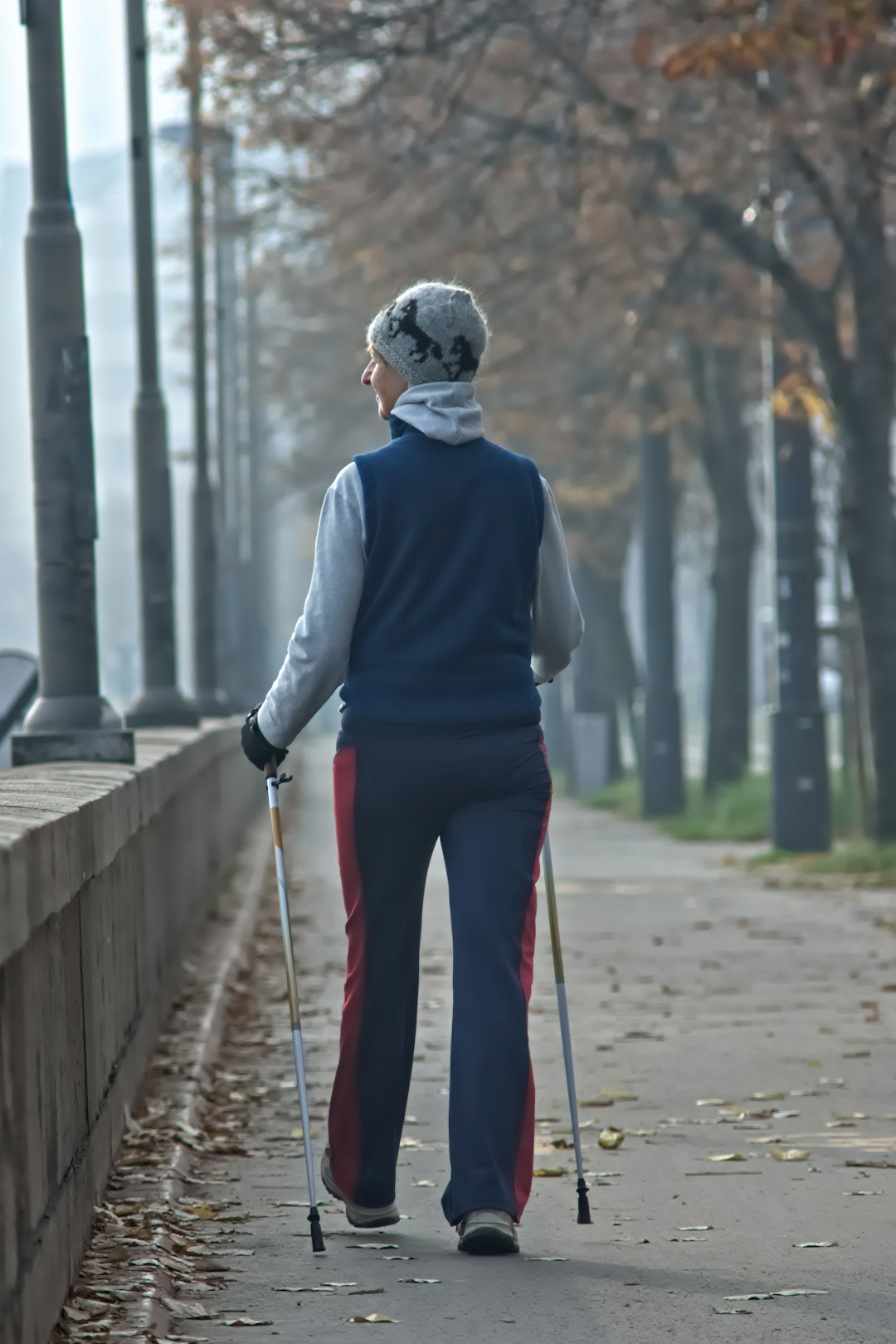
Here’s where things get messier. The study fans share most often goes back to 2000. In it, nine postmenopausal women kept up a vest workout three times a week for five years, while nine active women skipped it. At the end, hip density in the vest group had barely moved. The other women had lost bone.
That sounds great until you read the details. Those women weren’t strolling. Their routine paired the vest with jumping, and the group was tiny. Plain walking was never part of the test.
A much bigger trial came out of Wake Forest University in 2025. The team followed 150 older adults with obesity, average age about 66, through a year of weight loss. One group wore a vest for around seven hours a day. Another lifted weights, and a third only dieted. Yet all three groups lost a similar amount of hip bone. Study author Kristen Beavers said those steps “alone may not be enough.”
Then, in September 2025, Osteoporosis Canada spoke up. The group does not recommend a vest on walks for bone health, and it found “little to no evidence” that doing so raises bone density. It also warned that the added load may not sit well with people who have spinal arthritis or disc trouble.
So Is The Vest A Waste Of Money?
Not necessarily. Bone density isn’t the only thing a vest touches. Jaclyn McKenna, a sports medicine doctor at the Hospital for Special Surgery in New York, told the Post that added weight makes your body burn more energy and puts healthy stress on bones. In her view, that may help slow bone loss and lower your chance of a fall. She also said bolder claims, like sharper thinking, have little proof behind them.
Think of weighted vest walking as a way to make a walk you already love a bit harder. A 30-minute loop with an extra six or seven pounds feels different. Your legs work more on the hill by the school. Your breathing picks up sooner. For a woman who no longer finds her usual route a challenge, that can matter.
Even so, experts keep coming back to one point. Elizabeth Matzkin, who heads women’s sports medicine at Brigham and Women’s Hospital, told Healio that a vest can’t stand in for real strength training or good food. Squats, light dumbbells and hauling groceries up the stairs still give your body things a walk can’t. If you like adding a twist to your walks, our piece on three minutes fast, three minutes easy is another simple one to try.
How To Start Weighted Vest Walking Without A Sore Back
Say you’ve already ordered one, and it’s sitting by the front door. Sarah Wherry, an exercise physiologist at the University of Colorado Anschutz, likes a slow build. First, wear the vest empty on a normal walk to see how it fits. Next, add a small amount of weight and keep walks to about half an hour, two or three times a week. If nothing hurts for two or three weeks, you can add a little more.
How little is little? Haver has suggested starting somewhere between 5% and 10% of your body weight. For a woman who weighs 150 pounds, the low end comes to about seven or eight pounds. Wherry says most people shouldn’t go past 10% to 15%, while Osteoporosis Canada noted that the risk stays low at very light loads, around 3%. When in doubt, go lighter.
Fit matters as much as weight. Jacob Calcei, a sports medicine specialist at University Hospitals in Cleveland, wants a vest that hugs your body, with the load split evenly front and back. He also likes rest days between sessions, since daily wear isn’t the goal. Keep your shoulders back and your belly lightly firm as you go.
A few signs mean it’s time to stop and get checked. Alexandra Hill, a physical therapist who speaks for the American Physical Therapy Association, points to new or worse pain in your back, hips, knees or feet. Dizziness, trouble catching your breath, or tingling and numbness in your legs belong on that list too.
Who Should Ask A Doctor Before Buying One
If you already have osteoporosis, this part is for you. Hill says women with fragile bones may still gain from added load, but only with close guidance. The wrong weight can raise the risk of a cracked vertebra or a fall. A physical therapist can watch how you move and set a safe limit for you.
The same goes for anyone with disc problems, arthritis in the hips or spine, or shaky balance. Wherry also noted that many vests aren’t cut for a woman’s body, and buying online makes the fit hard to judge. Ask your doctor first, and bring the vest along to a physical therapy visit if you can.
You may find that you don’t need the vest at all. A brisk evening stroll does plenty on its own, as we covered in our story on a short walk after dinner. Some days, the best upgrade is simply getting out the door.
Bob and Brad, two physical therapists with a huge YouTube following, explain what older adults should know before trying a vest in this video.
Final Thoughts
The woman in the black vest on your street isn’t wrong to try it. She may just be expecting the wrong result. Weighted vest walking can turn an easy walk into a harder one and keep your legs working. The bone claims, though, rest on thin research, and walking with a vest hasn’t shown a clear bone benefit so far.
So if you try it, start light, pay attention to your back and knees, and keep lifting, eating well and asking your doctor about bone scans. The vest can be a nice extra, as long as it stays an extra.
Have you tried weighted vest walking, or seen your neighbors doing it? Did it help your strength or bother your back? Let us know in the comment box below.