
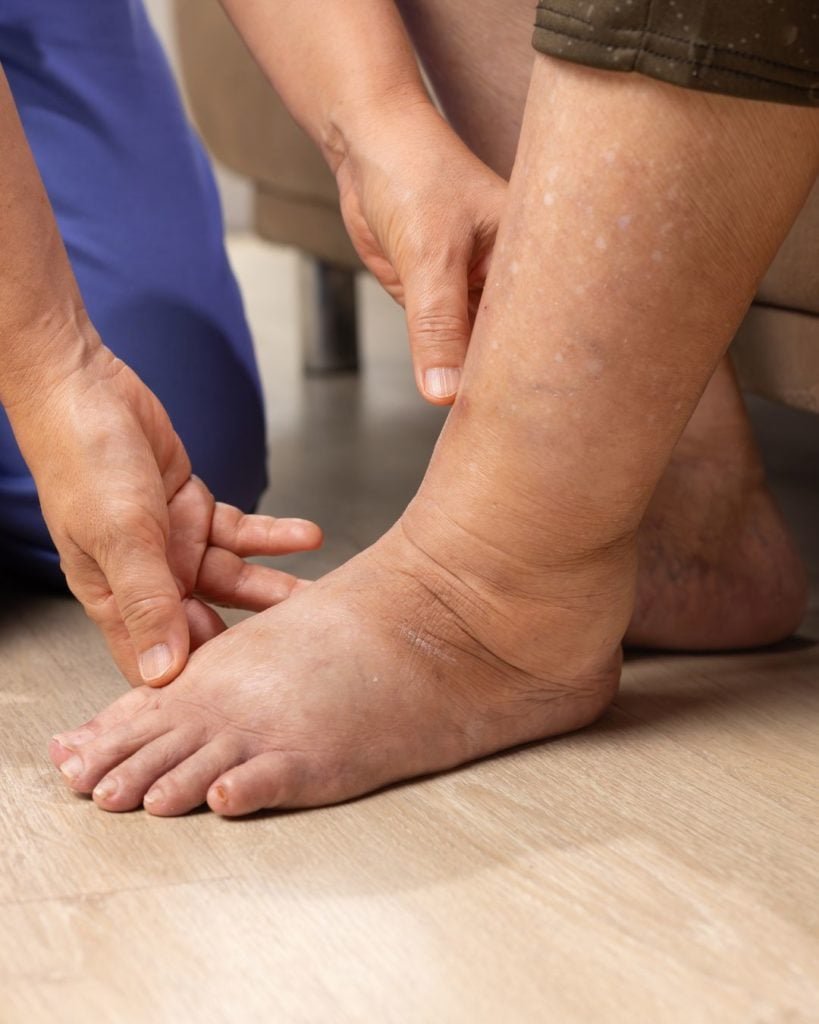
You take off your socks at the end of a long day and notice deep lines around your ankles. Those weren’t there last year. Out of curiosity you press your thumb into the skin above the ankle bone, and the little dent stays there for a few seconds before it slowly fills back in.
Most of us would shrug and go to bed. Long day, too much standing, maybe the salty soup at lunch. And very often that’s exactly what it is.
But sometimes it isn’t. Your feet are a surprisingly good early warning system. A lot of problems with the heart, the circulation, the nerves and even the lungs show up there first. In this article I want to go through 7 changes in your feet that are worth paying attention to, what they can mean, and when it’s time to stop shrugging and call the doctor. So, let’s go through it.
Just one important note first. I’m not a doctor, and this article is not a diagnosis. Most of these signs have harmless explanations too. If something new shows up and doesn’t go away, please get it checked.
Why Your Feet Often Show Problems First
Your feet are a lot more complicated than they look. According to the American Geriatrics Society’s Health in Aging Foundation, each foot has 26 bones and 33 joints, plus more than 120 muscles, ligaments, tendons and nerves. If you count both feet, that’s 52 bones, about a quarter of the 206 bones in the whole body. They also have thousands of nerve endings. That’s why they’re so ticklish, and why they’re so important for your balance.
Another thing is distance. Your feet are the part of your body furthest from your heart. Blood has to travel all the way down there and then climb back up against gravity. So when the heart or the blood vessels start having trouble, you often notice it in the feet first.
And let’s be honest, many of us don’t really look at our feet very often. Especially after 50, when bending down to check them isn’t as easy as it used to be.
1. Swollen Feet
Some swelling is completely normal. After a long flight, a day of standing at a wedding, a hot summer afternoon or a salty meal, the feet and ankles can puff up and then go back to normal by morning. Shoes that are too tight don’t help either.
Think about the last time you came home from a long family wedding, where you stood in the kitchen helping with the food for three hours and then danced in shoes you hadn’t worn since the last wedding, and your feet looked like two little loaves of bread by midnight. That kind of swelling is usually nothing to worry about. It’s the kind that keeps showing up on ordinary days that deserves a closer look.
But what if they swell often, for no clear reason? Or the swelling is still there in the morning? Then it’s worth asking why. MedlinePlus, the patient information site of the U.S. National Library of Medicine, lists heart failure, kidney failure and liver failure among the causes. All three can make extra fluid collect in the legs. Another very common one after 50 is venous insufficiency. That’s when the leg veins, often varicose ones, can’t push blood back up to the heart very well.
An underactive thyroid can sometimes cause swelling too. And don’t forget about medicines. Some blood pressure pills, especially amlodipine and similar drugs called calcium channel blockers, often cause swollen ankles. The NHS lists it among the common side effects of amlodipine. Did your ankles start swelling after a new medicine? Tell your doctor. But please don’t stop taking it on your own.
When Swelling Is An Emergency
This part is important. If only one leg or foot is swollen, especially with pain in the calf, warmth, or red or darker skin, it can be a blood clot, called deep vein thrombosis or DVT. The NHS advises getting urgent medical help, so call your doctor that same day. And if swelling comes together with shortness of breath or chest pain, call 911 right away. It can mean a clot has moved to the lungs, or the heart is struggling. That can’t wait until Monday.
2. Feet That Are Always Cold
Cold feet in January are normal. Cold feet in July, under a blanket, every single evening? Maybe not.
Often it comes down to circulation. When blood doesn’t flow well to the feet, they stay cold, and sometimes the skin looks pale or bluish too. Peripheral artery disease is one possible reason. That’s when the arteries in the legs get narrowed, especially in smokers and people with diabetes or high blood pressure. Diabetic nerve damage can make the feet feel cold even when they aren’t. Anemia, a low thyroid and Raynaud’s, which we’ll get to in a minute, can also play a part. And yes, stress can make your feet cold too. When you’re tense, the body pulls blood toward the center.
Are your feet cold all the time, with color changes, pain when you walk or numbness? Then mention it to your doctor. I wrote much more about this in Why Your Hands and Feet Are Always Cold After 50.
3. Tingling Or Pins And Needles
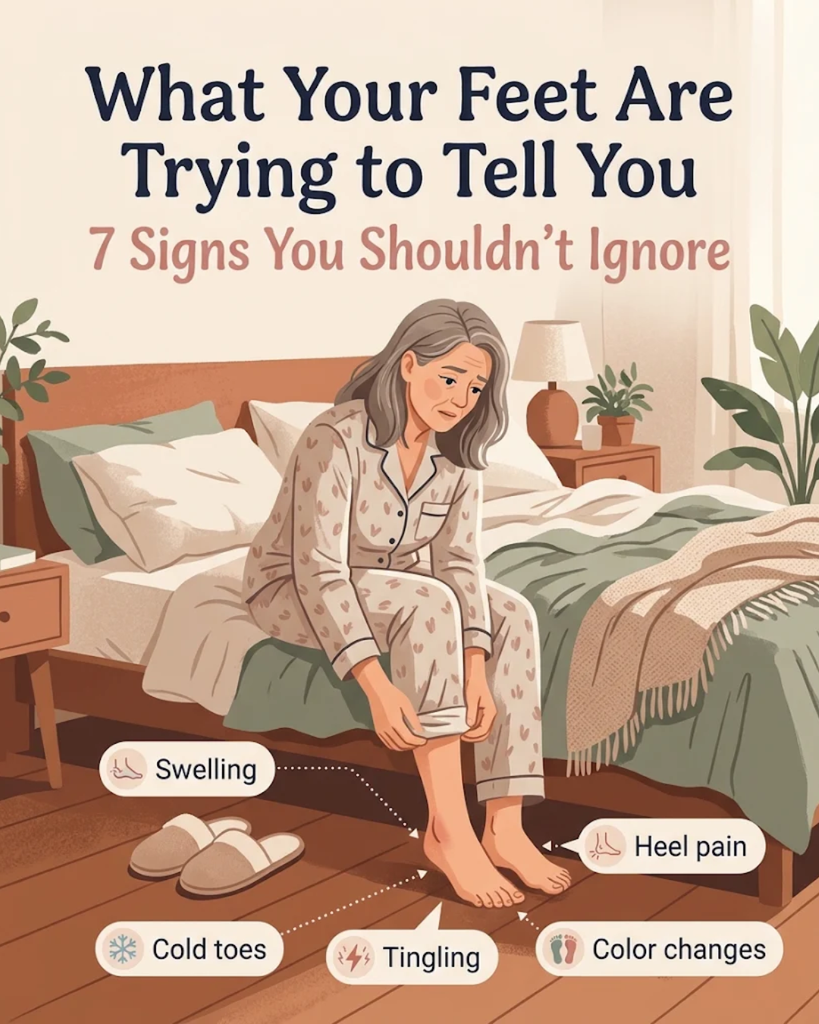
Everybody knows the feeling of a foot that fell asleep after sitting cross-legged. That goes away in a minute. What’s worth paying attention to is tingling, burning or numbness that keeps coming back, often worse at night, sometimes described as feeling like you’re wearing invisible socks.
Many people describe lying in bed at night with feet that burn or buzz, so they stick them out from under the blanket, then pull them back in because now they’re cold, then stick them out again, and by two in the morning they’re wide awake and wondering what on earth is going on with their feet. If that sounds familiar, it’s worth a conversation with your doctor.
That’s usually a sign of peripheral neuropathy, which means damage to the nerves. According to AARP, diabetes is the most common cause worldwide. About half of people with diabetes have some form of neuropathy. When many nerves are affected, the symptoms start in the feet about 75% of the time.
Other possible causes include a lack of vitamin B12, which is more common as we get older and in people who take certain medicines for a long time, like metformin or stomach acid pills. Kidney disease, poor circulation, a low thyroid and too much alcohol can cause it as well. The good news? Low B12 is easy to check with a simple blood test, and it can often be treated.
4. Heel Pain
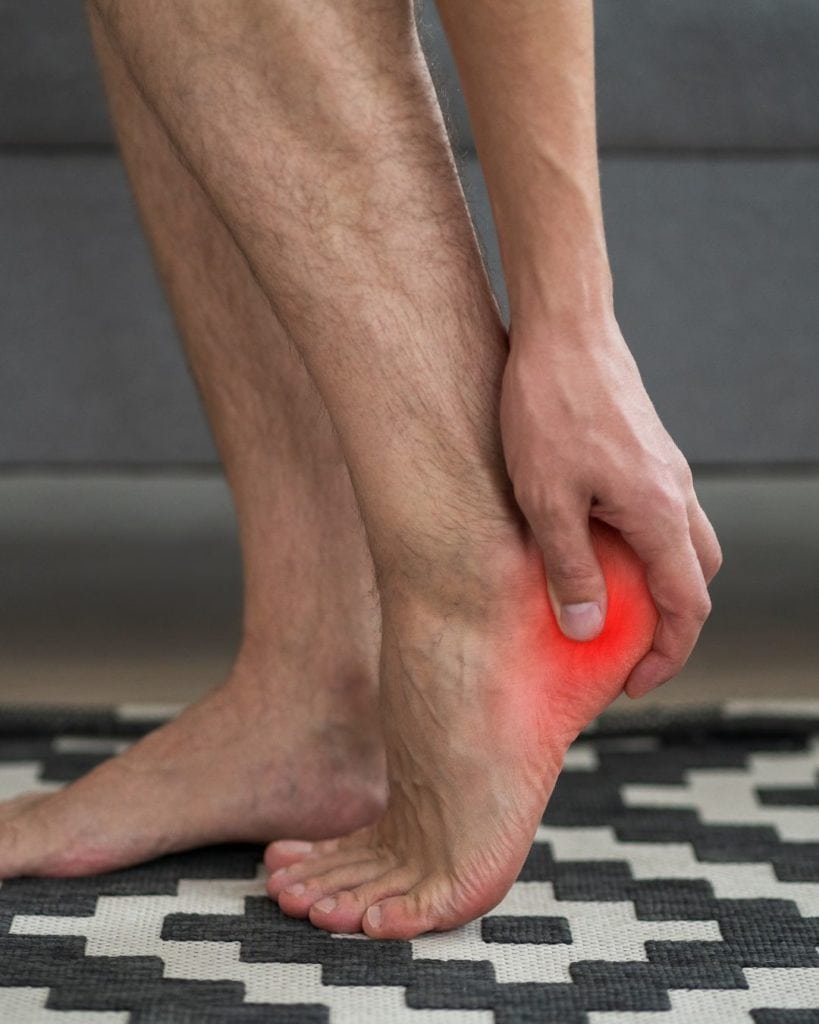
Do you know that sharp pain under your heel with the first few steps out of bed in the morning? Then you hobble to the kitchen, and after a few minutes it gets a bit better?
That’s the classic sign of plantar fasciitis. It’s an irritation of the thick band of tissue on the bottom of your foot, the one that connects the heel to the toes. According to an NHS patient leaflet from West Suffolk Hospital, the pain is felt on the underside of the heel, it’s worst after rest, and it’s most common between the ages of 40 and 60, about twice as often in women as in men. Extra weight makes it more likely. So do standing for hours, worn-out shoes and suddenly exercising more than usual.
The same leaflet says it usually gets better with time, often within 6 months to a year. Supportive shoes, heel pads, gentle calf stretches and not walking barefoot on hard floors can really help in the meantime.
Pain at the back of the heel is a different story. That’s more often the Achilles tendon, the thick cord above your heel. It can get inflamed from running, tight calves or shoes rubbing in the same spot. Arthritis can also cause heel pain.
5. A Sore That Won’t Heal
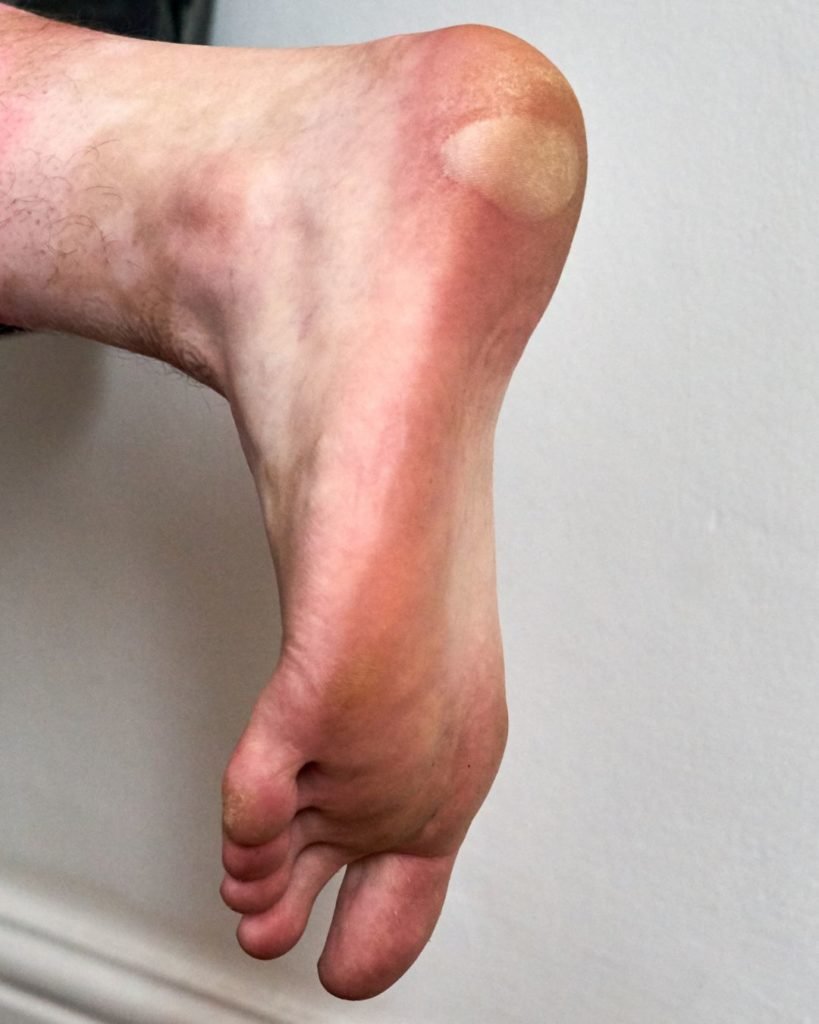
A small blister or cut on your foot should heal in a week or two. If it doesn’t, or it keeps coming back in the same place, please don’t ignore it.
Diabetes is the big one here. High blood sugar can damage both the nerves and the blood flow, so you might not even feel a small cut, and when you do notice it, it heals much more slowly than it should. That’s why people with diabetes are told to check their feet every single day. Poor circulation, kidney disease and infections can slow healing too. So can shoes that keep rubbing in the same spot.
Just a tip. Is bending down hard? Put a small mirror on the floor after your shower and check the bottoms of your feet that way. Or ask your husband or a grandchild to take a quick look. It sounds silly, but it can catch a problem early. A small red spot today is much easier to treat than an infected sore three weeks from now. Trust me on that one.
6. Clubbed Toes
This one is less common, and many people have never heard of it. With clubbing, the tips of the toes, and usually the fingers too, get wider and rounder, and the nails curve down over them like the back of a spoon. It happens slowly, so a lot of people don’t notice it until someone else points it out.
According to the Cleveland Clinic, people with clubbed fingers usually have it in their toes too. It can be linked to lung problems, including lung cancer. Some heart, liver and digestive diseases can cause it too. Sometimes no cause is found at all. Either way, new clubbing is something a doctor should see. The conditions behind it are often treatable when caught early.
7. Toes That Turn White, Blue, Then Red
You walk out to get the mail on a cold morning. When you come back in, two of your toes are completely white, almost waxy. Then they turn bluish, and as they warm up they go bright red and start to throb.
That’s typical of Raynaud’s phenomenon, where the small blood vessels suddenly tighten. According to the NHS, it’s usually set off by cold, anxiety or stress, an attack can last from a few minutes to a few hours, and it’s common and usually not serious.
Sometimes, though, it’s connected to another condition, for example rheumatoid arthritis or lupus. The NHS suggests seeing a doctor if it’s getting worse or only affects one side. The same goes if it comes with joint pain, rashes or weak muscles, or started after 30.
When To See A Doctor About Your Feet
Most foot problems are mild and go away on their own. But please make an appointment if you notice pain that’s severe, doesn’t go away or keeps getting worse, a foot that’s red, hot or swollen, new changes in the shape or color of your toes or nails, a sore or cut that won’t heal, ongoing tingling, numbness or weakness, or if walking or wearing shoes has become difficult. This matters even more if you have diabetes, heart disease, kidney disease or lung problems.
And remember the emergencies from earlier. One swollen, painful leg needs a doctor the same day. Swelling with shortness of breath or chest pain means calling 911.
Pro tip: take a photo when something looks wrong. Swelling often goes down by the time you get to the appointment, and toes that turned white on a cold morning look perfectly normal in a warm office. A quick picture on your phone, with the date, helps your doctor see what you saw.
What About Reflexology?
You’ve probably seen those colorful charts that divide the bottom of the foot into zones, each one supposedly linked to an organ, the liver here, the kidneys there. Reflexology is a traditional practice, and a good foot massage can feel wonderful and help you relax. That being said, there’s very little scientific evidence that those zones connect to your organs. There’s also no good proof that pressing them can find or treat a disease. Enjoy it if you like it, just don’t use it instead of a doctor.
Simple Habits For Healthier Feet
Other than that, a few small habits go a long way. Look at your feet a few times a week, every day if you have diabetes. Wear shoes that actually fit. Feet often get a little wider and flatter with age, so your size at 35 might not be your size now. Keep moving, even a short daily walk helps the blood flow back up from your legs. Put your feet up for a while in the evening if they swell. And keep your blood sugar, blood pressure and weight under control. Your feet feel all of them.
The Bottom Line
Your feet carry you about 5,000 steps a day. They often notice trouble before the rest of you does. Swelling that doesn’t go away, feet that are always cold, tingling, heel pain, sores that won’t heal, clubbed toes and toes that change color can all have simple explanations. But sometimes they point to something with the heart, the veins, the nerves or the lungs. Look at your feet now and then, especially if you’ve had diabetes for years or your circulation isn’t what it used to be, because the earlier you catch a change, the easier it usually is to do something about it. And don’t be shy about showing them to your doctor.
Have your feet ever warned you about something your doctor later found? Let us know in the comment box below.